Header mobile Image

More than just a game

Page 05

Auckland Grammar School crest
Ad Augusta
Magazine
November 2026
Advertisement Shakespeare Orthodontics — advertisement
Editors and writers
Amanda Booth and Jude Dobson
Phone / Email
09 623 5400 ext 576 · j.dobson@ags.school.nz
Contributors
Murray McKinnon ‘59 and Peter Stanes ‘58. Thank you to Dominic Gasparich ‘18 and the School’s Media Group for their photography input.
Proofreaders
Dr Stephen Clarke, Jim Espie ‘38, Mary Farrell and Fiona Geary
Cover image
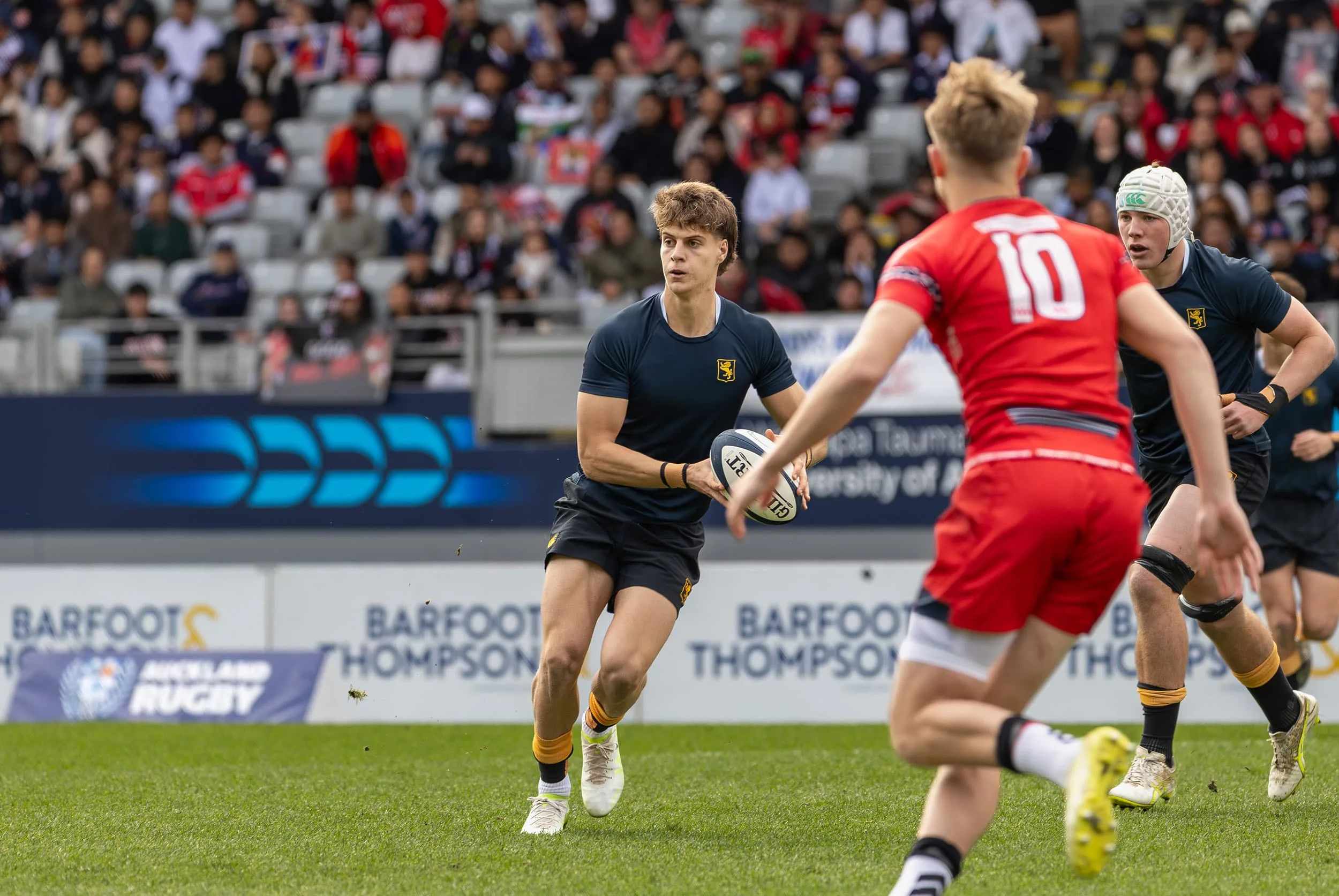
1st XV Rugby captain Nico Stanley runs out on the field at Eden Park for the 1A Final against Kelston Boys’ High School in mid-August. Photo credit: Dominic Gasparich ‘18
Design
PK Malkamaki (Great North)

Contents

Old Boys’ News

Headmaster Tim O'Connor

03Reflections by the Headmaster

“We live in a vastly different society from when Governor Grey founded the School in 1850, ‘for the welfare and educational advancement of persons of all classes and races who may inhabit this colony.’” Tim O’Connor, Headmaster
Headmaster Tim O'Connor

03Reflections by the Headmaster

“We live in a vastly different society from when Governor Grey founded the School in 1850, ‘for the welfare and educational advancement of persons of all classes and races who may inhabit this colony.’” Tim O’Connor, Headmaster

In 2026, Auckland Grammar School’s legacy is not a static monument to the past. The founding philosophy continues to guide and steer, but its legacy is a living one, through the words and actions our young men exhibit daily.

The legacy is lived through the choices they make — from wearing the uniform with pride to the respect they show each other and masters and their preparedness to contribute purposefully, whether it be in a classroom, on the sports field, in the performing arts or other extracurricular activities.

While we face considerable change in our sector, the principles of a liberal education on which Auckland Grammar School was founded remain integral to the School’s educational philosophy.

Inside our classrooms, consistency provides the essential foundation for academic progress, excellence and intellectual courage. Consistency of teaching standards provides the greatest opportunity for young men to achieve personal bests in their studies. Human behaviour thrives under stable, predictable conditions. When instructional routines are consistent across disciplines, cognitive friction is removed.

Consistent teaching ensures that expectations are transparent, eliminating the ambiguity and mixed signalling that elevate anxiety and undermine confidence. Confidence is one of the hallmarks of a Grammar man — that is, someone who works on expanding his belief in what he is capable of.

Like their peers, Grammar boys have some of the greatest freedoms outside our gates in generations and certainly in our School’s history. As a consequence, they also need the most guidance to decide what they will and will not accept personally. If they are to maximise the benefits available to them, we also need them to understand their personal responsibilities.

Through daily assembly messages, in our classrooms and on our sports fields, our young men can come to understand that they build personal credibility through acting with consistency — that is, people come to understand how they will respond across a range of circumstances.

When the majority of our young men understand these basic benefits of building personal credibility, we grow our culture while developing our high-purpose environment. Owen Eastwood would say, “In an inspiring group with strong standards and lived values, the line is high. Together, we take great pride in living above it. When someone falls below the line it is acknowledged and remedied.”

With these concepts in mind, the School may, to some, be seen as an educational outlier in our country. That perception is not a reason to change. Particularly, as we are prepared to back our young men to be representatives of the education we provide. If our emphasis remains on providing a rigorous education and our values are consistently lived rather than just cited, we establish high expectations as our norm in all contexts. Our legacy.

Recently, in assembly, I shared with the School Seth Godin’s sentiments that support our approach. He said, “What really matters is being better, and in order to be better, you need to be different. The thing about consistency is that it is different. The way to be better is to do the things everyone knows they should be doing but do them consistently. That is different. That is better.”

We take our responsibility to maintain a high-purpose environment seriously, as it helps shape how our young men respond to a variety of situations. This may include their approach to their studies, the way they compete in extracurricular activities, their ability to develop and maintain friendships, or their capacity to cope with pressure. If they are to be better, if they are to achieve personal bests, then our environment has to be intentionally primed every single day with energy, clarity, and trust. A high-purpose environment constantly connects daily tasks to a cause greater than the individual.

This is who we are. This is how we do things. This is what we expect of each other. Such an environment showcases young men who are embracing school life, endorsing our standards and showing that they are fit and ready for the task at hand.

It is a legacy worth living.

Per Angusta Ad Augusta.
Grant Trethewey's signature Tim O’Connor — Headmaster

Board Chair Grant Trethewey
Report

04From the Board

“The School roll continues to grow throughout the year, and projections indicate sustained demand for places at Auckland Grammar School over the next few years. As a result, the School has not accepted students through the General Ballot for 2027.” Grant Trethewey ‘76 — Board Chair
Board Chair Grant Trethewey

04From the Board

“The School roll continues to grow throughout the year, and projections indicate sustained demand for places at Auckland Grammar School over the next few years. As a result, the School has not accepted students through the General Ballot for 2027.” Grant Trethewey ‘76 — Board Chair

The growth of the School roll remains a key strategic issue for the Board, which is considering ways to respond to increasing demand for a Grammar education without compromising the School’s character or the opportunities available to all students.

The expanding roll has emphasised the importance of our ability to collect the School donation. As the roll increases the School is increasingly reliant on payment of the donation. This enables the School to continue to provide appropriate facilities and resources for students and teachers. For this reason, I would encourage and exhort you to continue to pay the donation. To those that have paid, the Board thanks you for your contribution to the School.

Expanding and enhancing campus facilities remains an ongoing priority: both to accommodate roll growth and to provide high-quality learning environments for students. The Board continues to work with its advisers on the School’s Master Campus Plan, which sets out campus development over the next 25 years and beyond. This includes future planning for the Clive Road/Barnett Road Precinct, covering increased supply of teacher housing, an expanded Tibbs House facility and the expected purchase of 10 Clive Road (you can read more about the project on page 07 of this edition). This work is particularly timely given pressure on the Enrolment Zone and the need to attract teachers while ensuring the facilities at Tibbs House are maintained and enhanced to meet the needs of all boarders.

At this time of year, the Board recognises the outstanding contributions made across the Grammar community. Teaching and non-teaching staff contribute significantly to the School’s curricular and co-curricular life, ensuring students have access to a wide range of opportunities during their time at Grammar. Achievements in academics, sport, the arts, and cultural activities show that students across all year levels are making the most of the opportunities provided to them.

Now in his fourteenth year at Grammar, the Headmaster and leadership team continue to provide strong, forward-looking leadership. Tim’s ability to attract, retain and motivate high-quality specialist teachers, while ensuring the School is professionally administered, is central to maintaining our high academic, sporting and cultural standards. The Board seeks to recognise and encourage these efforts with the support of the Grammar community. Through your generous contributions during the year, the Board can support and acknowledge our students, teachers and support staff. We thank you for your support.

We are fortunate to enjoy enormous support from Old Boys around the world and the Old Boys in the United Kingdom and United States are particularly strong in their support of the School. As this edition goes to print, the Headmaster and the Director of Advancement Jeff Blackburn ‘67 have attended functions in London and New York where they will meet up with UK and U.S.-based Old Boys. These functions are important as they continue to strengthen the strong relationships between the School and the Old Boys living overseas.

I would also like to congratulate the editorial team — Amanda Booth and Jude Dobson — for their enormous contribution to this redesigned and enlarged edition of Ad Augusta. The magazine provides a superb overview of the many aspects that make up life at Grammar and the contribution of students, teachers, support staff and the wider Grammar community across a multitude of activities and disciplines from music, sport, cultural, academic life and the arts.


Tibbs House and Our Thanks

Tibbs House and the In Zone boarders are an essential part of Auckland Grammar School, adding a distinctive and highly valued dimension to the wider community. This has been strengthened by the outstanding contribution of the outgoing Director of Boarding, Frank Haszard ‘93, who finishes at the end of this year after six years at the helm. An Economics teacher first and foremost, Frank will continue to teach the subject at Grammar.

We are delighted to welcome current Deputy Director of Boarding Matt Cuming into the Director of Boarding role; he will start his tenure at the start of the 2027 academic year. You can read more about both Frank and Matt’s achievements on page 13 of this edition of Ad Augusta.

I also wish to acknowledge the high-quality support we continue to receive from the Foundation Trust and the Headmaster’s Council, ably led by Rob Hamilton ‘81 and Pip Muir respectively, alongside the voluntary contributions of parents and other supporters of the School. Together with the Old Boys’ Association, led by Chris Sixton ‘86 who took up the role as the new President in June, these groups are central to the fabric of Grammar and help make the School distinctive within the state school sector.

Finally, to the students, our best wishes for your forthcoming exams. To the Form 7 leavers, we thank you for your contributions during your time at Grammar. We wish you well as you pursue your careers and look forward to welcoming you back to the School as Old Boys.

Per Angusta Ad Augusta.
Grant Trethewey's signature Grant Trethewey ‘76 — Board Chair

Headmaster Tim O'Connor watches the 1st XV celebrate from the sidelines
More Than Just a Game

05More Than Just a Game

Shaping character and values through sport.

Beyond the scoreboard lies the true value of sport at Auckland Grammar School. Sport is a great teacher in life. Every match serves as a crucial classroom for building resilience, teamwork, and strength of character.

Headmaster Tim O’Connor watching from the sidelines of the No. 1 field as the whistle blew on the 1A semi-final against St Kentigern College. Winning this game earned the 1st XV a position in the 1A final against Kelston Boys’ High School.

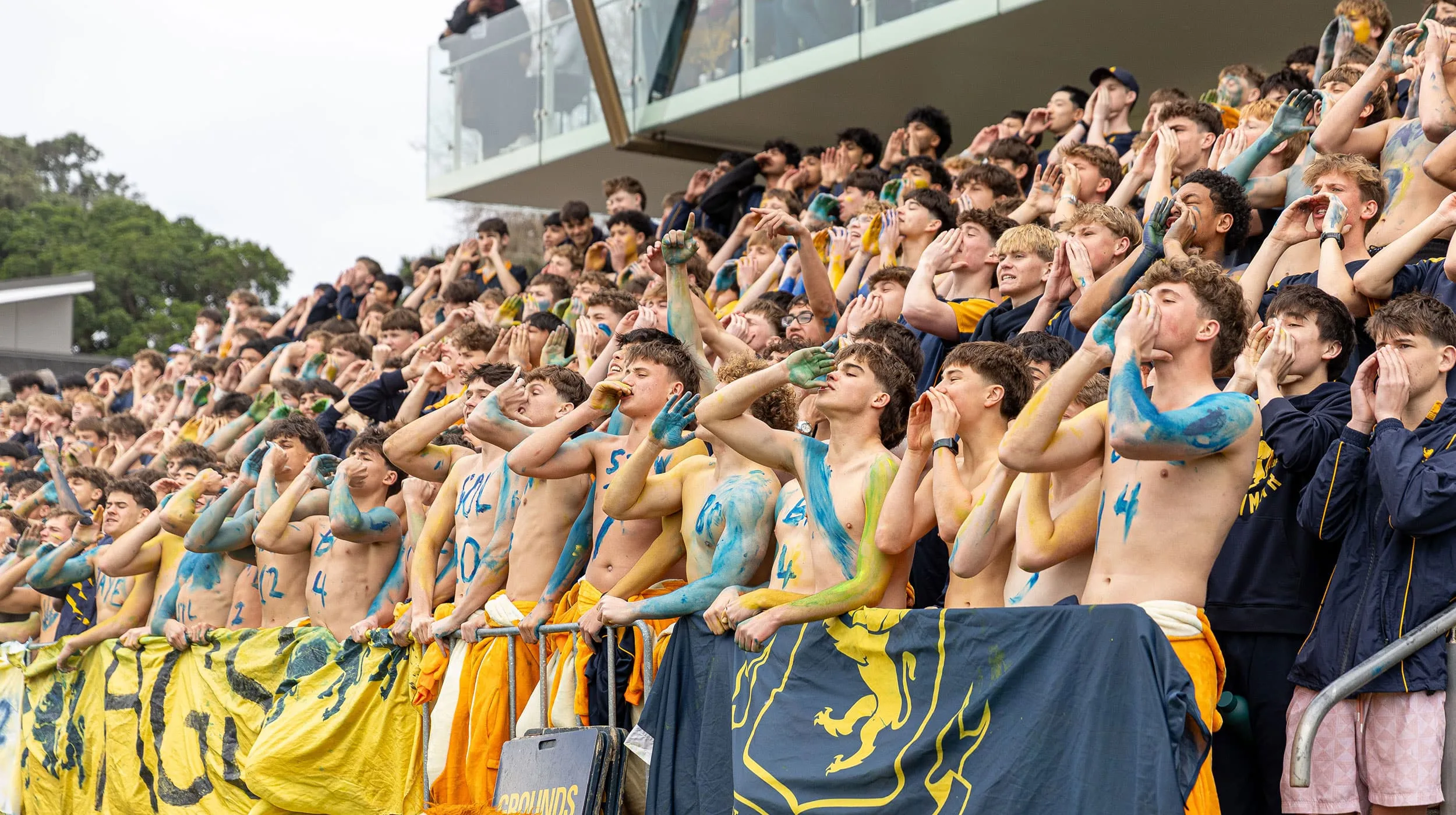
The Augusta Army on the sidelines

The Augusta Army on the sidelines.

On a bracing Saturday afternoon at Eden Park this winter, Head Prefect and Captain of the Auckland Grammar School 1st XV Nico Stanley led his team out to play in the Auckland 1A rugby final. The run out was a memorable moment. “It was a privilege to run out onto the hallowed turf with the team. We had fought hard to get there and knew the whole School community was behind us.” Deputy Headmaster Pastoral — Senior School and 1st XV coach Dave Askew has been through the sharp end of the season multiple times. “The last 1A championship was in 2014. Since then, the 1st XV has been in the 1A final twice, semi-finalists seven times, and in 2020, the 1st XV was leading the competition after five rounds, prior to the COVID-19 pandemic cancelling the remaining games.” Every season has a story, and the final pages of the 2026 one was about to be written.

The Eden Park occasion carried all that a premier school rugby final should: young men playing hard for themselves, their teammates, and their school. In the packed stands the blue and gold supporters included family, friends, students, staff, and Old Boys. The vocal Augusta Army were in full swing. It was an occasion that showed what sport can create: connection, identity, belonging and collective pride.

Unfortunately for Grammar, Kelston Boys’ High School prevailed 27–15. Yet, to reduce the day to that scoreline would be to miss its real significance.

The Lessons Beyond Results

Yes, winning matters. However Director of Sports Development Dave Mackay argues that the sporting programme at school has a deeper purpose. “The most enduring contribution is what it teaches young people about themselves and others when things become difficult.”

There is a lot to contend with in a game, well beyond the technicalities of the individual sport. On a field, court, track, waterway or golf course, students are asked to meet pressure in public. Beyond that, they must collaborate with teammates, respond to coaches, absorb setbacks, exercise self-control and continue when the result is uncertain.

While they learn the satisfaction of preparation paying off, there is also the more complicated reality that effort does not always deliver the wanted outcome. Dave tells students frankly that, “there’s going to be a winner and there’s going to be a loser. You need to understand that you could be going home with this emotion or that emotion. And it is how you deal with the emotion that matters.”

That applies not only to the final whistle, but also to the moments during a game when emotions rise. Dave asks players to distinguish between reacting and responding. “A reaction can be immediate, emotional and unconsidered. A response asks a young person to pause, think, and choose the conduct that reflects his values.”

It is a lesson that has relevance well beyond sport. Young men will encounter criticism, conflict, disappointment and unfairness throughout their lives: in families, friendships, workplaces and communities. Dave says sport gives them repeated opportunities to practise how they will meet those moments. “That means teaching young men to respond respectfully when challenged — whether by an opponent, a crowd, a difficult result or their own frustration. The aim is not to remove all pressure from their lives. It is to help them develop the character and judgement to meet pressure well.”

Sport, he says, “is a great teacher for the values that we’re trying to instil in our young men. It can be a concentrated version of life.” Students learn how to deal with pressure, disappointment, adversity, or feeling they have let a teammate down. These are not trivial experiences for a teenager. Handled well, they help develop resilience and perspective within a setting where coaches, teachers, teammates and families can help put challenges in perspective. “We teach virtues through behaviours and responses,” he says. “We expect our young men to behave a certain way and therefore respond a certain way to adversity and challenge.” The scoreboard, he says, only measures one part of a sporting day. “If we only focus on performance, we’re going to basically ultimately end up failing the kids. Sport is competitive at Grammar, and winning is a good result, but winning at all costs is not part of our ethos.”

Opportunity Matters

About 65% of Grammar — over 1,700 students — participate in school sport. The challenge is to create meaningful opportunity not just for the most accomplished athletes within that number, but also for those who are trying a sport for the first time, playing with friends or finding new ones, developing later than others, or simply seeking the enjoyment of being active and connected. That principle has shaped recent thinking around participation.

This year, approximately 130 Junior students trialled for Basketball. In previous years, a limited number of teams might have been selected, leaving many students without a place. Dave Mackay as Director of Sports Development and Ben Richardson — Head of Sport questioned whether that was the right outcome for students who had put themselves forward. Dave says, “they have gone out of their comfort zone to come to a trial. They are not at a practised level, but that’s not the point. The point is they want to do it.”

Working with neighbouring St Peter’s College, Grammar helped establish a Grammar–St Peter’s Basketball league. Students who were not selected for the top-graded teams were placed in teams with their friends, given uniforms and the chance to play in a structured competition for a trophy. Ben Richardson, the School’s Head of Sport, is pleased with the result and the new plans it has now prompted. “Twelve teams were involved, creating an opportunity for roughly 120 students who might otherwise have missed out. Student feedback from the initiative tells us that this is an approach worth developing, and plans are now afoot to offer this localised inter-school model in Volleyball, Tennis, Badminton, and Football over the next 12 months. To get started, we have been fortunate enough to receive funding from Sport Auckland through their Tū Manawa Fund to scale the Basketball league and introduce a Volleyball competition from Term 4 this year.”

It is a practical example of a larger belief: participation need not be reserved for the few. A student does not need to be a future professional player for sport to matter in his life. The benefits are physical — time away from screens, regular exercise, healthier routines. They are also social and emotional. A sense of routine, a structure that has some goals around it, an outlet to talk with friends after a difficult day, a group to belong to and a reason to keep turning up. It can give a student who might be struggling in the classroom another setting in which he can contribute, improve and be known.

Dave has seen that value firsthand, recalling students for whom sport has been an important reason to remain connected to school and to make positive choices. There is also the possibility to develop over time. “Talent is not always obvious early. A student placed in a lower-grade team at age 13 is not fixed there forever. He may grow physically, develop skills, discover commitment, become more confident, or simply mature later than his peers. There is an opportunity every year at Grammar if you work hard, and you are good enough, to climb up the grades.” The task is to preserve pathways and encourage effort, rather than prematurely defining who is — and who isn’t — “a sportsman”.

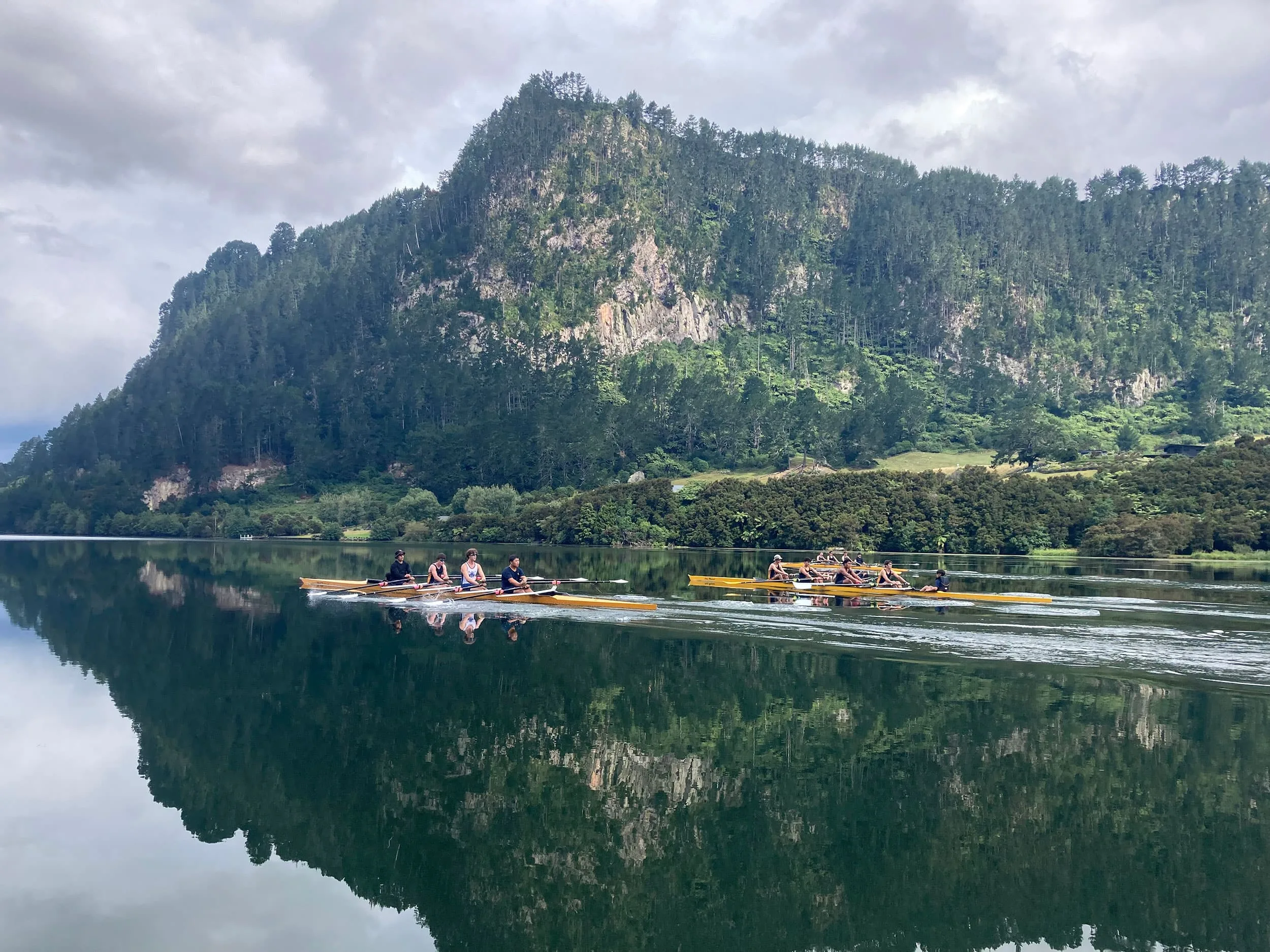
The Rowing Squad's Summer Camp on the Waikato River near Whakamaru

Sport takes students all over Auckland and all over the country. The entire Rowing Squad have a Summer Camp in January before the school year starts. The above image is taken on the mighty Waikato River near Whakamaru.

The Teacher as Coach

At Grammar, staff are expected to make a summer and winter contribution to extracurricular activities.

Dave says having a staff member coach students adds enormous value to the teacher-student relationship. “Those relationships matter because a teacher understands the wider context of a school day. A student who arrives at training tired, distracted, or frustrated may have had seven classes and competing deadlines, all before he puts on his training gear. A teacher as coach is well placed to see the person behind the player. That does not mean lowering expectations. It means understanding how to set them intelligently and humanely. On a day when students are exhausted, the best decision may not be to demand more intensity. It may be to change the session, get outside, walk and talk, or make space for the team to reset. Such choices reflect an educational rather than purely transactional model of sport.”

A Lasting Education

When the 2026 1st XV final did not end in victory for the team at Eden Park, their coach Dave Askew felt for them. “The players would have felt the loss sharply, particularly after an unbeaten season this year in both 1A and traditional games. Disappointment is an unavoidable feeling in competitive sport.” He reiterates that the game brings value nonetheless. “Going through what sports can throw at you is why it is more than just a game. Sport can be a great teacher. If you have the right people leading, it can foster the resilience needed to respond to variables outside your control and to undesirable outcomes that might hurt.”

The players earned the right to represent their school on a major stage. The Augusta Army demonstrated what school pride can look like when a community gathers behind its students. Staff, families and Old Boys helped create an occasion that will remain in the memory of those involved. And the students who played learned how to prepare, how to perform under pressure, how to carry themselves when the desired result did not arrive, and how to begin again.

1st XV Captain Nico Stanley reflects on not just the day at Eden Park, but the year. “While the result was not what we wanted obviously, the team has had a great season. We have learnt a lot — and not just about the game. We have grown together as a team, and many of us have made friends for life. Mr Askew helped us create a team culture we really enjoyed.”

Nico’s comments reflect Dave Mackay’s thoughts about the value of sport at Grammar. “It provides a place where young men learn to belong, to serve, to persevere and to become the people they hope to be.”

Headmaster Tim O’Connor values the researched opinion of Owen Eastwood, author of Belonging, whom he quotes from: “It is from the cues around us daily that we quickly establish what the true standards are within the group. It is not about posters on walls, and it’s not about words; it is about the way we see people behaving daily.”

Tim translates Eastwood’s statements to the Grammar sporting context: “It is how we speak to each other and how we treat each other when we think no one is watching us — at any time. It is about how we support our premier teams on sidelines, it is about whether we keep a blue head when representing the school, when the opposition has gone red head. It is whether we win with humility and lose with dignity.”

These are the characteristics that determine Grammar. Sport is an enabler to show who we are as individuals and as a school. Sport at Grammar — it provides so much more than just a game.

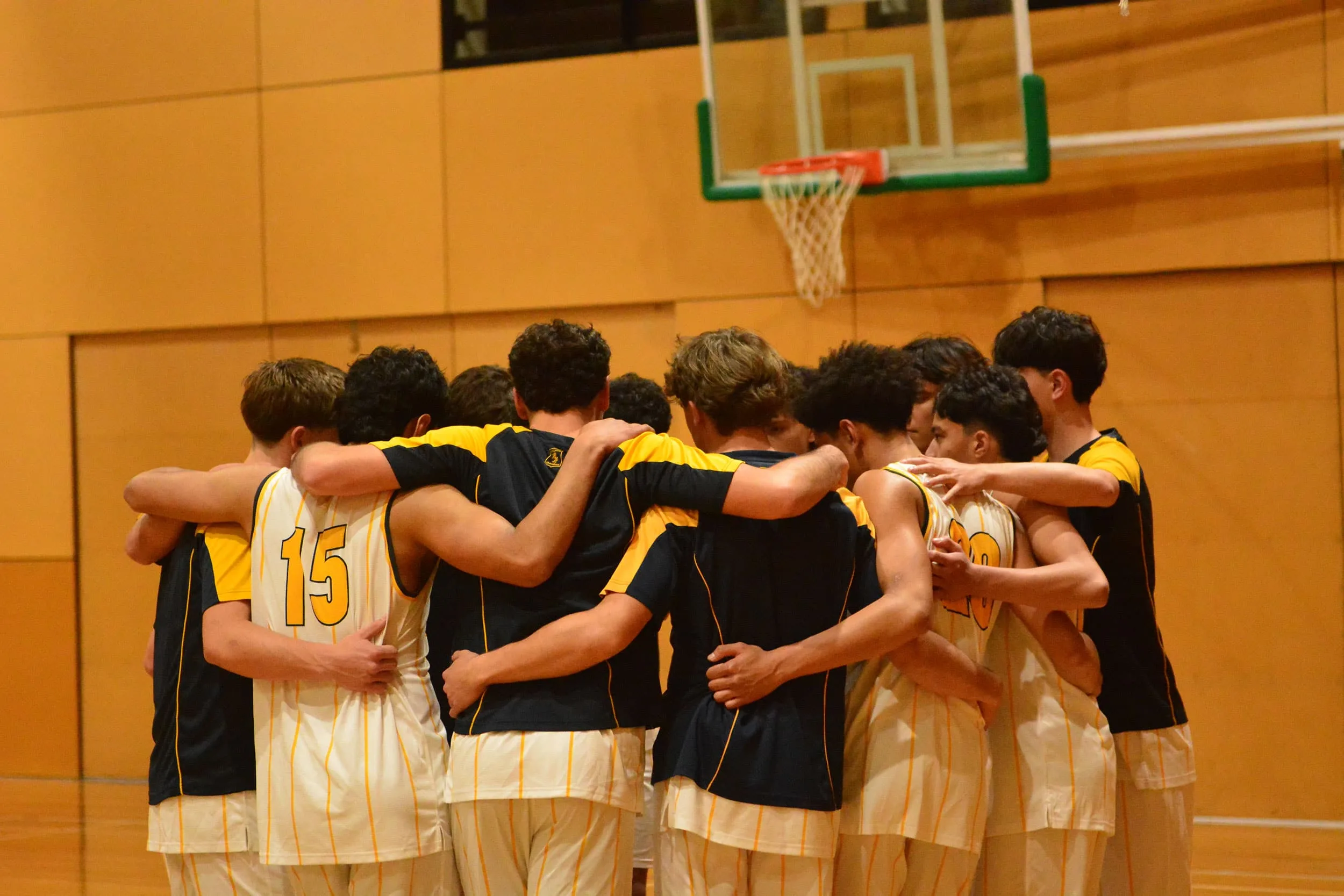
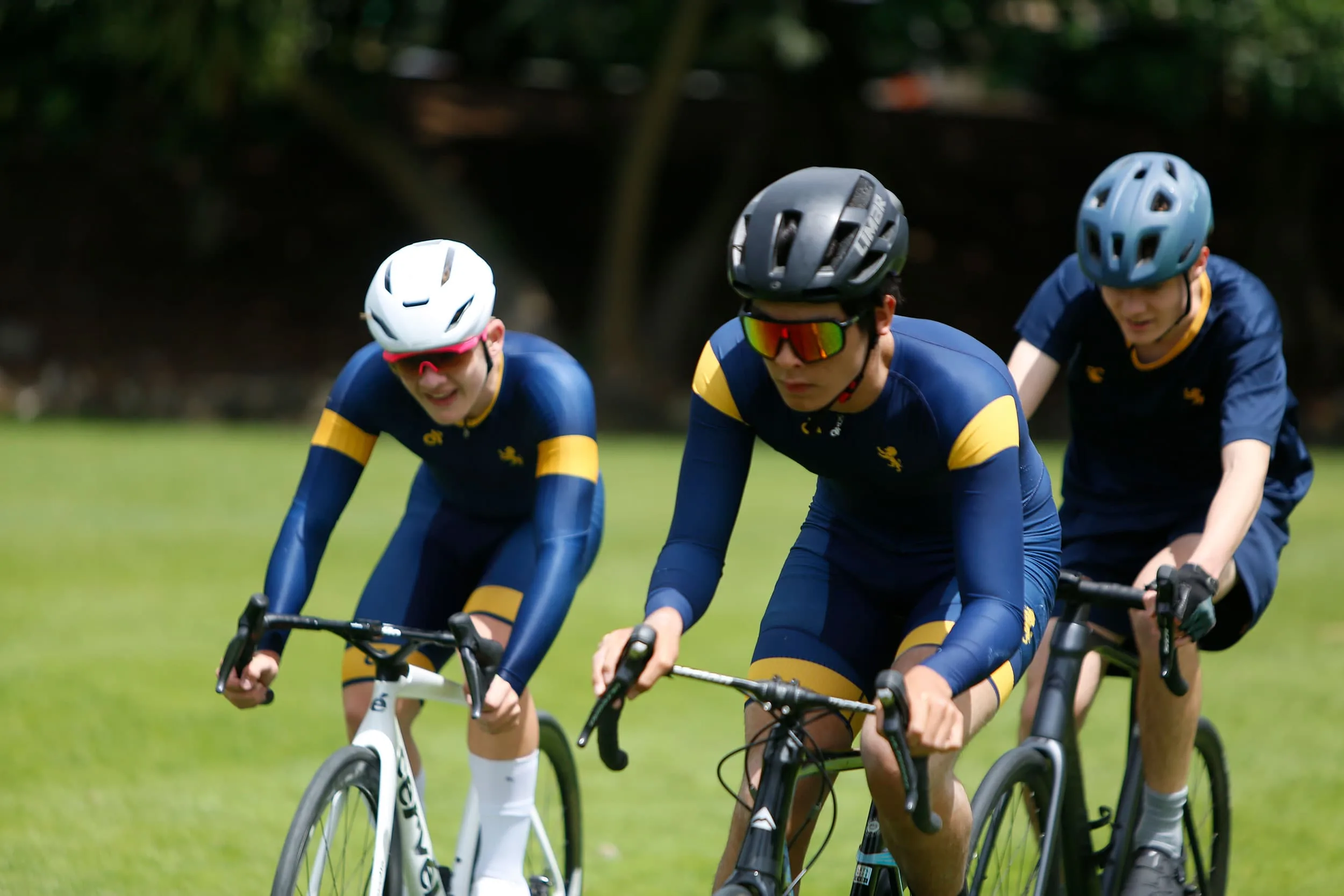
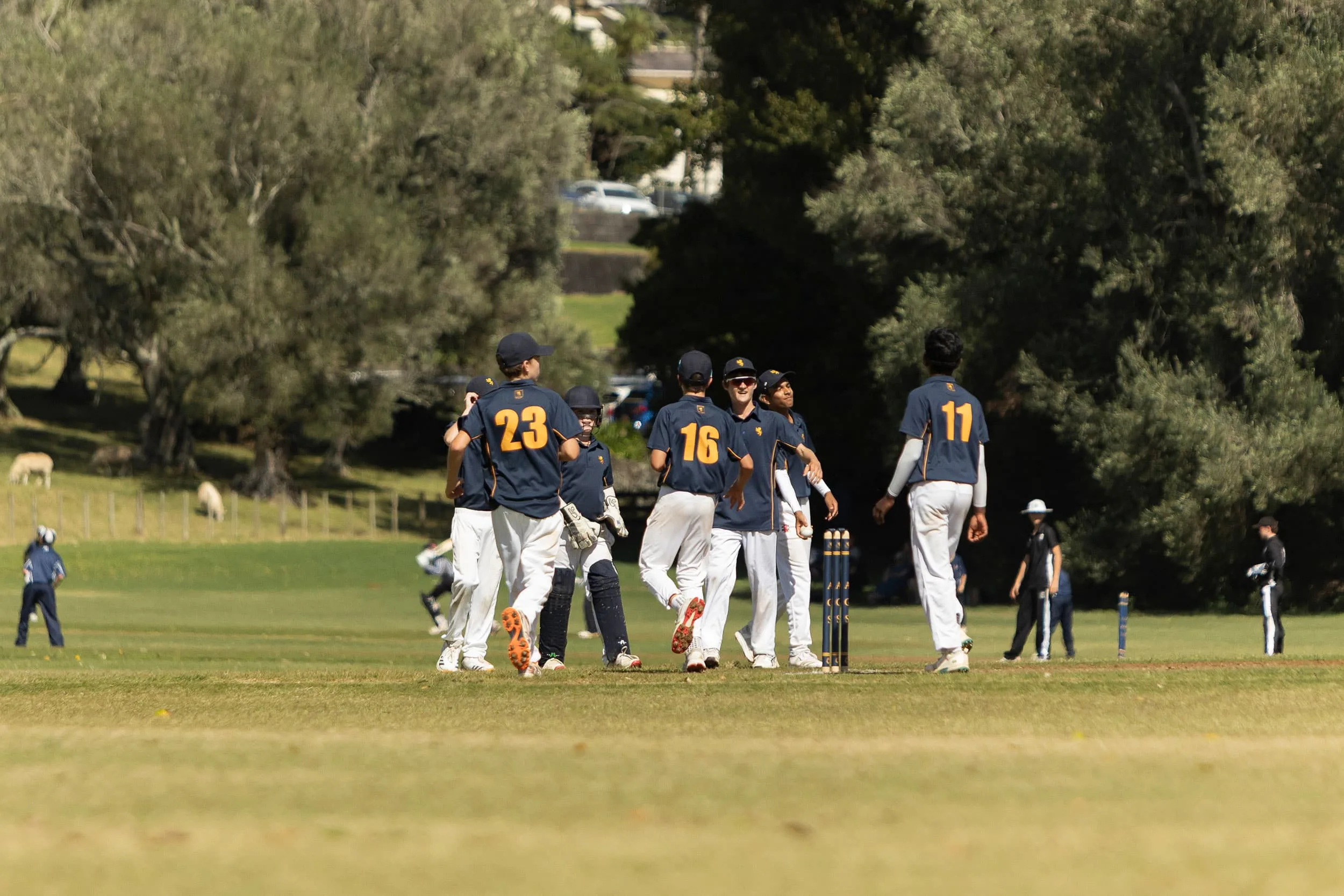
The Premier Basketball team connect as a team before their game against Dilworth School The Grass Track Cycling Race on the No. 1 Field The Colts Cricket team at the Junior Secondary Schools' Boys Invitational

1) The Premier Basketball team connect as a team before their game against Dilworth School in August; 2) The Grass Track Cycling Race was held on the No. 1 Field in February; 3) The Colts Cricket team at the Junior Secondary Schools’ Boys Invitational during Summer Tournament Week in March.

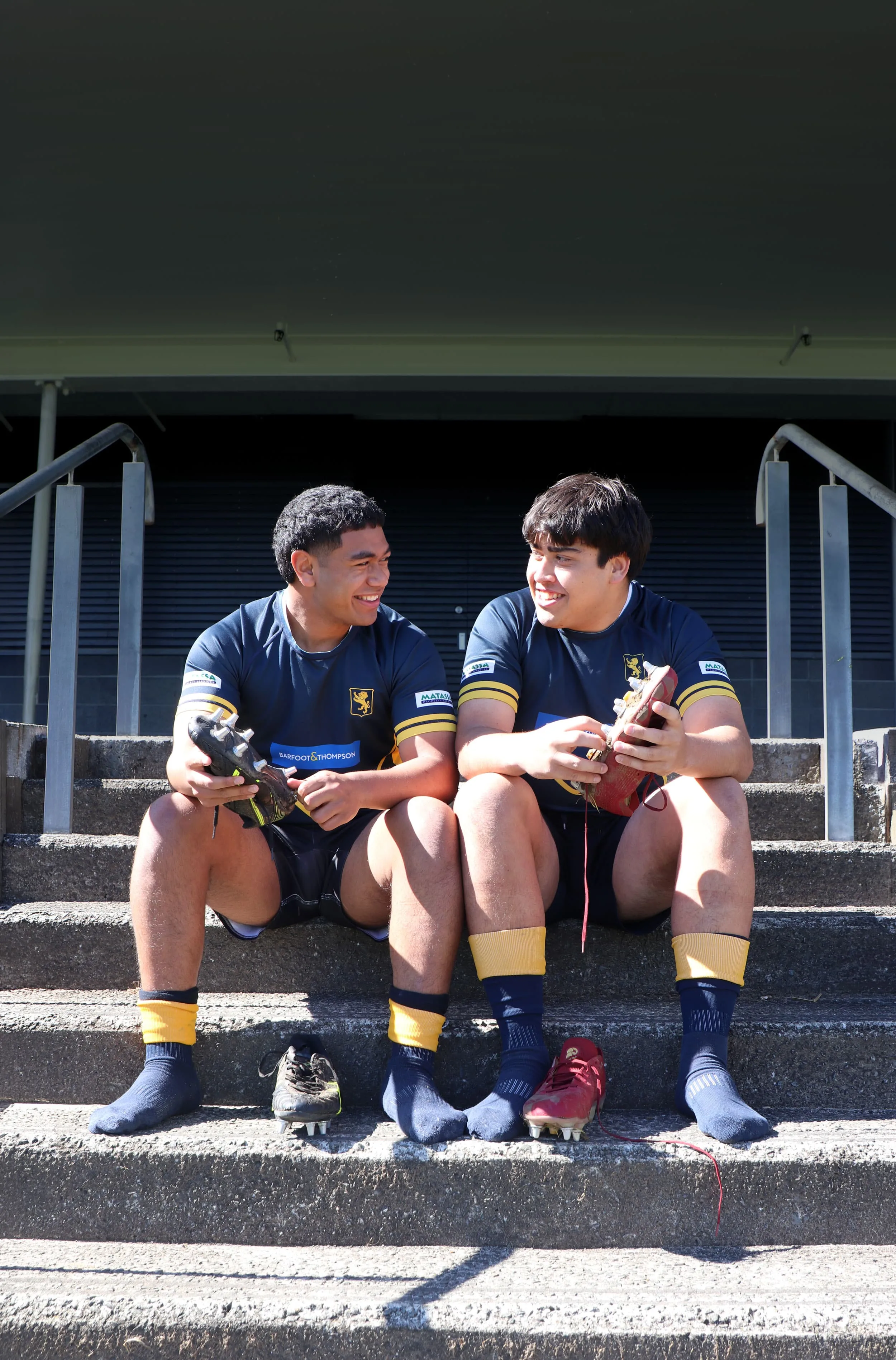
Form 7 students and 1st XV teammates Mahonri Soifua and Marlee Jacobs clean their boots after rugby practice

06Manners Maketh the Man

Why Good Manners Matter

For the young men of Auckland Grammar School, good manners are not a relic of the past. They are essential to being a Grammar man — today and always. Cultivating manners and mutual respect are at the heart of building character.

Form 7 students and 1st XV teammates Mahonri Soifua (left) and Marlee Jacobs clean their boots after rugby practice.

Outside the changing rooms overlooking the No. 1 field, Form 7 students and 1st XV teammates Mahonri Soifua and Marlee Jacobs clean dirt from their rugby boots before going inside. It shows respect for those who maintain the space and those who use it next.

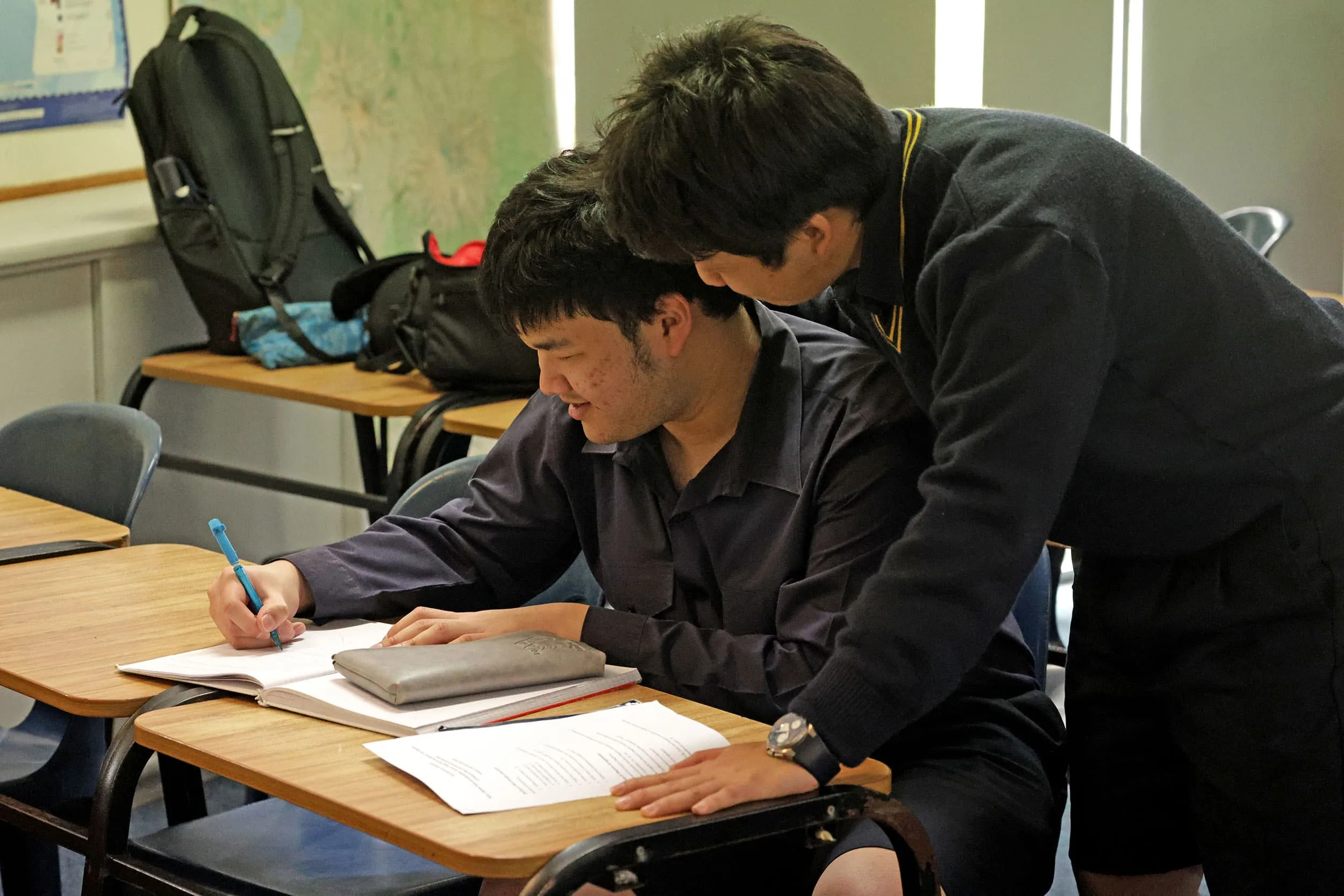
The Asian Tutoring Group meet every week where students support each other with school work Deputy Head Prefect Matayas Thomson talks to former master Allan Faull at the Augusta Fellowship Luncheon

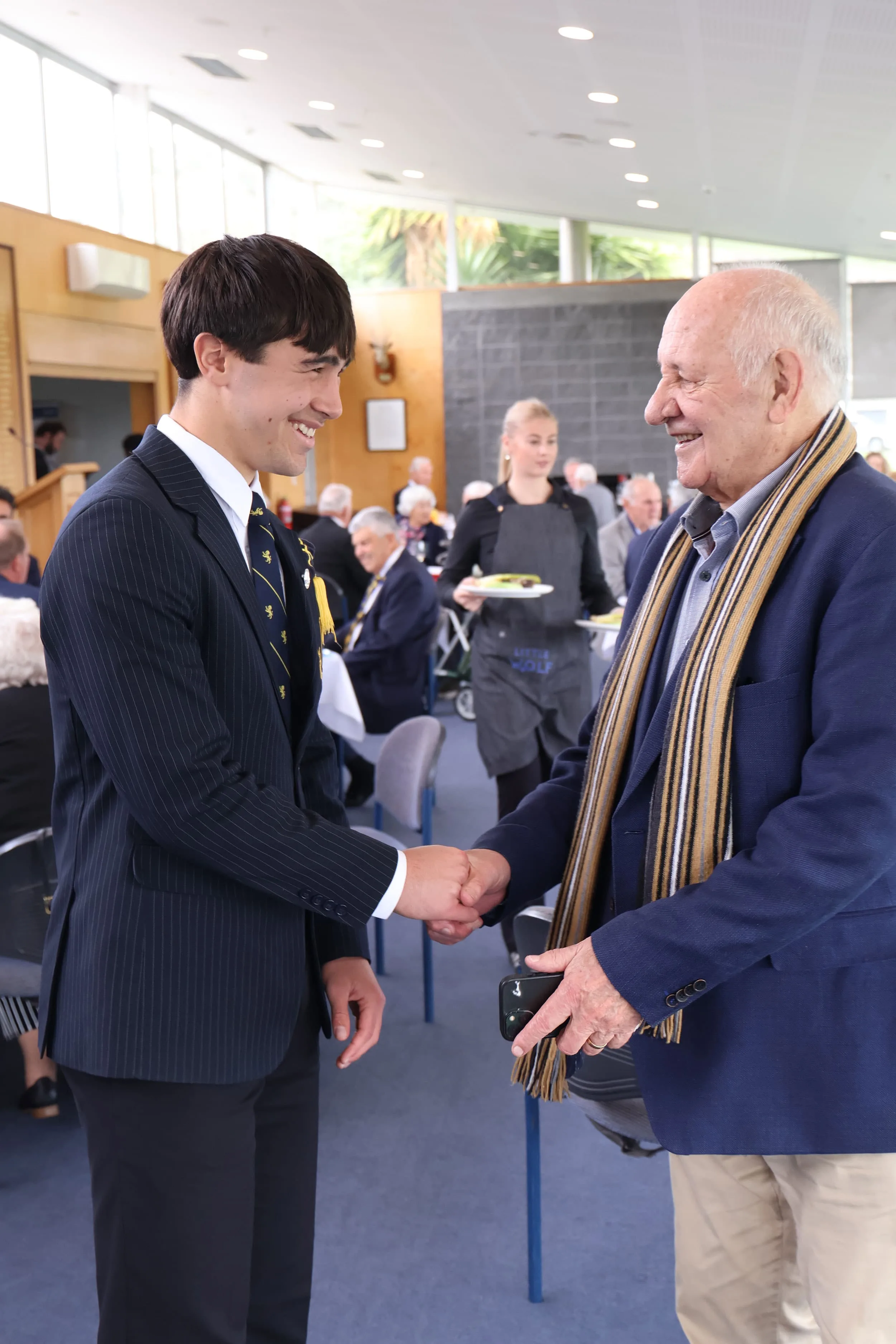
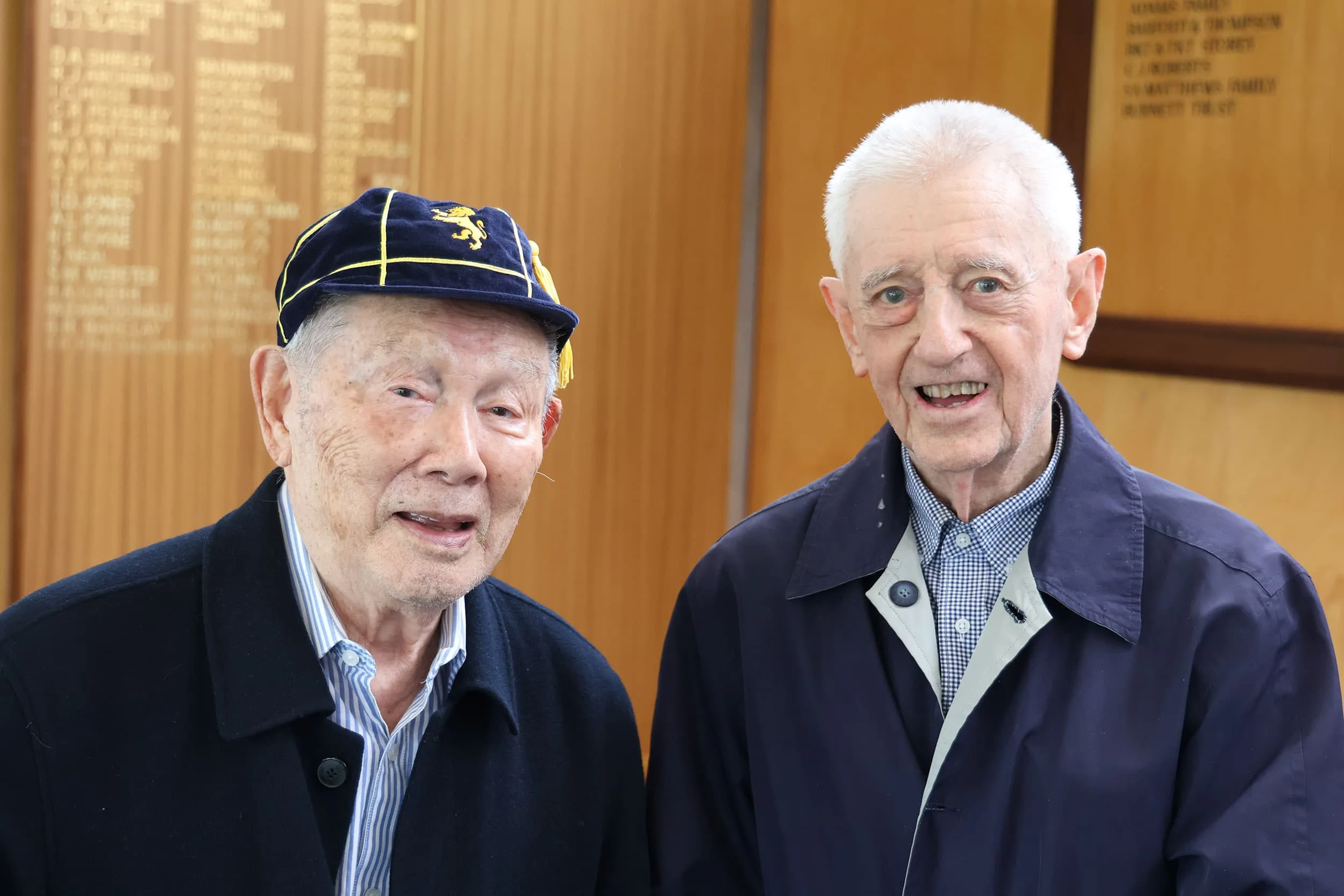
The Asian Tutoring Group meet every week where students support each other with school work. Deputy Head Prefect Matayas Thomson talks to former master Allan Faull at the Augusta Fellowship Luncheon — Matayas’ father Paul was in the 1st XV team that Allan used to manage in 1988.

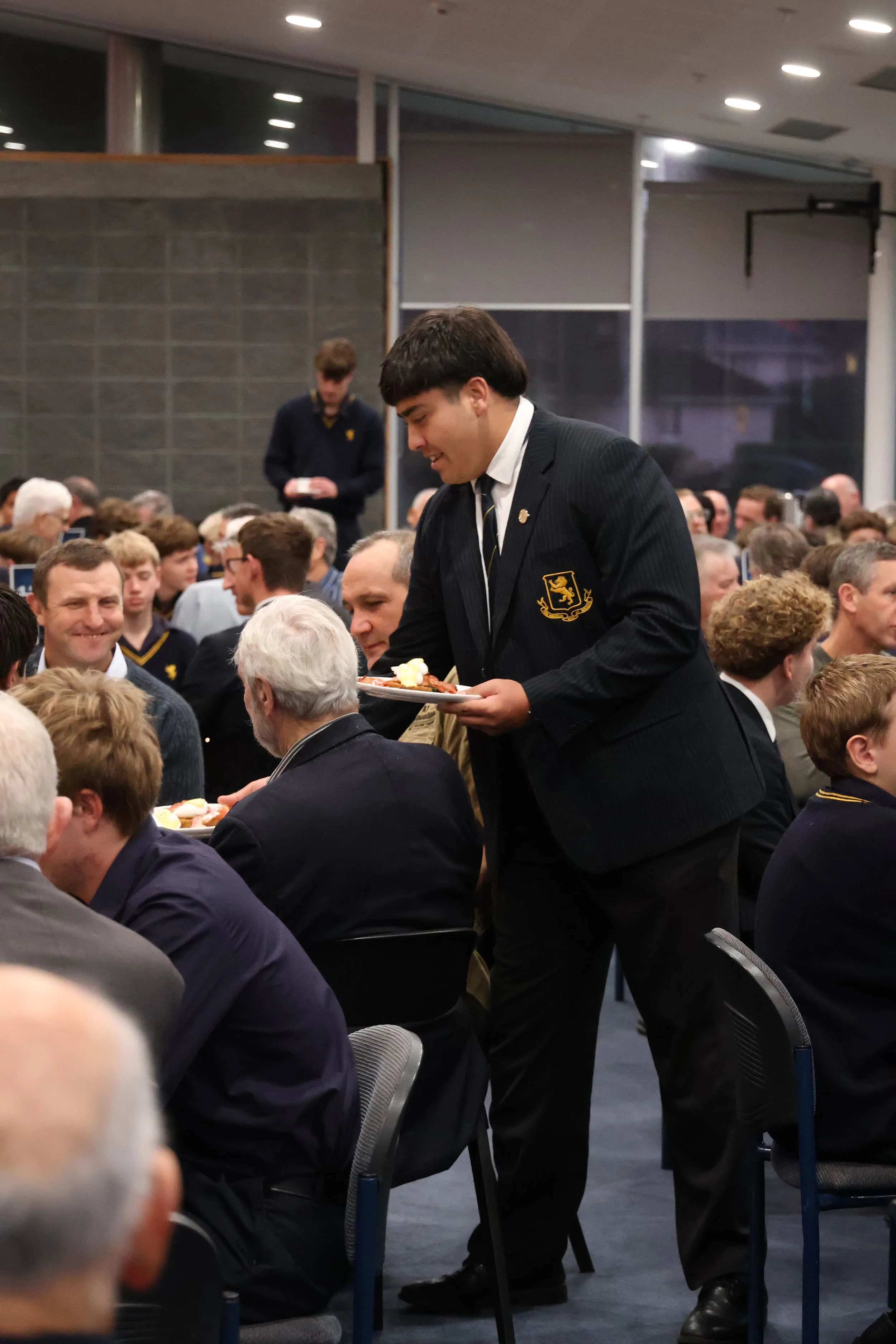
At lunchtime tutoring, a student respectfully helps another make sense of their work. At an event, Prefects help senior Old Boys to tables and converse with guests. As the adage says, ‘manners maketh the man,’ and manners are the trademark of a Grammar man.

Headmaster Tim O’Connor says a school environment helps young men develop manners and he reminds students that it is not difficult to do so. “Manners are something everyone can acquire that require absolutely no talent. As a Grammar community they are something that every single person can achieve, and in doing so we build a respectful culture. Respect is one of our cornerstone values, but it needs to be lived, with consistency.”

Mahonri says Mr O’Connor’s daily assembly messages about standards are well understood by the student body. “He reminds us that knowing the right thing to do is not enough. You need to do it.”

People standing up for others who could do with a seat on public transport is a basic example of good manners, expected of all Auckland Grammar School students.

Mahonri, as a daily commuter on trains, says he has watched people stay seated when they really should have given up their seat. The behaviour sticks out as unacceptable to him and reiterates another of Tim’s messages: “Good manners should be common knowledge, but they are not common practice.”

Manners are part of the daily rhythm of school life — correct uniform, punctuality, listening, courtesy to staff and visitors, standing when an adult enters a classroom, holding a door open for someone. Such actions, Tim says, are not just old-fashioned formalities — they are demonstrations of character.

“Character rises out of the standards we set ourselves, and the courage to live them consistently. We know that accepting responsibility for your own words and actions builds independence and self-discipline. Others come to expect you to behave in a certain manner. That is, you build personal credibility.”

Marlee sees this in practice in his own life. “Manners go a long way at school, around the house, with jobs, and sport. On the Rugby field, that means acknowledging coaches and players, speaking respectfully to referees, and helping around the changing rooms. A ‘please and thank you’ is very much appreciated by coaches and players.” He also reflects what it is like to be on the receiving end of good manners. “It gives me the feeling that I have actually made an impact on someone.”

Tim says cultivating good manners is beneficial for a student’s personal growth. “When young men accept personal responsibility for their behaviour then every action becomes a vote for the person they want to become. They keep getting better.”

A well-mannered young man then goes on to influence the world around him. “They start making contributions that add to the quality of our society. We see news stories about people insisting on their personal freedoms, but seldom do we hear of people reminding themselves and others of their personal responsibilities. That’s a job we take seriously at Grammar and having good manners is an easy one to work on for them.”

Tim’s vision is to not only ingrain the trait as part of a school day, but to extend the use of good manners beyond the school environment. “When young men treat others with courtesy, consideration, and genuine care in all parts of their life, we are in a position to start a revolution outside our gates.”

Ryland Te Tamaki, Head Prefect of Tibbs House, plays pool with Freddy Cuming

07The Grammar Precinct

Purchasing 10 Clive Road is a cornerstone investment in the growing Grammar Precinct.

This vital acquisition secures the opportunity to be able to provide more staff housing, expand Tibbs House for boarders, and better cater for boarding masters with growing families.

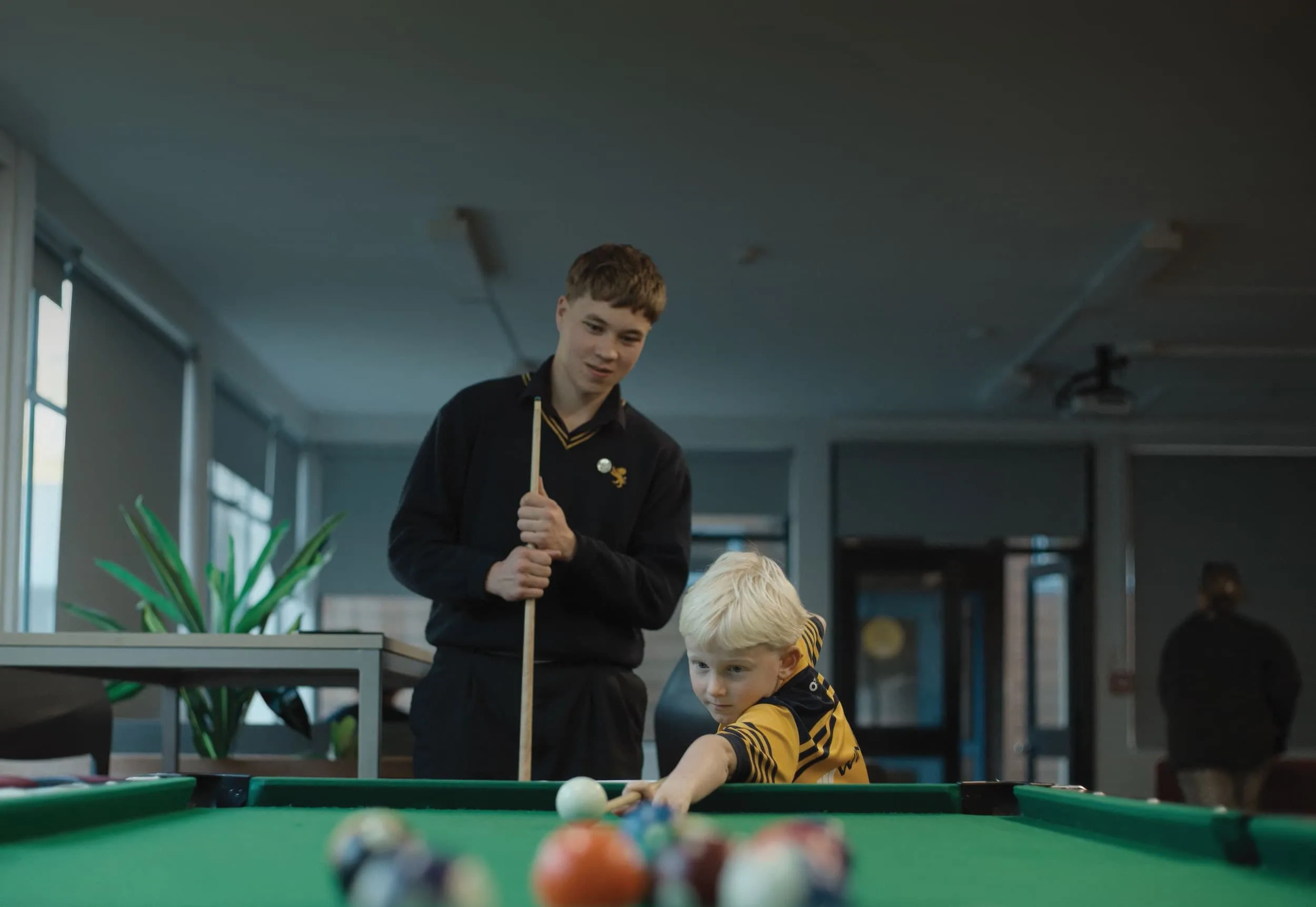
Ryland Te Tamaki, Head Prefect of Tibbs House, plays pool with Freddy Cuming, son of Deputy Director of Boarding Matt Cuming. The staff that live in staff housing along Clive Road and Barnett Crescent value the community they have created together.

Almost two years ago, Auckland Grammar School decided to pursue the purchase of 10 Clive Road to become the cornerstone of a new Grammar Precinct, with the community at its heart. The purchase of this property will enable improvements to Tibbs House for the boarders and house masters who call it home. It also provides the possibility to expand staff housing within a much-enjoyed community surrounding the School.

In December 2024, knowing how valuable the 2,000m² property would be to Grammar, the owner offered it to the School first to see if there was interest in purchasing it, before taking it to the open market. The answer was a resounding ‘thank you for the opportunity, we would love to see if we can make this work.’

Neighbouring 8 Clive Road, at 1,000m² is already in Grammar’s possession. Beside No. 8, Tibbs House sits on a large site on the corner of Clive and Mountain Roads. Consequently, securing No. 10 creates a contiguous landholding, which Headmaster Tim O’Connor says is key. “10 Clive Road is a strategic purchase for the School. It is a multidimensional, legacy piece of land where location is everything. When the three properties are viewed collectively it unlocks all sorts of possibilities for us as a school community.”

The three sites offer considerable potential but realising that vision requires ownership of No. 10 by a trust entity at Auckland Grammar School by December 2026. And to own it, requires funds.

Funding the purchase

The agreed purchase price two years ago was under market value at just over $4.4 million. A generous Old Boy paid the $1.5 million deposit, which he has kindly since gifted to the School. Another Old Boy offered to pay the balance of the price to secure the property himself in the interim, so that the owner could move out and move on with her life. The generosity of these two men ensured the property did not go to the open market but would later be able to go into Grammar’s possession.

For the past two years, Auckland Grammar School has successfully fundraised towards the agreed milestones to pay back $2.9 million to the temporary owner of the house. If the entire amount can be paid back in full by the end of 2026, the property will be in the School’s possession.

The School’s Director of Advancement Jeff Blackburn ‘67 says the wider Grammar community has understood “that this is an opportunity that simply cannot be missed. As such, they collectively helped us pay back $1 million to the interim owner at the end of 2025.” The remaining $1.9 million needed to be raised by the end of 2026 has been going well, with $565,000 remaining to be found as at the end of September 2026. However, Jeff notes that the clock is ticking. “We now only have a couple of months to source that support, but we are hopeful our community will help make the purchase of 10 Clive Road a reality for Auckland Grammar School.”

The School community has always managed to fund vital things into reality throughout its history. From the World War I obelisk in 1922 through to the Te Ara library complex and the new pool in 2024. Tim says the hallmark of the Grammar community over time has been that “we take control of our own destiny through the active engagement of our community, feeding forward to provide us with the Auckland Grammar School we have today.”

Tim muses on a Greek proverb: a society grows great when old men plant trees in whose shade they shall never sit. “This proverb accurately reflects our community’s way of supporting a Grammar education through time. It is now our turn as we look ahead to provide future students, staff, headmasters and boards with the legacy purchase of 10 Clive Road, and the enormous amenity that will bring.”

School counsellor Justin Doolan and Academic Administration Manager Brenda Craw catch up with Director of Sports Development Dave Mackay Rose Cuming, wife of Deputy Director of Boarding Matt Cuming, with her children

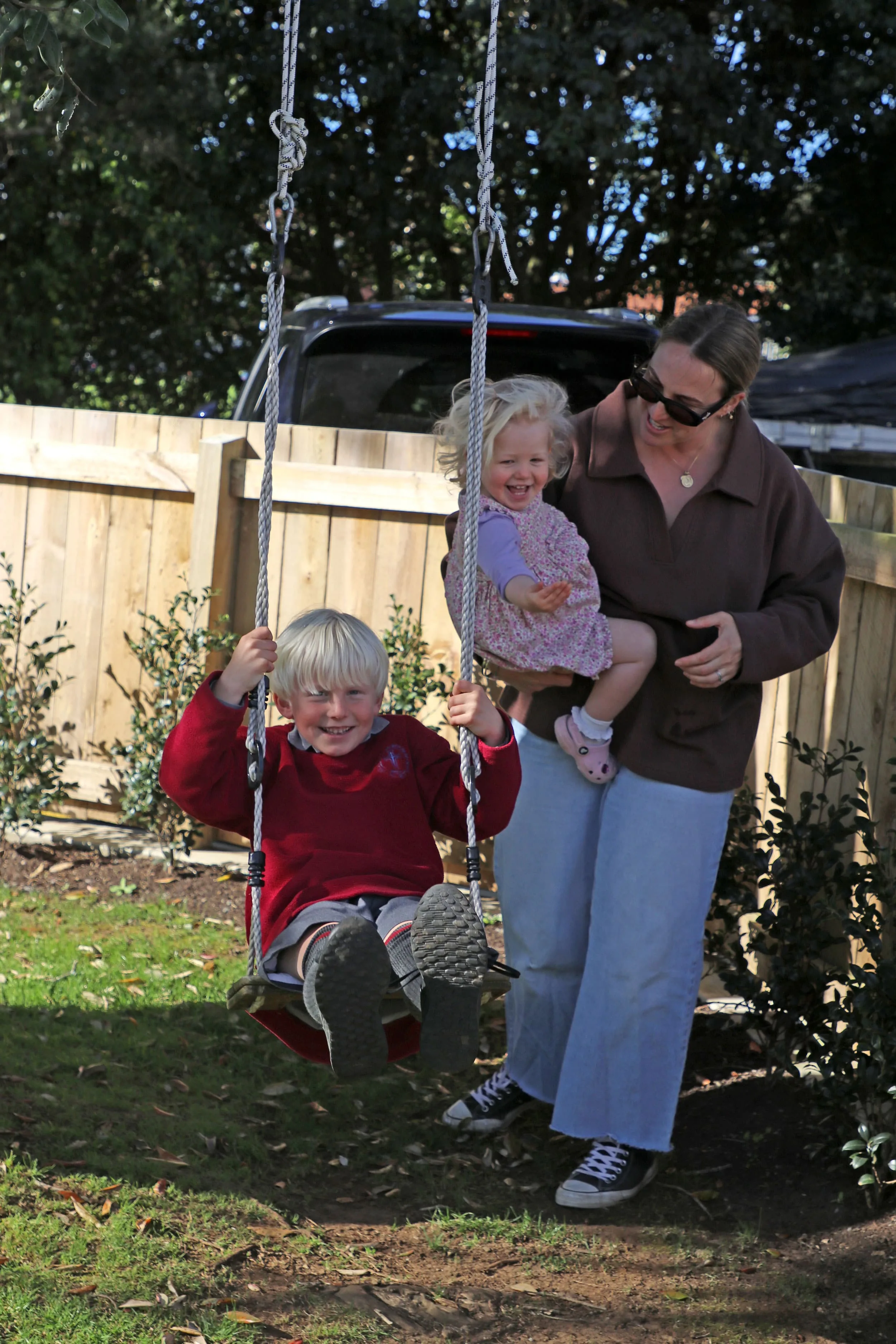
School counsellor Justin Doolan and Academic Administration Manager Brenda Craw catch up with Director of Sports Development Dave Mackay. Rose Cuming, wife of Deputy Director of Boarding Matt Cuming, enjoys the community of friends that live around them, and the proximity to the School for Matt.

Tibbs House

The School’s boarding establishment at Tibbs House requires both upgrading of the existing facilities and the creation of new ones.

It would be good to give more space to boarders as they get older. While having four or five to a room might still be the norm for junior students, moving to single or twin accommodation for Form 5 and 6 students would be ideal.

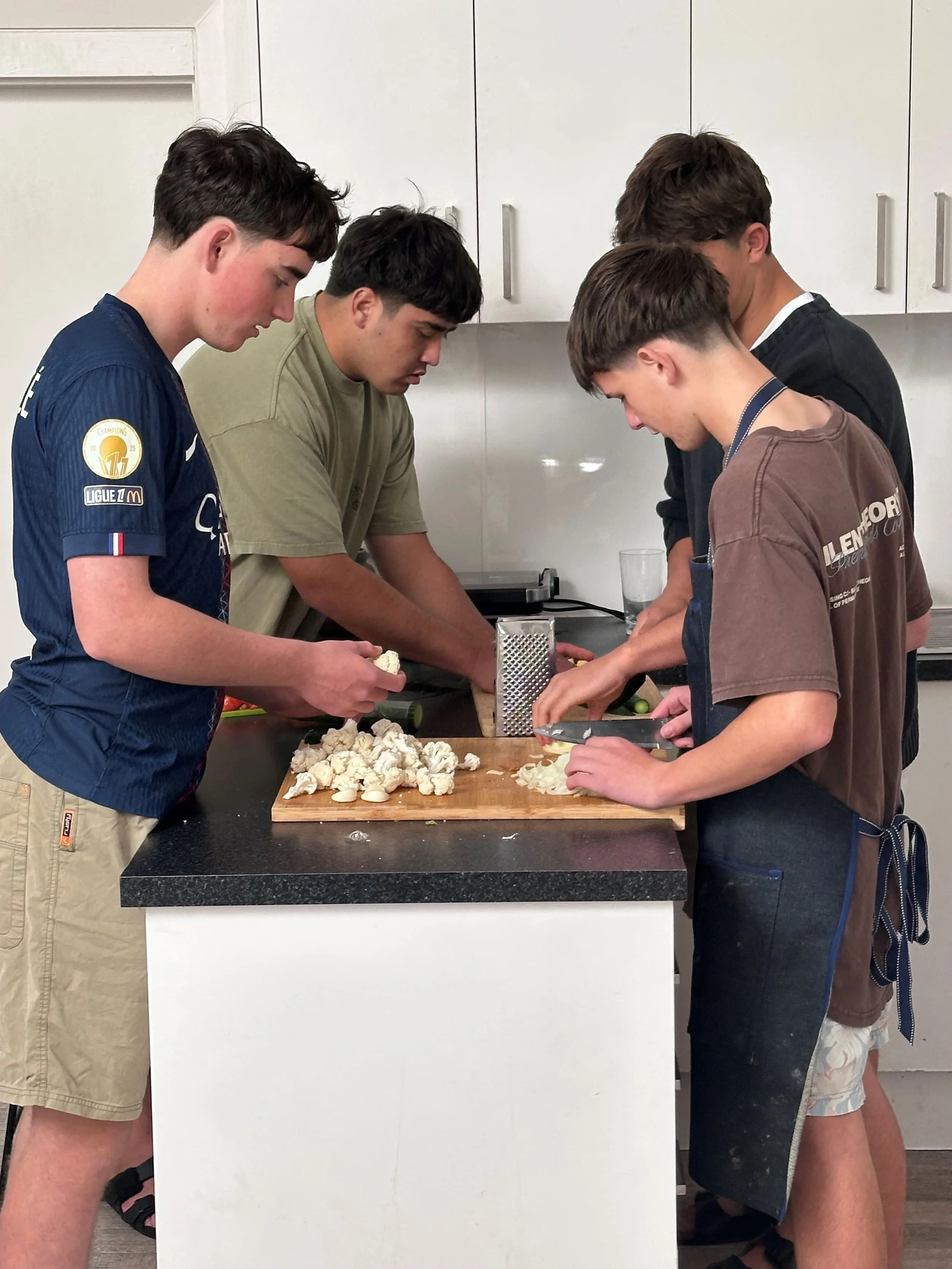
Tim also has a vision for the most senior students. “I would like to see potentially five Form 7 students living in a townhouse-type environment with their own kitchen and laundry facilities. We could provide them with a meal kit once or twice a week so they could learn to cook their own meals. We always say we want to produce young men who can contribute to society, so we need to think about preparing them for that next step.”

The School also wants to upgrade the style of accommodation offered to housemasters, especially those who have young families. The current housing has a maximum of two bedrooms which Tim recognises needs to change as it precludes boarding masters with growing families. “We encourage having families live at Tibbs House because it provides a different feel to other boarding establishments.”

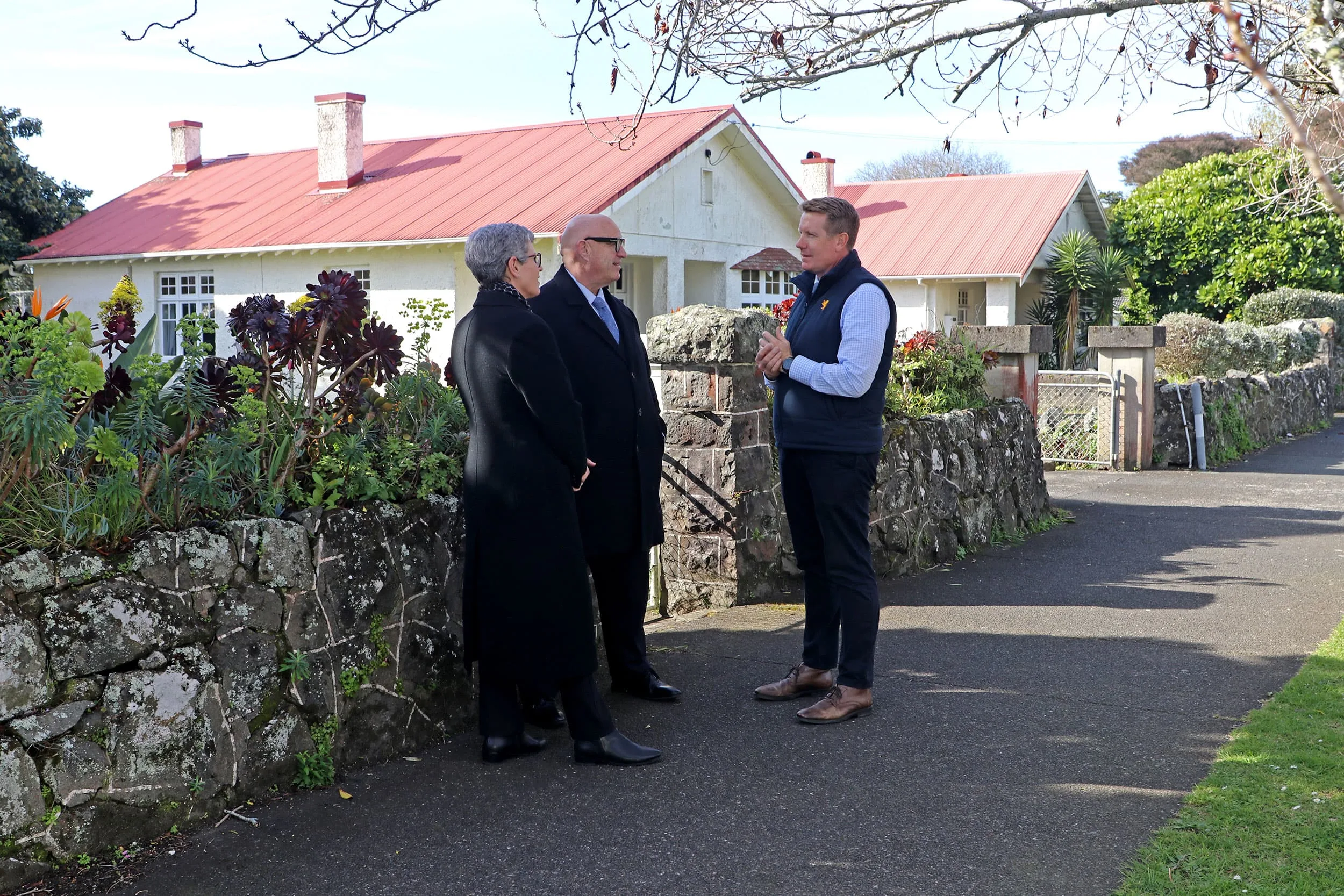
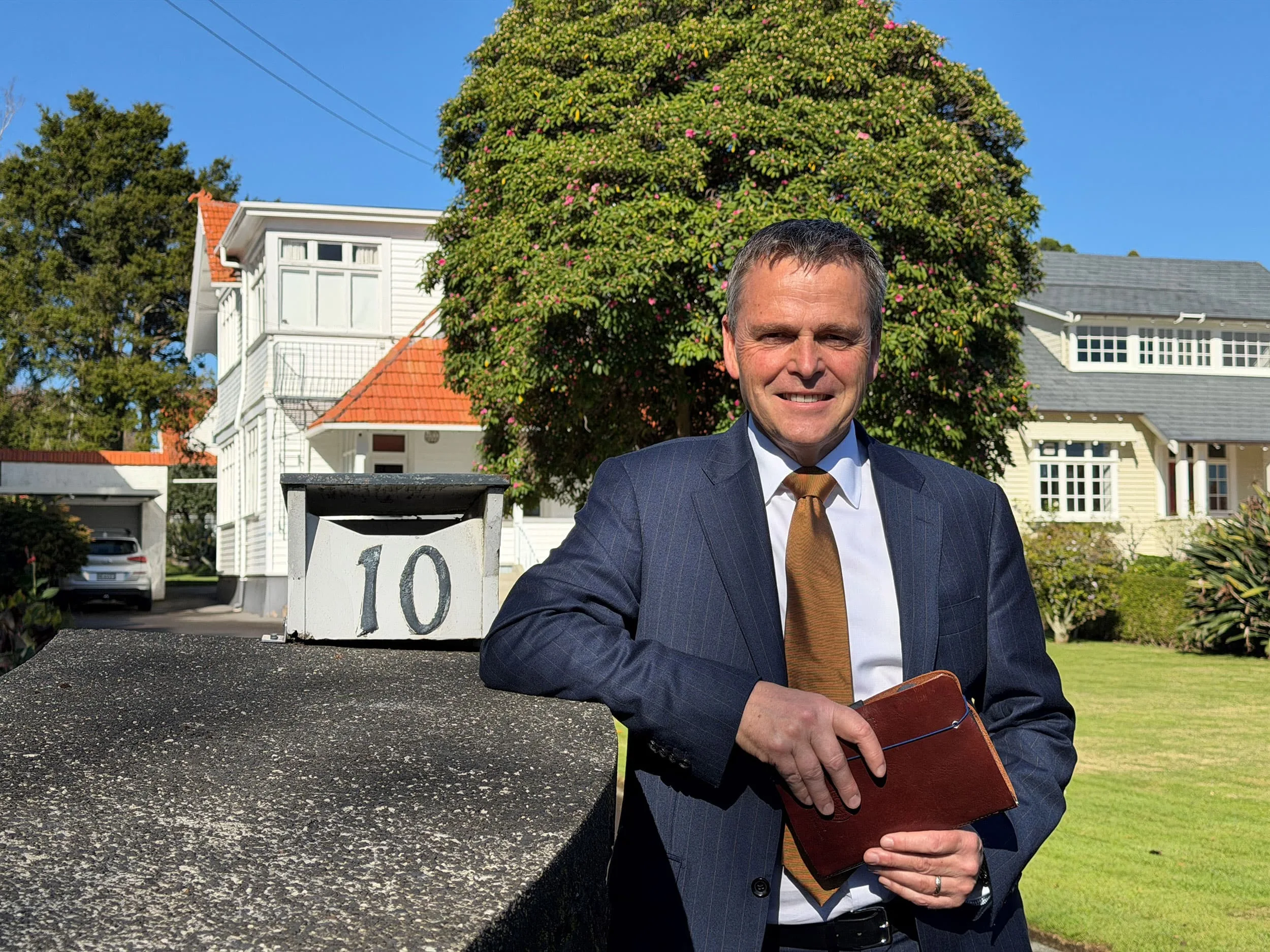
Headmaster Tim O'Connor outside 10 Clive Road Form 7 students cooking together

Headmaster Tim O’Connor outside 10 Clive Road. Part of Tim’s hope for the land use is to be able to provide purpose-built accommodation for Form 7 boarders at Tibbs House where they could be provided the opportunity to cook their own meals a couple of days a week.

A Community of Staff Housing

The Headmaster hopes the area could also provide more housing for teachers.

There is an ever-growing waiting list for the 17 existing rent-subsidised staff houses along the northern side of Clive Road and through Barnett Crescent.

Housing is an excellent way to attract and retain good teachers at Grammar given the cost of housing in central Auckland can be challenging. The proximity to campus also makes it easier to be involved in the day-to-day life of the School.

Biology teacher Matt Cuming and wife Rose have three young children and thoroughly enjoy living in the community that has arisen around staff housing. Rose says without grandparents in Auckland, “it can be quite hard, but everyone supports everyone here. All our kids hang out together and we get time with other adults. We don’t have to travel anywhere to organise a catch-up with mates which can be difficult sometimes with kids in Auckland. We just bomb around to each other’s houses unannounced. Our friends outside of Grammar are always so incredibly jealous of our set up. Our kids are genuinely never inside — they are always running around with other kids or out on the field. They also get to interact with the hostel boys, which they love.”

Senior Academic Dean Marie Gaspar is Matt and Rose’s neighbour and agrees that there is a lot to love about living close to the School in staff housing. “It is safe and there’s no stressing out about being able to afford rent. It feels like a real community and makes all of Grammar feel like home. Living here contributes to my overall happiness and is one of the key reasons that I don’t want to leave the School.” The proximity to her place of work is a real plus. “It makes life so much easier: no parking stress, no commuting. I have it all right at my doorstep.”

Rose says that being close by to work is also beneficial to both Matt and the family. “We love it that Matt doesn’t have to sit in traffic to and from work meaning maximum family time. That means he can really be a hands-on dad but a hard worker too. He gets the best of both worlds.”

Justin Doolan, a School counsellor, says it is a close and welcoming community where people genuinely get to know other staff and their families. “There is a strong sense of trust and care, knowing that we are here for one another and will always look out for each other. Whether it’s a barbecue, dinner together, helping a family settle in from overseas, or simply asking, “Have you got a spare egg or an onion?”, it’s the little things that create a real sense of belonging. We all have busy lives, but there is a genuine warmth, friendship and trust within our community that makes living here very special.”

Rose concurs with Justin’s summation and adds her thoughts as a mum to three young children. “I love having people around. Being a stay-at-home mum can sometimes be isolating, but I never feel alone because there’s always someone around. It’s a real village.”

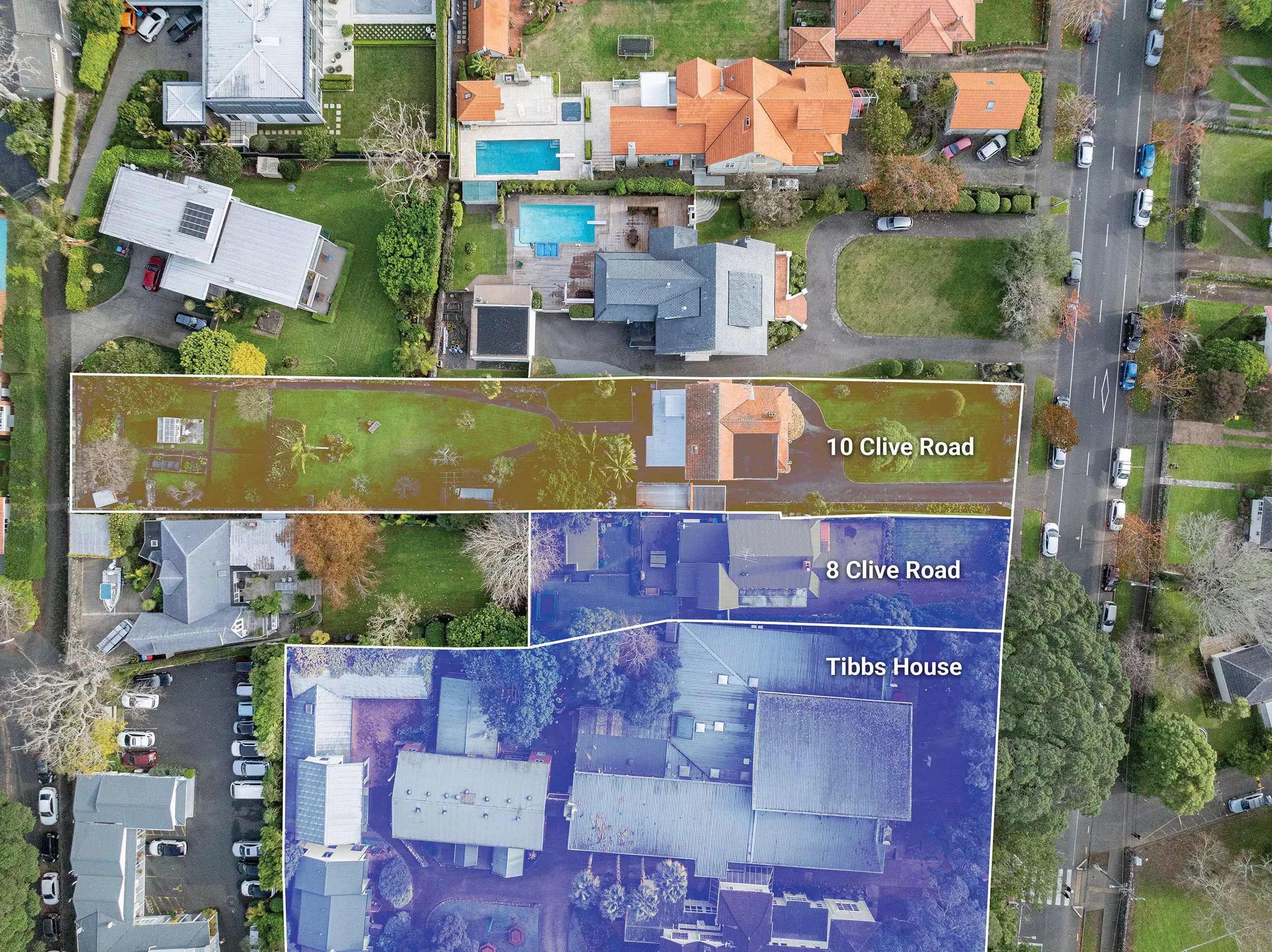
Aerial view of 10 Clive Road, 8 Clive Road and Tibbs House

10 Clive Road is a 2000m² site that runs between Clive Road and Castle Drive. It adjoins 8 Clive Road, which is already owned by the School. With No. 8 neighbouring Tibbs House (the School’s boarding hostel), the addition of No. 10 provides a substantial contiguous land holding.

Tim strongly feels that creating more staff housing will be a fundamental requirement for the School going forward. “If we are to retain the essence of Grammar, we need more passionate teachers living close by, so their job is achievable and rewarding.” With 2000m² available at 10 Clive Road, more staff housing becomes a possibility.

The Grammar Precinct

Tim describes ‘a Grammar Precinct’ as the most apt terminology for the amenity that 10 Clive Road would add.

He has mused on the possibilities this Grammar Precinct would offer. “What does a new precinct look like where teachers and their families are part of a wider boarding community? While Auckland Grammar School is a school with boarding, rather than a boarding school, could we find some middle ground? Why could we not lead the way? Why would we not create a Grammar precinct that attracts engaged and committed students and skilled, passionate practitioners (and their families) who are truly rewarded for the surplus value they provide to generations of Grammar students?”

Looking forward, a growing roll will equate to the need for more teachers, and more places at Tibbs House for out-of-zone students, which makes 10 Clive Road a sensible, and critical addition to the School’s property portfolio.

Getting into Grammar on the out-of-zone public ballot has not been a possibility in the past few years, and that seems unlikely to change with the current in-zone pressure, as Tim reiterates. “The roll size or demand for places at Grammar will not diminish. Our roll is now at its largest in our history, at almost 2,800. This year we have a cohort of 564 in Form 3, a Form 5 cohort of 608 students and a Form 7 with 490. We are in unprecedented times.”

Therefore, securing 10 Clive Road is timely. This key property will provide opportunities to anchor Tim’s vision for a growing Grammar precinct in the neighbourhood.

“Grammar has enjoyed a strong presence along Mountain Road since 1916, and that presence will not diminish. Instead, through the new Grammar Precinct, it will become stronger.

“No. 10 symbolises our aspirations for the future of Grammar. If we are to protect the essence of a Grammar education in 10, 20 and 50 years’ time, we need to begin accepting responsibility for this now. By purchasing this property, it will provide future boards and future headmasters with important choices around quality accommodation for our staff and evolving the boarding experience. 10 Clive Road is perfectly positioned to enable all of this.”

For more information and video content, please visit ags.school.nz/10-clive-road/

To donate please contact:
Director of Advancement Jeff Blackburn — j.blackburn@ags.school.nz
Major Gifts Manager Daniel Reddish — d.reddish@ags.school.nz

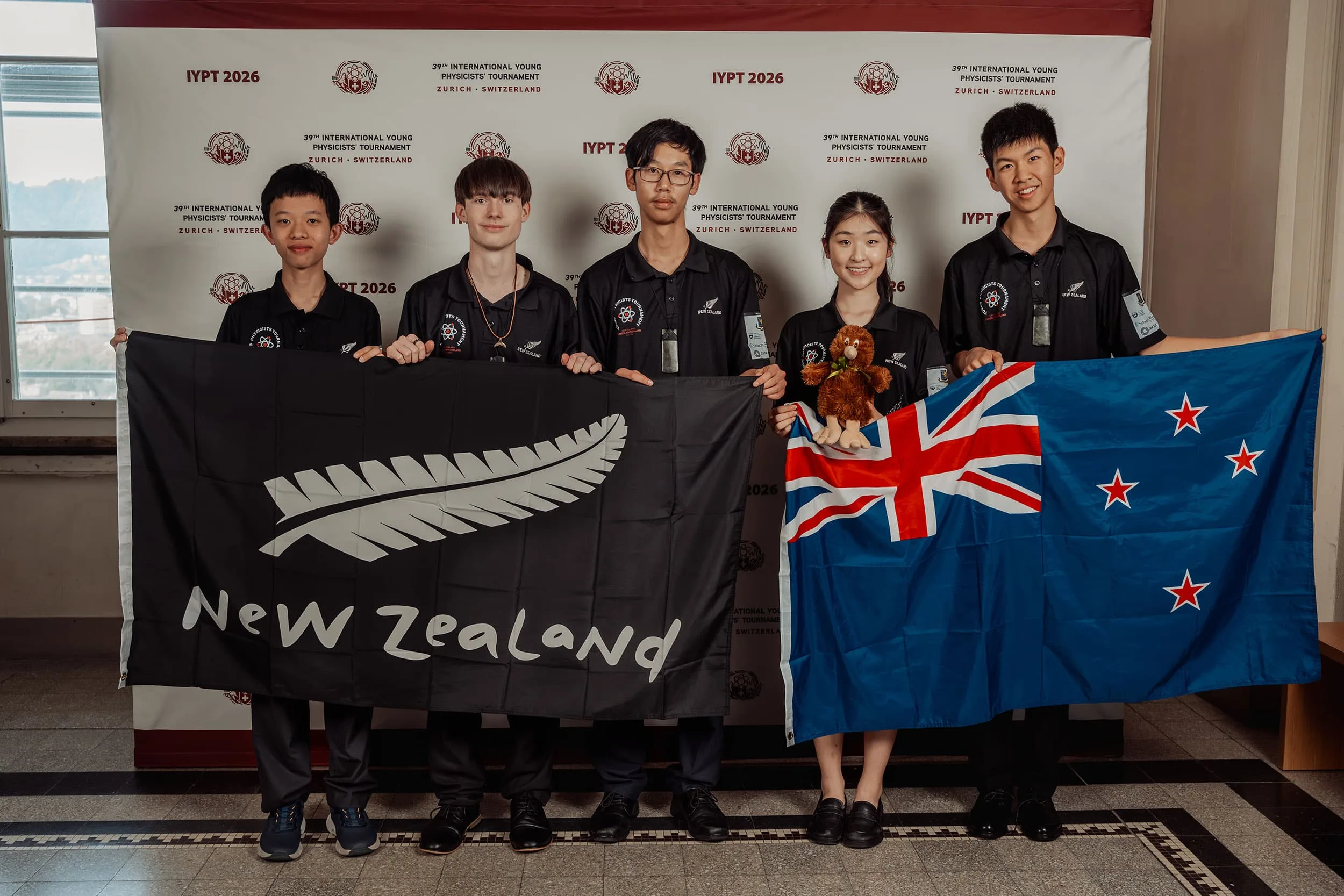
Form 7 student Zihan Mei (far right) with the New Zealand IYPT team

08Academia

Landfall Tauraka Young Writers’ Essay Competition

Form 7 student Uzair Khan has been announced as the 2026 Landfall Tauraka Young Writers’ Essay competition winner for his essay entitled The Bright Ones. The prestigious national competition recognises outstanding young essayists from across New Zealand, and the winning essay gets published in Landfall Tauraka, the country’s longest-running literary journal.

Written during Uzair’s final year at Auckland Grammar School, The Bright Ones explores the experience of being an ambitious young New Zealander, reflecting on the tension between pursuing opportunities overseas and remaining connected to home. Uzair explained that the essay was inspired by the familial conversations he has had about his future. “I wanted to write about that pattern, and also about the fact that the education system I’m in was designed somewhere else and seems to lead somewhere else.”

Reflecting on the writing process, Uzair knew what he wanted to write about. “I knew I wanted to write about my circumstances, but I didn’t want it to be a complaint. The hardest part was finding the right balance between honesty about what frustrated me and honesty about what I love.”

Landfall Tauraka editor and essay prize judge, Lynley Edmeades, said of Uzair’s essay, “it does a fine job of acknowledging the privilege while also interrogating the ideologies these messages contain. Having grown up in the 80s and 90s, I thought we were long past the idea that real life was something that happened outside Aotearoa; Khan proves otherwise, showing us how deeply ingrained and unconscious this dominant ideology still is.” Uzair’s work was praised for exploring important questions about ambition, identity and belonging, bringing national recognition to both his writing and the strength of scholarship at the School.

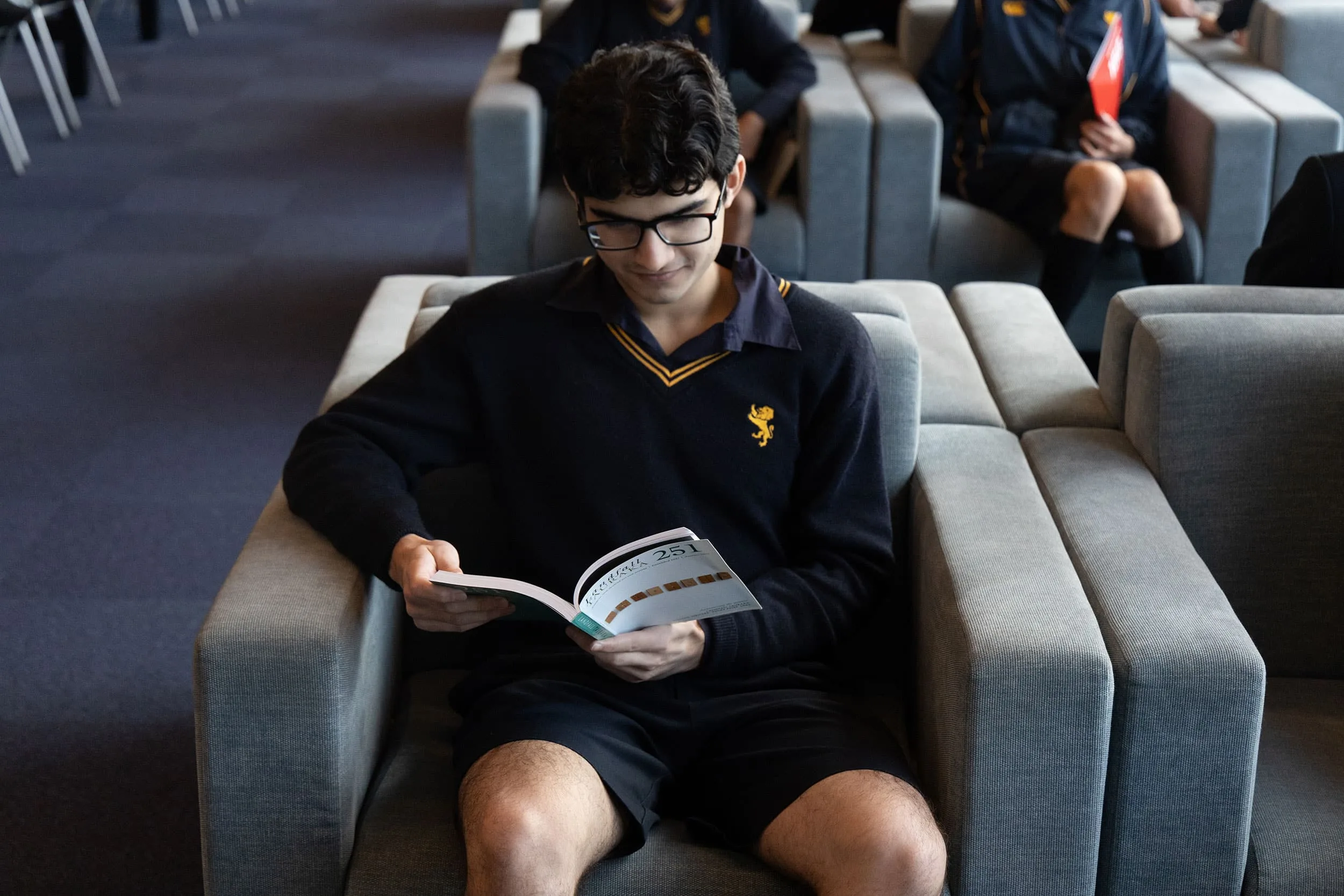
Uzair Khan reads a copy of Landfall Tauraka

Uzair Khan reads a copy of Landfall Tauraka in Te Ara Mātauranga.


North Island Brain Bee Challenge

Towards the end of Term 2, three Form 5 students represented Auckland Grammar School at the North Island Brain Bee Challenge, held at the University of Auckland’s Centre for Brain Research.

The annual neuroscience competition brought together more than 140 of the North Island’s highest-achieving Year 11 students, who had qualified through earlier rounds of school-based quizzes.

In the team competition, Auckland Grammar School finished in second place, behind winners Epsom Girls’ Grammar School and a composite team of students from Rototuna High School and Rosmini College coming in third place.

In the individual competition, all three Auckland Grammar School students progressed to the live final. In doing so, Robert Baker, Suryaansh Reddy Bathula and Safwen Oumer were all awarded Neurological Foundation Brain Bee Internships. The internships provide students with the opportunity to spend a day working alongside researchers at the Centre for Brain Research during the Term 3 school holidays in September.

In addition to the competition, students were given the opportunity to tour research laboratories, take part in hands-on neuroscience activities and met researchers working to understand and treat neurological conditions.


Proceres Grammatici

Throughout the year, Proceres Grammatici — the School’s scholars’ group — have the privilege of being able to visit various institutions and meet with several pioneers in their field.

In August, the group took a visit to the Bioengineering Institute at the University of Auckland, a world-leading research centre that combines engineering, medicine and computer science to improve healthcare through innovative technologies. Its researchers develop advanced computer models of the human body, medical devices and artificial intelligence tools to better diagnose, treat and prevent disease. Working closely with hospitals and industry, the Institute translates research into practical healthcare solutions that improve patient outcomes in New Zealand and around the world.

The visit offered students the chance to interact with post-graduate academics, explore their ongoing projects, and to appreciate the critical role of research in tertiary education. Students engaged with fellow young scientists, gained insight into diverse, cutting-edge projects — such as needleless syringes and computerised heart models — and learned how these innovations are marketed and monetised in a competitive global environment.

Ultimately, this trip proved exceptionally valuable for members of Proceres Grammatici, many of whom plan to attend the University of Auckland next year to begin their tertiary studies.


International Economics Olympiad

Founded in 2018, the International Economics Olympiad is an annual global competition in Economics, Business and Finance for high school students. The 2026 tournament was held in Shenzhen, China, and after a rigorous testing process, Form 7 student Toby King was selected as captain of the New Zealand team.

The international competition tested both the team’s theoretical knowledge and practical stamina. It began with a multiple-choice paper covering economic theory and applied Mathematics, followed by five ‘deep-dive’ open-response questions.

The most gruelling aspect of the International Economics Olympiad was the 24-hour business case. Starting at 6:00am, the team had just one day to develop a solution to a real-world economic issue facing New Zealand. This required an 18-hour continuous work stretch to prepare a presentation for a panel of industry judges.

The New Zealand team achieved a strong result, placing in the top 20 teams overall. Individually, Toby’s performance was outstanding. He finished with the top individual score of the New Zealand team and was awarded a Silver medal.

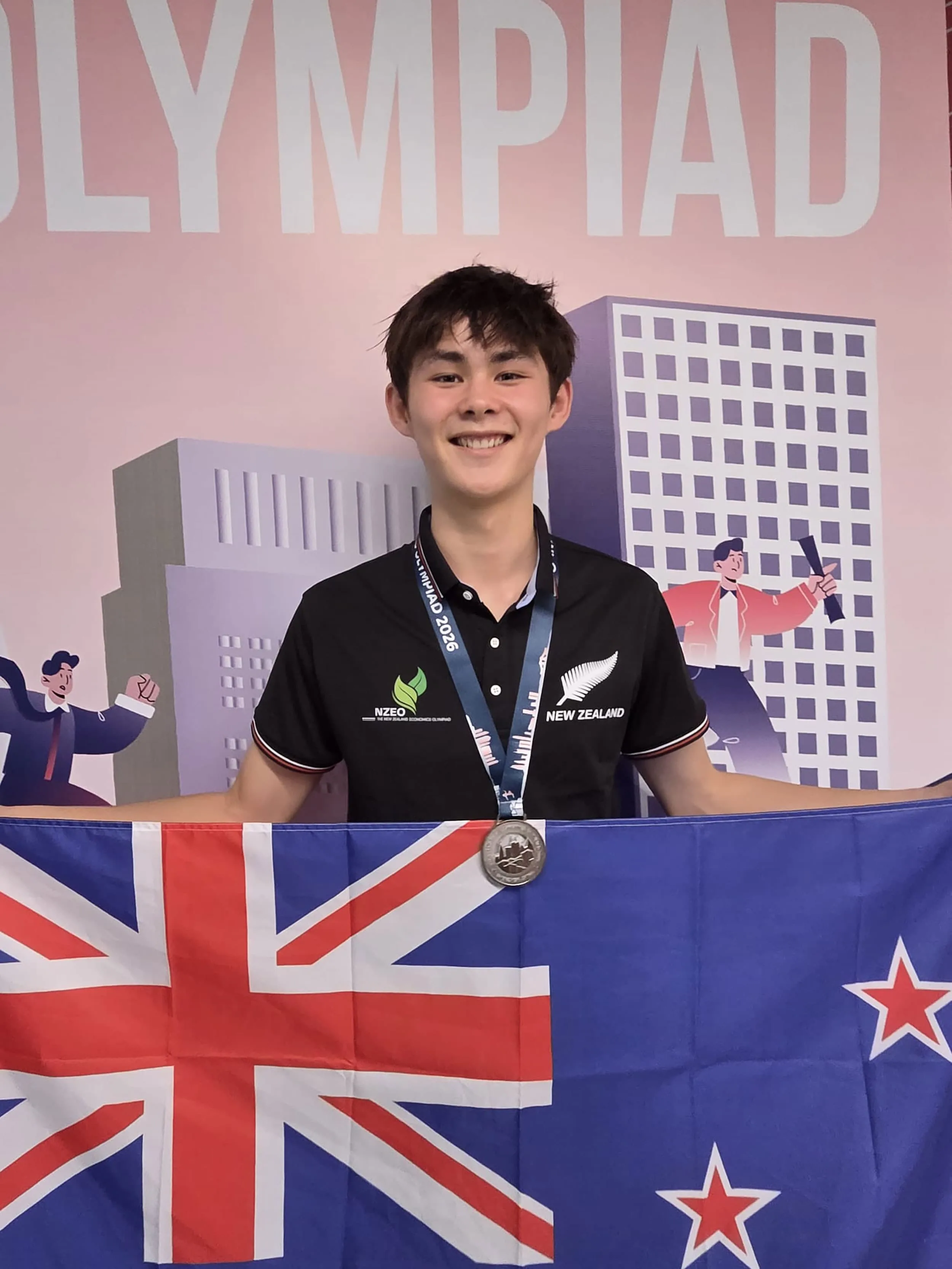
Form 7 student Toby King at the International Economics Olympiad

Form 7 student Toby King at the International Economics Olympiad.


Admission to Overseas Universities

At the end of 2025, a number of students from the class of 2021 indicated they would travel overseas to start their tertiary studies.

Griffith UniversityHarry Fan
Massachusetts Institute of TechnologyYuntao Xue
Monash UniversityTaejeong Kim
Swinburne University of TechnologyJosh Lightbourne
University of the Sunshine CoastIan Hyeon
University of SydneyLucas An
Adam Andrews
Yu-Jui Chu
Maxwell Clarke
Charles Fearon
Robbie Kelso Heap
Aaryan Maganlal
Zane Mahon
James Moh
Robert Turnbull
Matthew Wang
Luca Williams
Andy Wu
Gary Yuan
Jacob Yuan

International Young Physicists’ Tournament

The 39th International Young Physicists’ Tournament (IYPT) was held in Zurich, Switzerland in early July. The venue this year was the Swiss Federal Institute of Technology, where Albert Einstein had studied Physics and later lectured as a professor.

IYPT requires students to use the scientific method to conduct research on open-ended problems to obtain precise results. This is followed by an oral defence of their proposed solution in a debate called a ‘Physics Fight’.

Auckland Grammar students have proudly represented New Zealand in IYPT teams for 20 years and Form 7 student Zihan Mei was selected as a member of the New Zealand team this year. 35 countries participated in the tournament this year, with the New Zealand team finishing ninth overall and receiving a Silver medal.

The 2027 IYPT Tournament will take place at the University of Auckland and they are looking forward to hosting the teams of talented young physicists from around the world. A special mention must go to Head of Physics Gavin Jennings for his work with the New Zealand Young Physicists’ team.

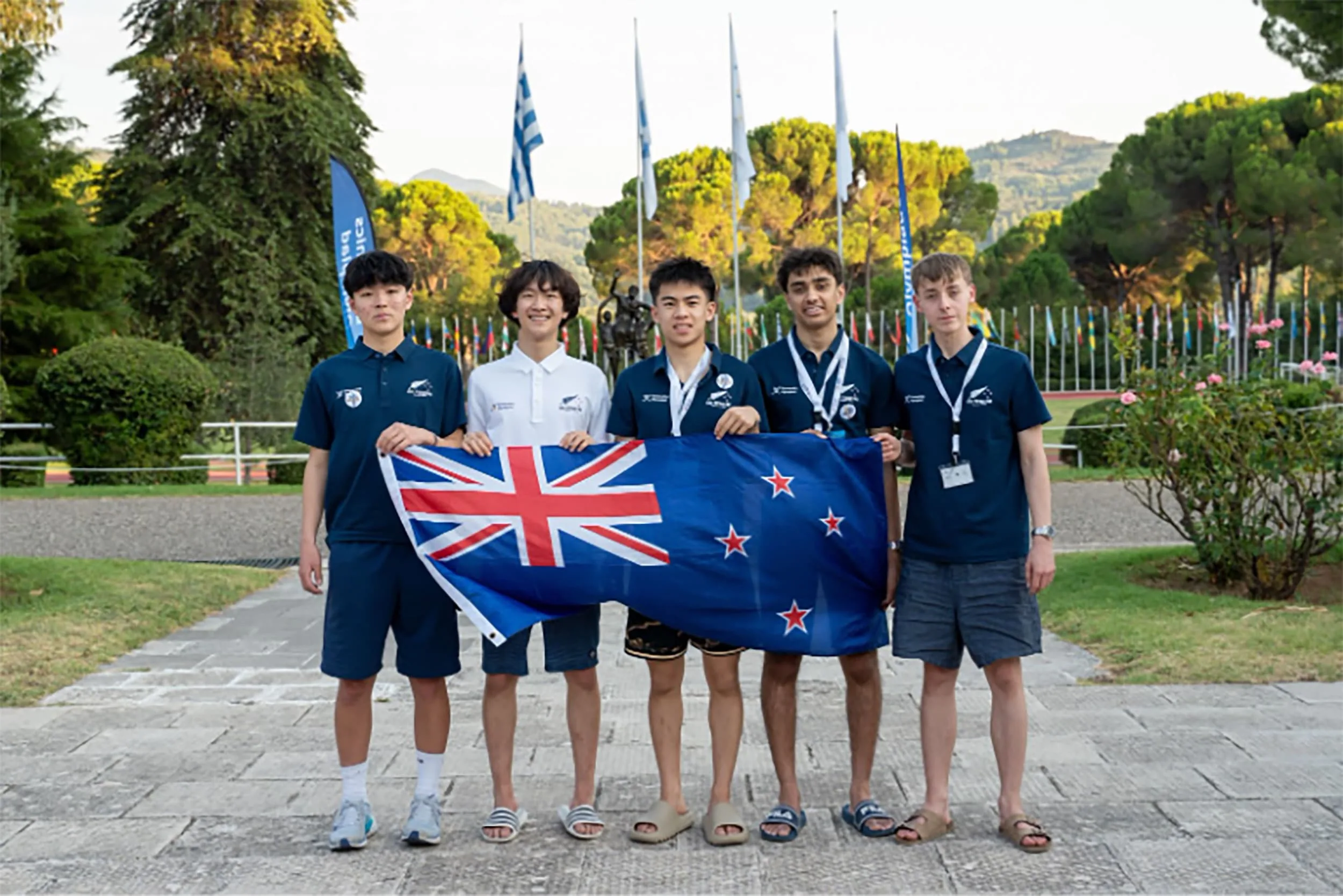
Form 7 student Zihan Mei (far right) with the New Zealand IYPT team

Form 7 student Zihan Mei (far right) with the New Zealand IYPT team.

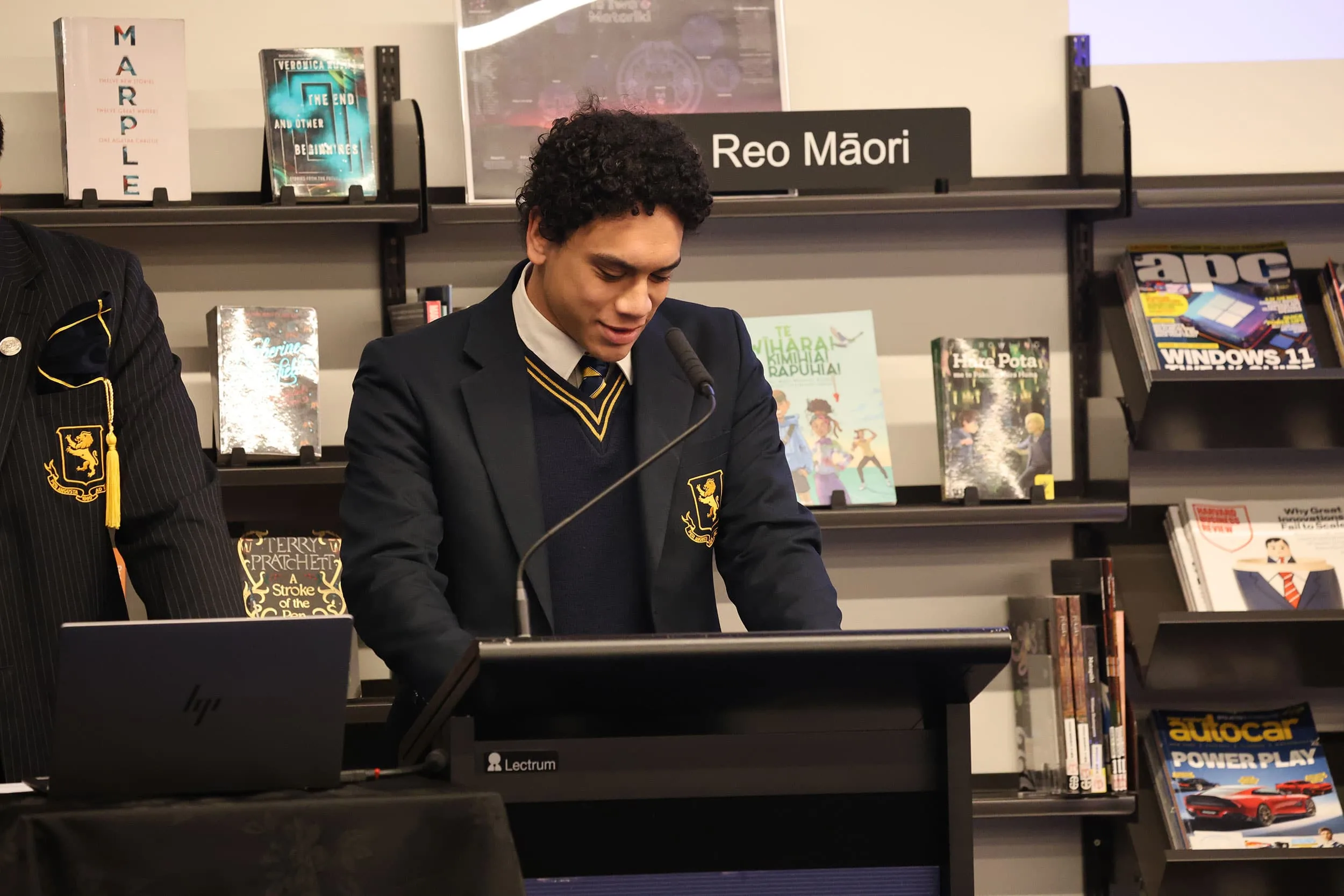
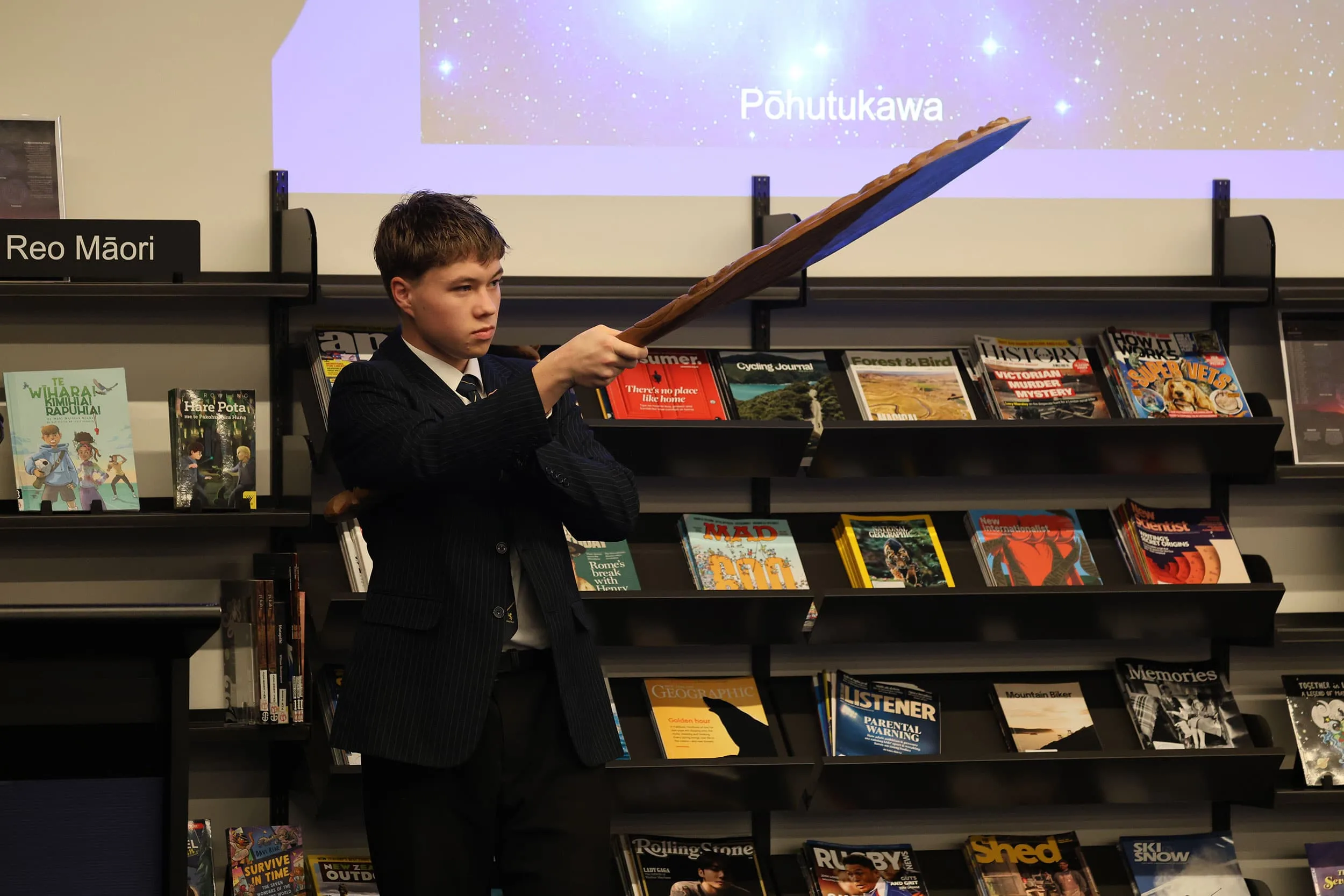
Form 7 student Victah-Levi Hopkinson explains the importance of Matariki
Extracurricular

09Extracurricular

Interact Group

Interact, the school-based branch of Rotary, has run at Auckland Grammar School for the past 15 years. Throughout the year, members take part in a number of projects, including restoring Windmill Park through litter collection, weeding and native planting, making survival blankets for people sleeping rough out of clean chip packets, assisting at the Ngatira Tennis Centre with blind, low-vision and ASD kids, and knitting Peggy squares to be made into blankets for The Premmie Knitting Club, which are then distributed to families with premature babies.

In Term 1, the group collected books for the Story Store and raised funds for the Cancer Society through the seven-hour Relay for Life, while activities in Term 2 focused on collections of food and clothing for the Auckland City Mission’s health centre and kitchen.

Term 3 is the busiest term for the group. In early August, students participated in a two-day donation drive for NZ Blood, a quiz night with students from Epsom Girls’ Grammar School raising money for Beyond Water Global, the annual Daffodil Day appeal for the Cancer Society, and the Christmas Book Appeal donating new books to Kiwi Christmas Books for families in need.

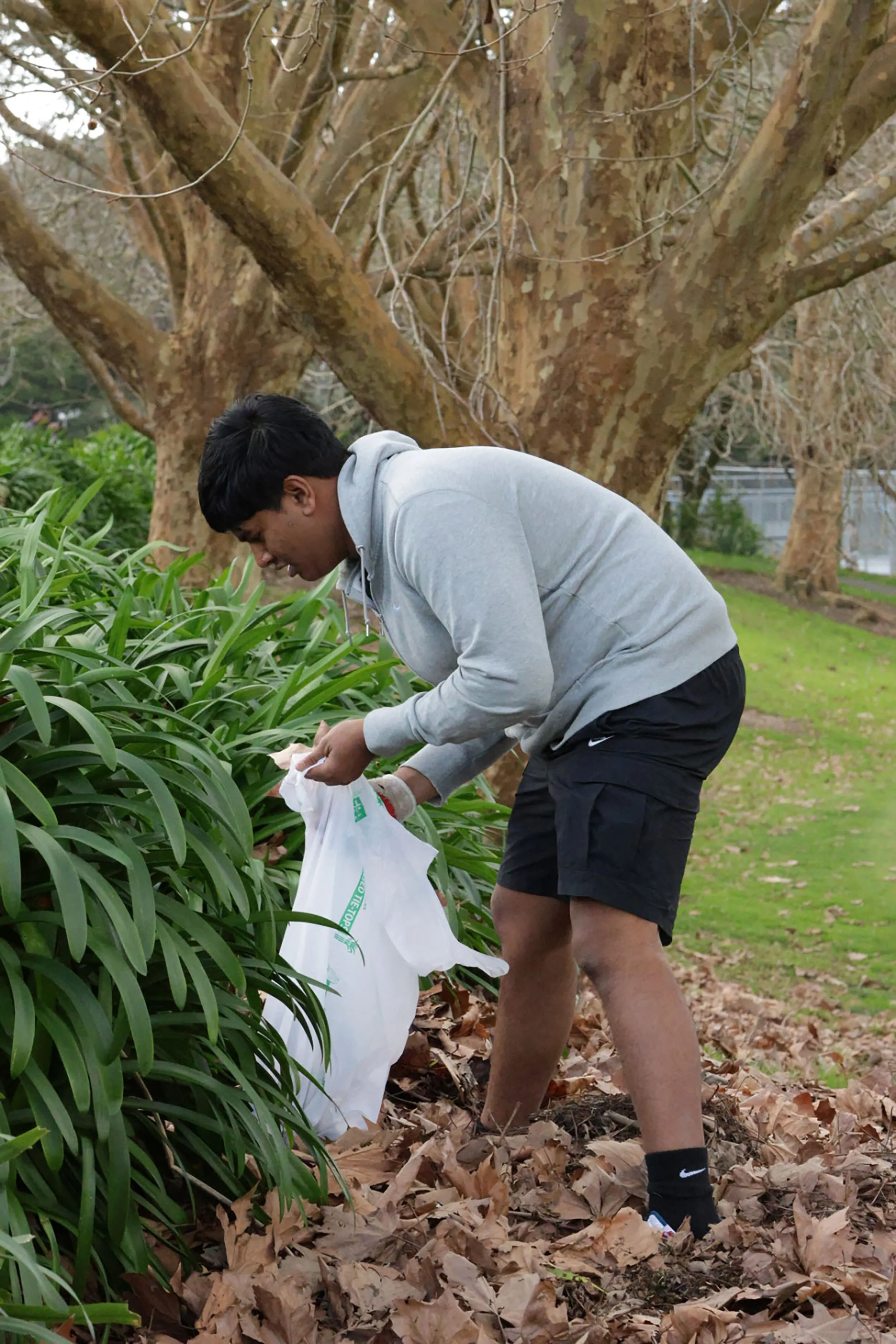
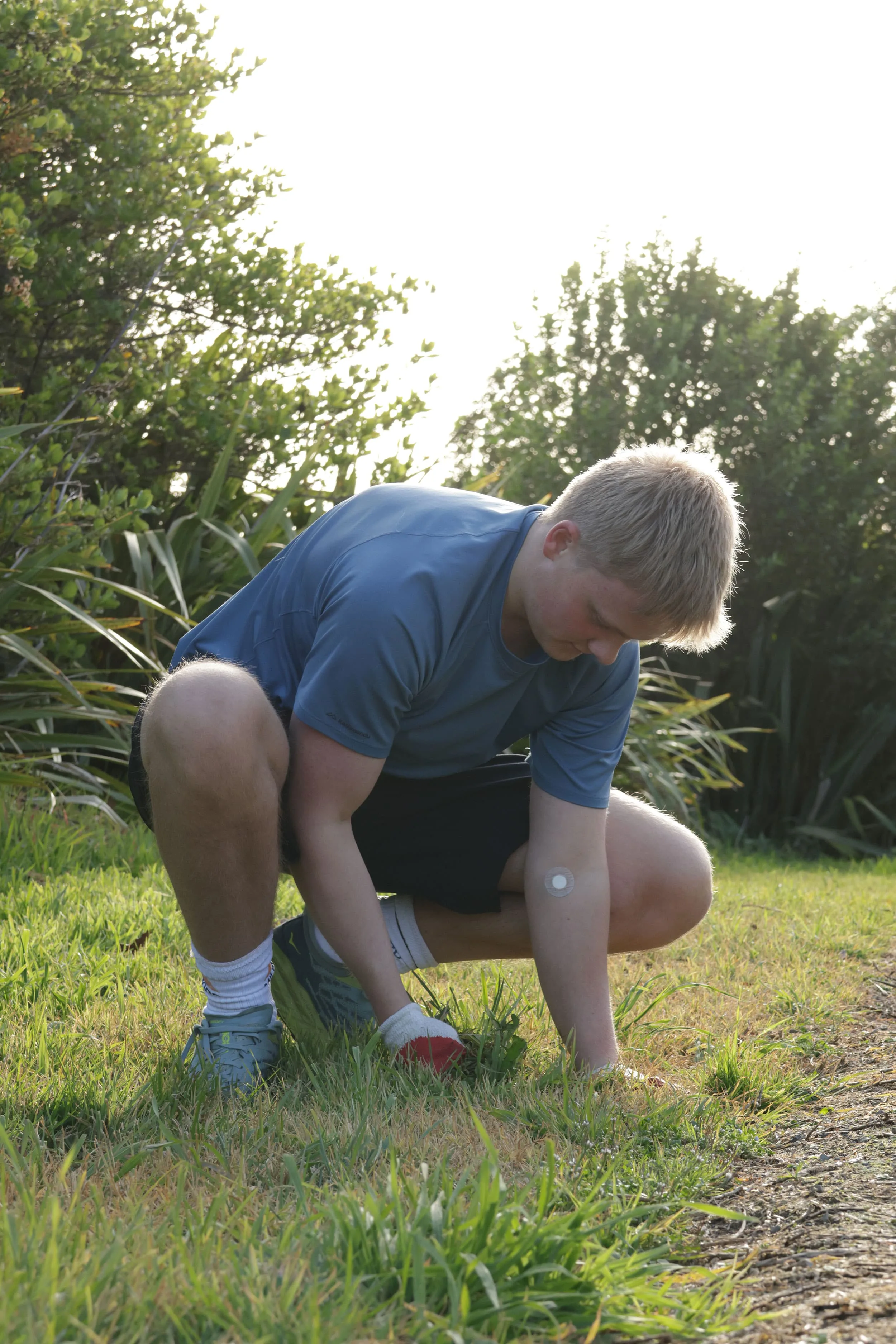
Senior students pick up rubbish and plant native trees as part of the Windmill Park Restoration Project A student plants native trees as part of the Windmill Park Restoration Project

Senior students Akshay Patel (left) and James Covacich pick up rubbish and plant native trees as part of the Windmill Park Restoration Project.

Mānawatia a Matariki

Just prior to the end of Term 2, Auckland Grammar School hosted its annual Matariki celebration. Matariki is the Māori name for the Pleiades star cluster that rises on the right side of Rangitoto in the Waitematā during winter. Matariki (Māori New Year) is a time to honour ancestors who came before, celebrate the present, and welcome the future alongside family and friends.

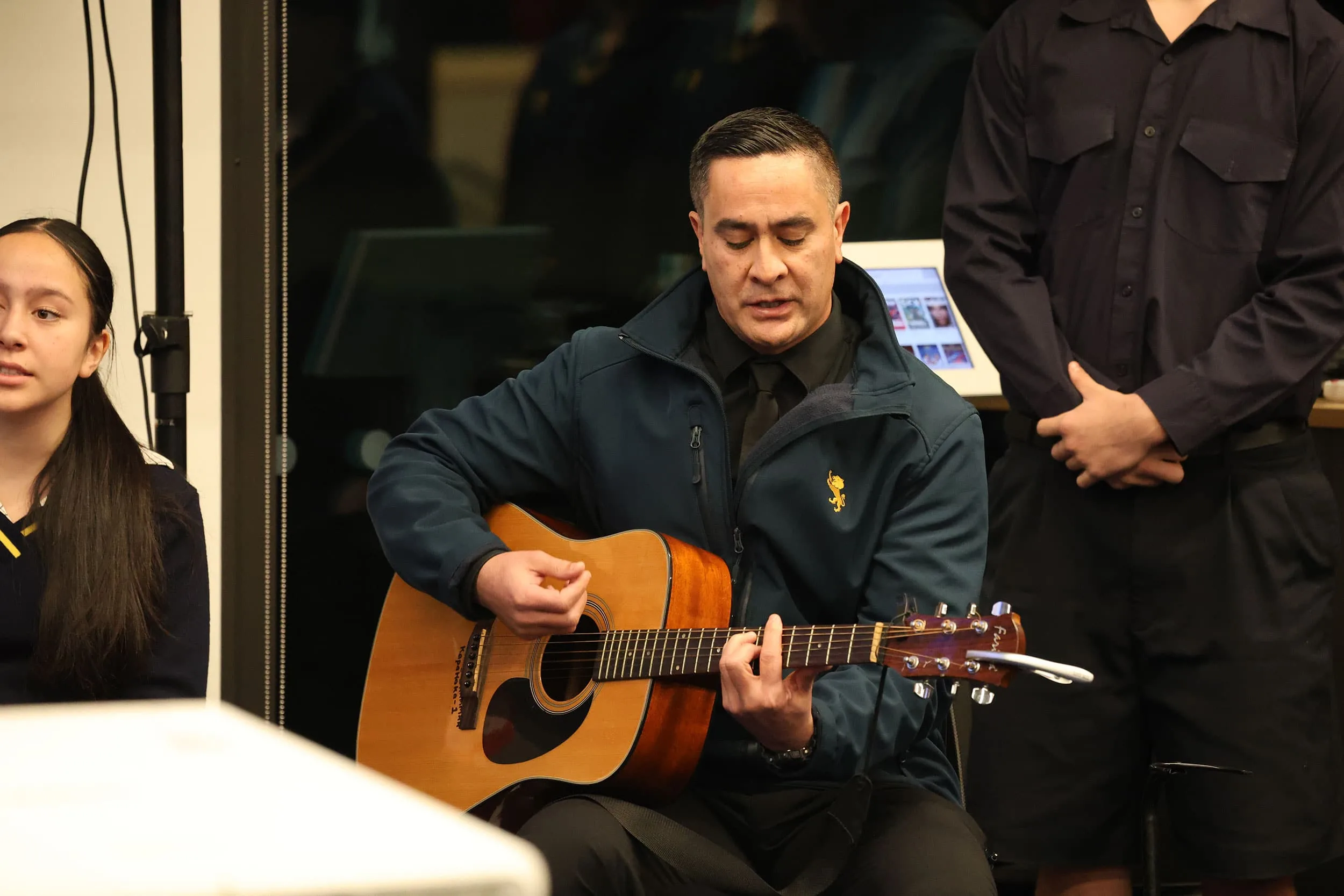
Led by senior Te Reo Māori students, the celebrations took place in Te Ara Mātauranga, with the playing of traditional Māori instruments and a special karakia delivered by Form 6 student Lincoln Evans. Whānau and friends who attended were able to develop and strengthen their understanding of this process.

Prefects Marlee Jacobs, Ryland Te Tamaki and Nīkau-Te Ha Thorpe and Form 7 student Victah-Levi Hopkinson delivered a presentation that identified the various sections involved in acknowledging Matariki. Information was also shared about how Matariki is celebrated in other islands such as Tonga and Sāmoa.

Guests reflected on the past and remembered friends and family who had passed on during the year. Whānau then experienced how the stars were utilised to make plans for the future, including Hiwa-i-te-rangi, the youngest of all the stars in the cluster, which is associated with dreams and aspirations. Following this, senior students invited everyone to the Heritage Room for refreshments.

Tibbs House Head Prefect Ryland Te Tamaki Head of Faculty - Languages, Matua Carlin Shaw, performs during the Matariki celebrations

Tibbs House Head Prefect Ryland Te Tamaki. Head of Faculty — Languages, Matua Carlin Shaw, performs during the Matariki celebrations.

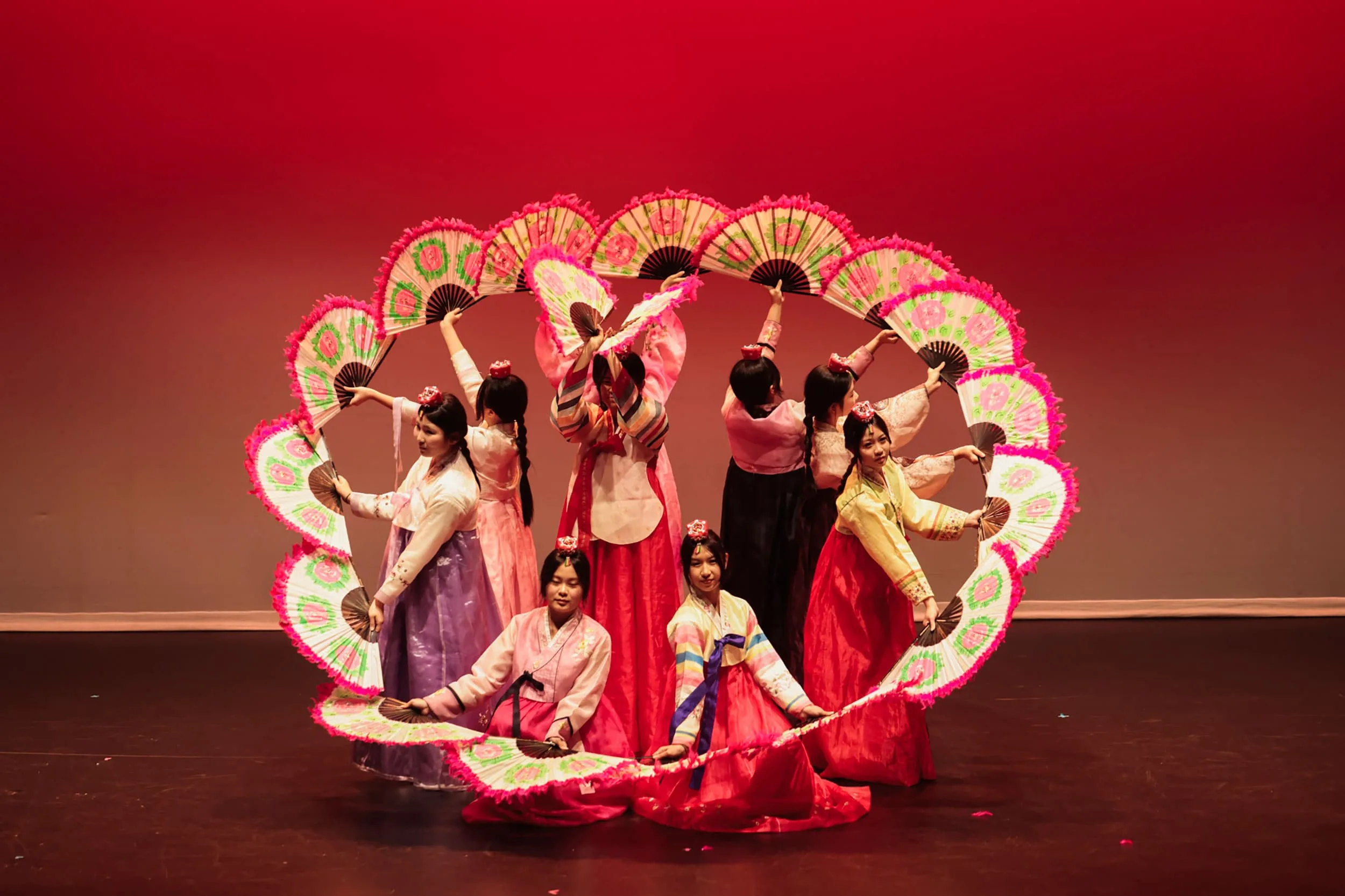
The Korean Fan Dance at the Korean Cultural Evening

10Arts and Culture

Minister’s Plate Competition

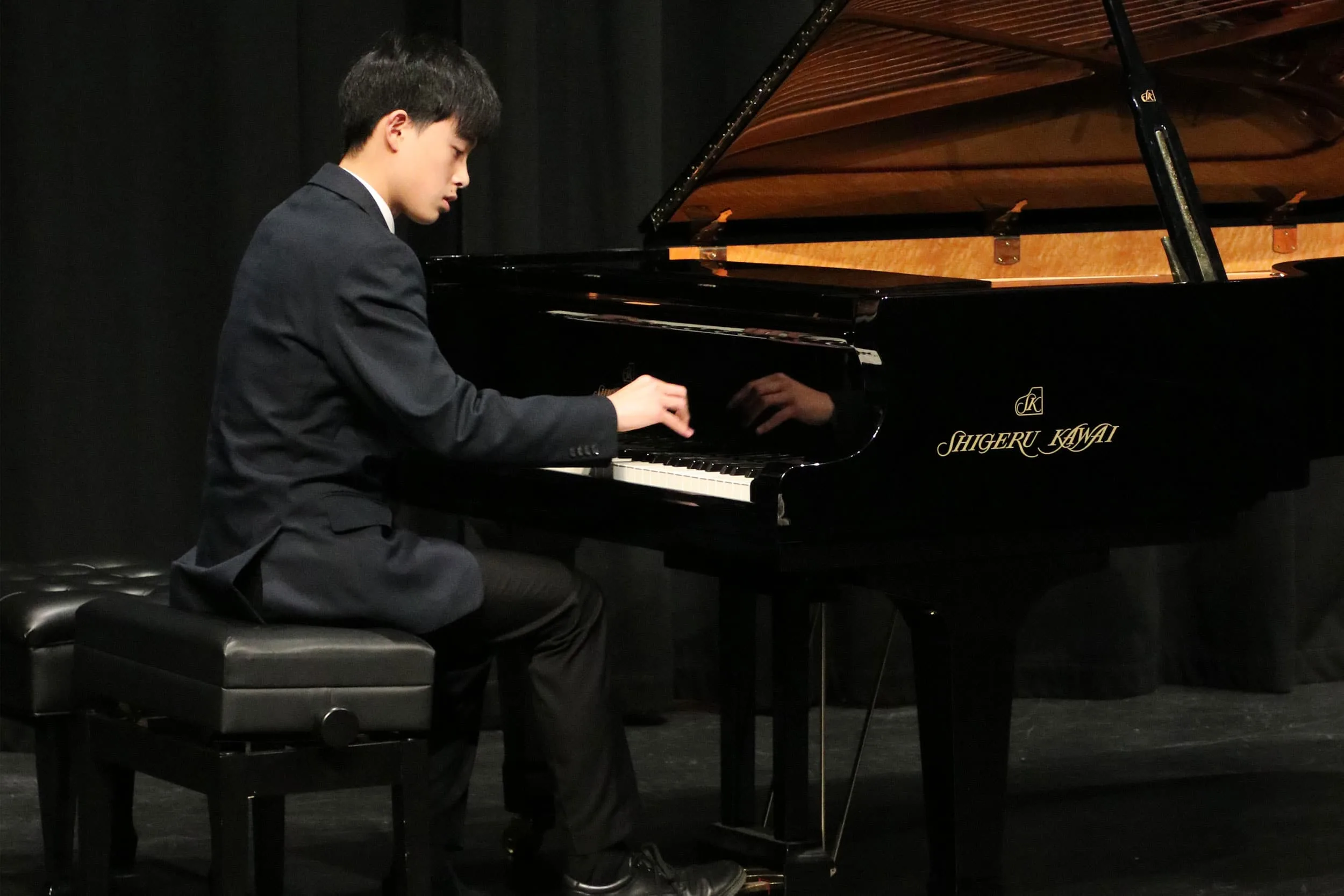
Each year, the Minister’s Plate Music Competition brings together Auckland Grammar School’s most accomplished solo musicians for an evening of outstanding performance. The tradition dates back to 1984, when the late Merv Wellington, then Minister of Education, presented the School with a silver plate to mark the opening of the Music Suite. The Amos family followed two years later with a matching plate, giving rise to the Junior Music Plate.

With adjudication provided by Huw Dann, Section Principal Trumpet of the Auckland Philharmonia, the Junior Music Plate was awarded to Form 4 student Ryan Yeh (piano) for his performance of Rachmaninov’s transcription of Kreisler’s Liebesleid, which the adjudicator praised as a “very clear, strong musical voice and a mature sense of space.” Ryan has achieved numerous awards nationally and internationally in both piano and cello.

The Minister’s Plate winner was Form 5 student Ethan Wang (piano), whose rendition of Chopin’s Ballade No. 3 in A-flat Major was called a “musically mature performance, delivered with flair, poise and a great musical personality.” Runner-up honours went to Form 7 student Hanzhao Chen (flute), who tackled the demanding Presto Energico from Liebermann’s Sonata for Flute and Piano.

Minister's Plate winner Form 5 student Ethan Wang on the piano

Minister’s Plate winner Form 5 student Ethan Wang on the piano.


KBB Music Festival

In early August, six Music groups competed at the annual KBB Music Festival at the Holy Trinity Cathedral and St Mary’s Church.

Concertante, the School’s string ensemble established in 2024, continues to grow in both size and musical ability. This year marked the second year the group was competing and they tackled repertoire spanning the Classical and Romantic periods through to film music, offering valuable performance experience for our younger and developing musicians.

Grammar Virtuosi delivered a challenging programme with impressive technical skill, musical understanding and ensemble awareness, earning a Silver Award.

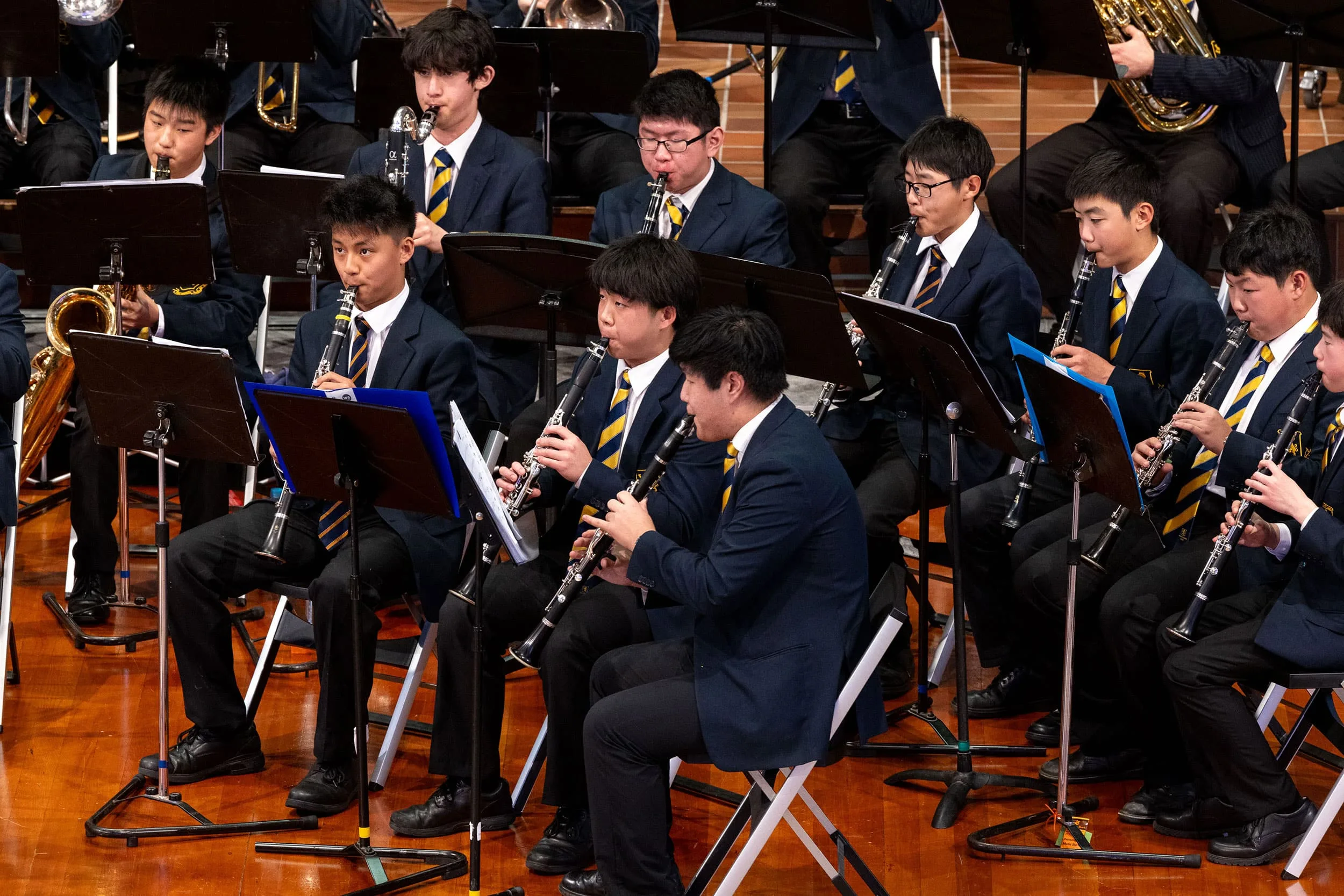
The Wind Band brought energy and confidence to four entertaining works, also earning a Silver Award. This is a strong result that reflects the ensemble’s growing musicianship and the progress made throughout the year.

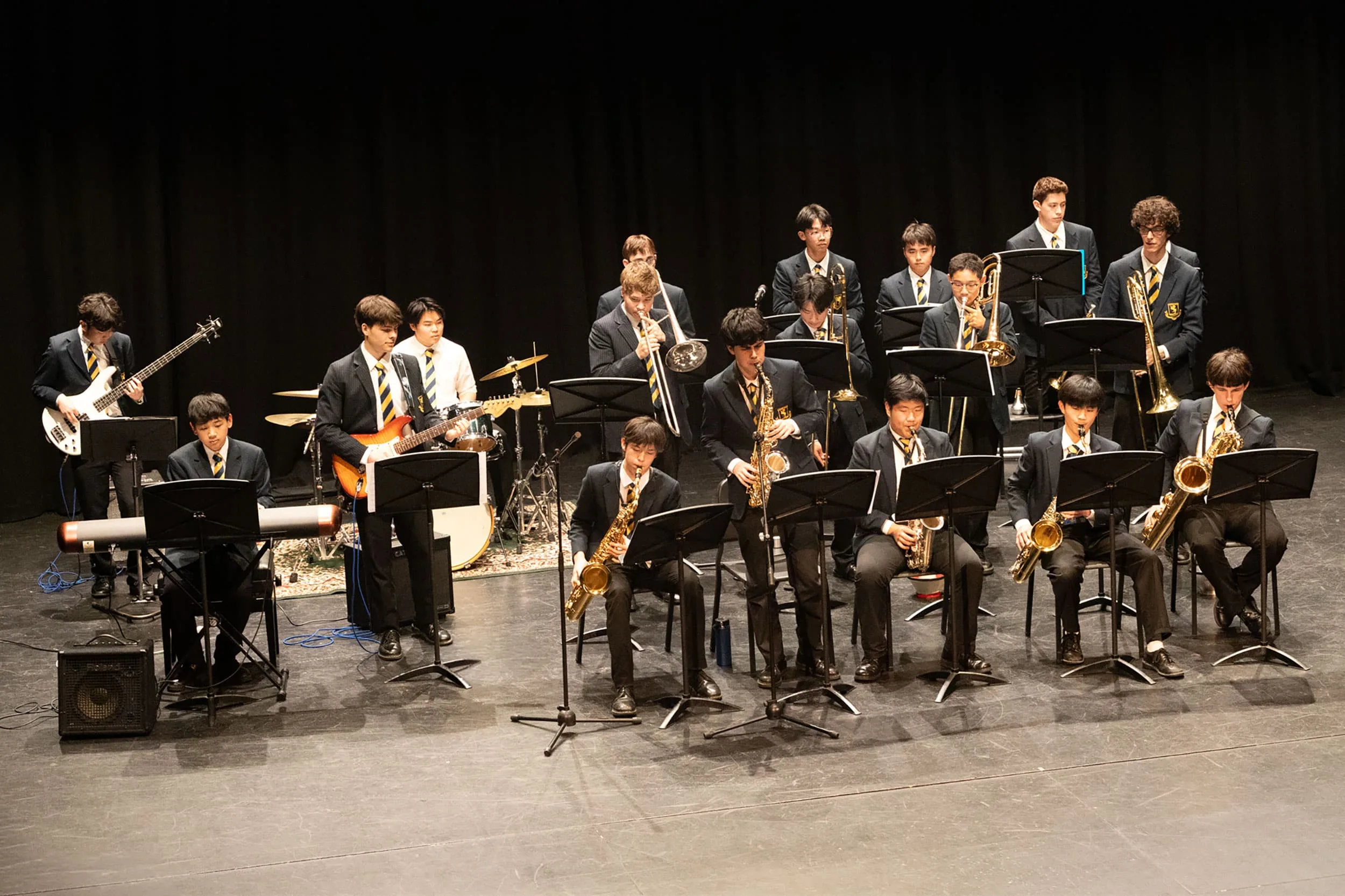
The Big Band followed up their Gold Award at the Auckland Secondary Schools Jazz Competition the previous week with another accomplished performance, receiving a Silver Award. With Elliot Gray at the helm for the first time, these results are a particularly encouraging start.

The Symphony Orchestra gave a polished, well-prepared account of three demanding works, with the group receiving a Silver Award. It is a fitting reflection of the orchestra’s ongoing development and the students’ dedication.

The Concert Band impressed with a varied programme spanning multiple styles, showing maturity, technical control and a strong sense of ensemble. The group received a Gold Award, and they were also selected to perform at the Gala Concert; a significant achievement for the group.

Five students were also chosen to play in the Honours Orchestra, playing with other students alongside two highly respected music educators — Hanzhao Chen (flute), Kelvin Chen (viola), Ben Liu (cor anglais and oboe), Ryan Wang (clarinet) and Daniel Yu (cello).

Congratulations to all musicians on their preparation and commitment. These results reflect the level of excellence and the high standard of musicianship within the Music Department.

The Concert Band performing at the KBB Music Festival

NZCBA National Festival

Just prior to the end of Term 2, the School’s Concert Band and Wind Band competed at the annual New Zealand Concert Band National Festival in Cambridge. Both groups gave outstanding performances, with each earning a well-deserved Silver Award.

The Concert Band performed a varied programme of Persis (James L. Hosay), Solas Ané (Samuel R. Hazo) and Cajun Folk Songs (Frank Ticheli). Their performance demonstrated strong technical control and musical contrast, earning praise from the adjudicators. The Wind Band made its debut at the festival playing four pieces: Joy (Frank Ticheli), Friday the 13th (Thomas Doss), A Song of Hope (James Swearingen) and Abracadabra (Frank Ticheli). The ensemble also received the Style Award for Excellent Performance of an Entertaining Work.


Upper North Island Cadenza

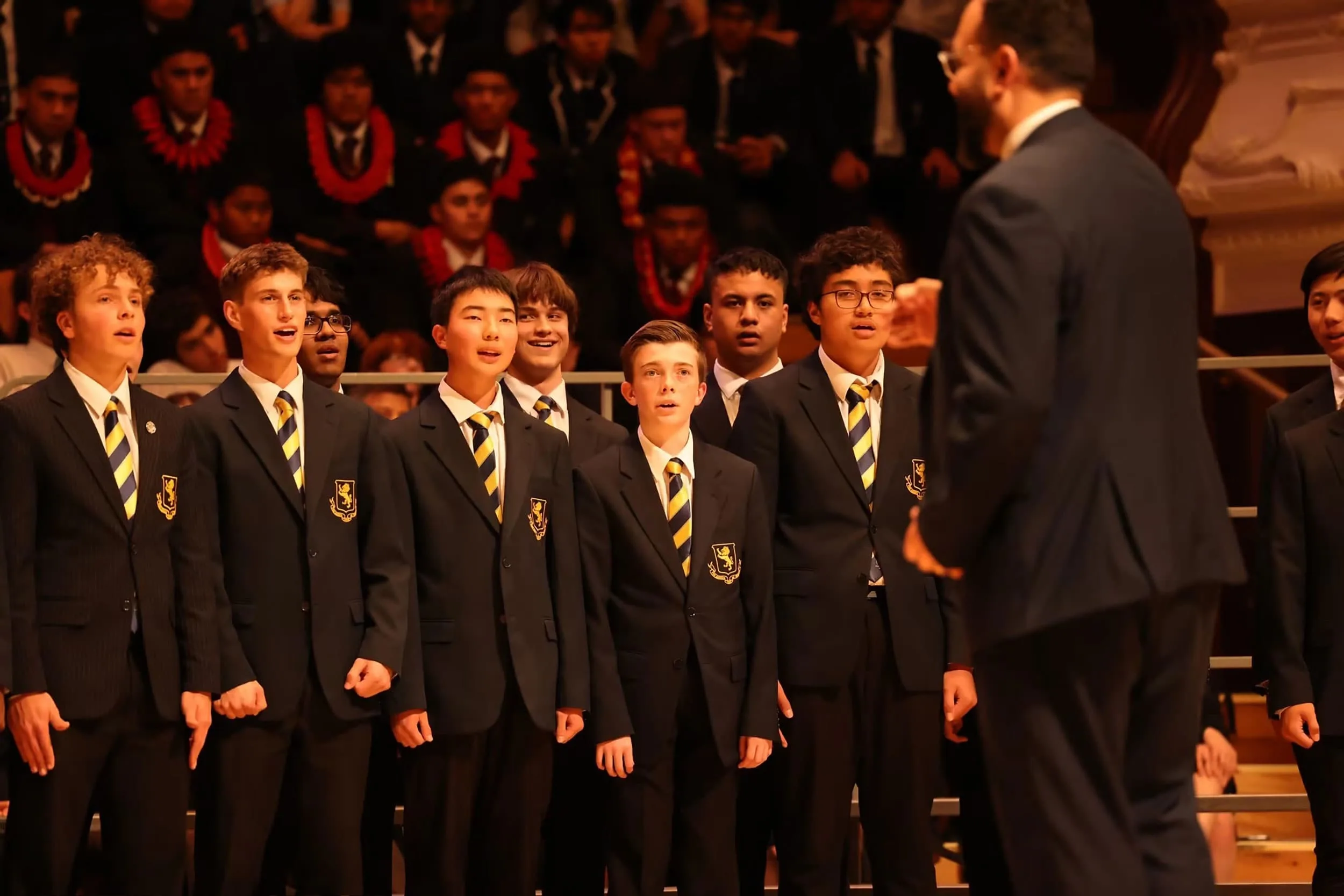
After success at the Big Sing Regional Competition, the School’s auditioned choir, Grammarphonics, competed at the Upper North Island Cadenza in August, held at the Sir Howard Morrison Centre in Rotorua. Cadenza is a competitive, finale-style event covering two days of competition with 24 choirs from 12 different schools.

The festival was a valuable experience for the ensemble, providing an opportunity to perform, learn and reflect on their strengths and areas for development. Grammarphonics performed well across the two days of competition and also joined forces with the other participating schools to form a mass choir.

The competition concluded with Grammarphonics receiving a Silver Award; a very pleasing result that reflects the students’ hard work and commitment throughout the year.

Grammarphonics performed in the Big Sing Regional Competition

Grammarphonics performed in the Big Sing Regional Competition at the Auckland Town Hall, prior to the Upper North Island Cadenza.


Auckland Jazz Competition

The School’s Big Band and Jazz Combo competed in the Auckland Jazz Competition held at the Birkenhead RSA in August.

The Jazz Combo opened their three-piece set with Caravan, featuring a tenor saxophone solo from Henry Wong on tenor saxophone. The modal jazz classic Nardis followed, highlighting subtle dynamics and intricate interaction, featuring standout solo work from Henry Wong and Joshua Benson on bass guitar, before their final piece Chick’s Pain closed their set with tightness and driving rhythmic momentum, earning them a Gold Award.

The Big Band presented a programme that showcased both section cohesion and individual solo talent across multiple jazz styles. The group’s set included the Miles Davis classic Four, the smooth, relaxed ballad Li’l Darlin’ by Neal Hefti and finished with a powerful rendition of Jazz Police. The band was also presented with a Gold Award for their high-level musicianship, ensemble precision, and dynamic solo performances.


Winter Concert Series

The School’s annual Winter Concert Series once again showcased the talent and dedication of Auckland Grammar School’s young musicians with more than 240 students performing in a wide range of ensembles, presenting a programme spanning classical masterworks, jazz, contemporary repertoire and traditional music.

Grammar Virtuosi opened Winter Concert I, whose performances of John Ritchie’s Aquarius, Tchaikovsky’s Serenade for Strings and Vivaldi’s Winter from The Four Seasons displayed outstanding technical skill and musical expression. The Jazz Combo had a three-piece set featuring Chick’s Pain, Miles Davis’ Nardis and Duke Ellington’s Caravan, demonstrating confident improvisation and impressive ensemble playing.

Grammar Voices, the School’s all-comers choir, has continued to flourish as a large and enthusiastic choral ensemble. Their programme included the Samoan folk song Lota Nu’u, Ubi Caritas by Ola Gjeilo and the uplifting spiritual Wade in the Water. Chamber musicians followed with David Hamilton’s Carousel for saxophones and piano, before Grammarphonics presented Scarborough Fair and Northern Lights, highlighting the versatility and musical maturity of our choral and chamber ensembles.

The evening concluded with the Big Band, whose energetic renditions of Gordon Goodwin’s Jazz Police, Miles Davis’ Four and Jimmy Webb’s MacArthur Park brought the audience to its feet.

Winter Concert II celebrated the breadth and diversity of the School’s larger Music groups. The Pipe Band played a traditional Scottish repertoire which created an exciting opening. Concertante, the School’s intermediate string ensemble, performed works by Edward Elgar and Karl Jenkins with poise, while the flute, oboe and clarinet trio presented engaging performances of works by Malcolm Arnold and Paul de Wailly.

The Symphony Orchestra continued the programme with Douglas Lilburn’s Aotearoa Overture and the dramatic The Hut on Hen’s Legs (Baba Yaga) from Mussorgsky’s Pictures at an Exhibition, bringing energy and grandeur to the stage. The Concert Band then delivered a powerful performance of James Hosay’s Persis and Samuel Hazo’s Solas Ane, providing a spectacular finale to two memorable evenings of music.

The Big Band closed out Winter Concert I with an energetic set

The Big Band closed out Winter Concert I with an energetic set.


Chinese Extravaganza

In late July, students from Auckland Grammar School and Epsom Girls’ Grammar School held their annual Chinese Extravaganza at the Raye Freedman Arts Centre. The student-led event was an incredible success, selling over 700 tickets across three shows. This ensured a sold-out venue which reflected the strong sense of cultural pride and support from both school communities.

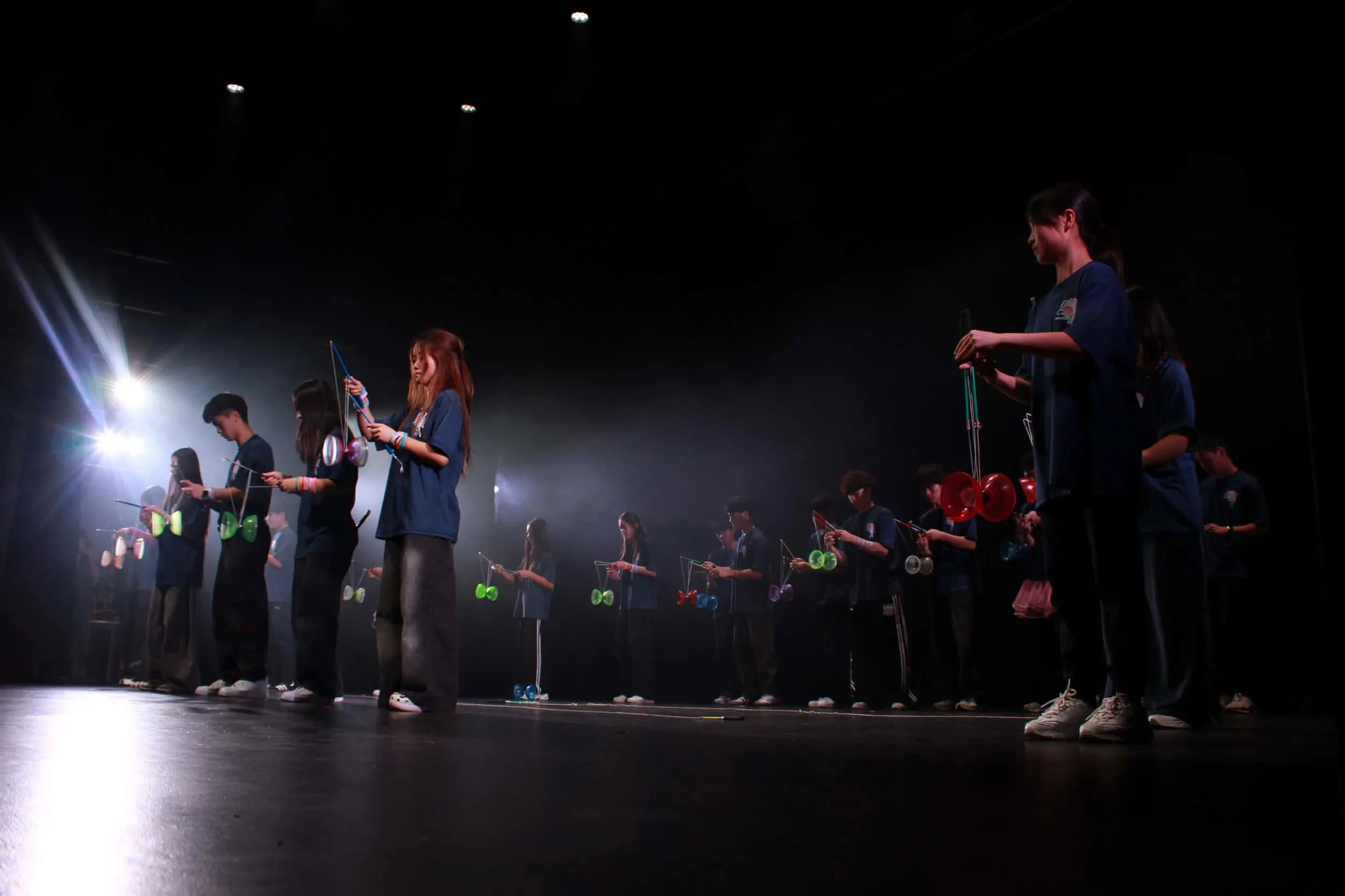
Over 170 students worked for months to put the show together. Kicking off with an energetic Lion and Dragon dance to symbolise good fortune and prosperity, the Traditional Dance group performed elegant fan and umbrella pieces that balanced seamlessly with dynamic routines from the Modern Dance team. Musical items by the Chamber group and Mixed Choir delivered rich melodies, complementing a light-hearted Chinese Drama performance and the impressive, high-energy tricks of the Diabolo group.

The success of the production relied heavily on the tireless behind-the-scenes efforts of the Media group, who produced an engaging short film to open each show, and the Backstage crew, who ensured a seamless program throughout. The group extends their thanks to everyone whose hard work made this performance possible, including the Masters in Charge Ellen Peacock and James Yeh for giving up their time to supervise rehearsals and show nights. They are looking forward to continuing this legacy in 2027.

Students perform the traditional Diabolo at the Chinese Extravaganza

Students perform the traditional Diabolo at the Chinese Extravaganza.


Korean Cultural Evening

The Korean Cultural Group delivered another stellar Korean Night in June, playing to sold-out crowds in the Centennial Theatre.

The production began early in Term 1 with a strong turnout at auditions, bringing together over 100 students from Auckland Grammar School and Epsom Girls’ Grammar School. Student leaders, led by Kihwan Lee and Seungmin Lee, crafted every element of the show themselves, from choreography and scripts to design and props. The result was a professional, high-energy production that lived up to its reputation as one of the school’s most anticipated events, with queues forming well before doors opened.

The programme spanned the breadth of Korean culture: melodramatic K-Drama scenes, powerful Taekwondo demonstrations, the traditional Fan Dance, soulful K-Band performances, and edgy K-Rap. The Korean Modern Dancers brought the house down while the thunderous Nanta drummers (having performed in assembly and the School’s inaugural Lunar New Year event) were once again a highlight for the audience.

The group would like to thank Messrs Elliot, Evans, Ioelu, Kim, Lee, and Watt who worked tirelessly behind the scenes to help make the event a reality. Despite past uncertainty over enrolments, students’ passionate commitment has kept the tradition alive. With growing global interest in Korean culture, the group looks set to keep flourishing as a treasured part of Grammar life.

The Korean Fan Dance is always a highlight of the evening

The Korean Fan Dance is always a highlight of the evening.


Sri Lankan Cultural Group

The Sri Lankan Cultural group met on a regular basis throughout the 2026 academic year, welcoming more students and strengthening their connection to the School. In Term 1, members joined the Sri Lankan group from Epsom Girls’ Grammar School for their annual Fia Fia Night, with senior students Isuru Dharmasekara, Menul Rupasingha, Muhandiramge Rodrigo and Evin Senevirathne praised for their dedication and efforts with practices.

The group also enjoyed Cricket together on weekends and is planning a Buddhist temple visit, a community project, and a field trip to celebrate their dual Sri Lankan-New Zealand heritage.

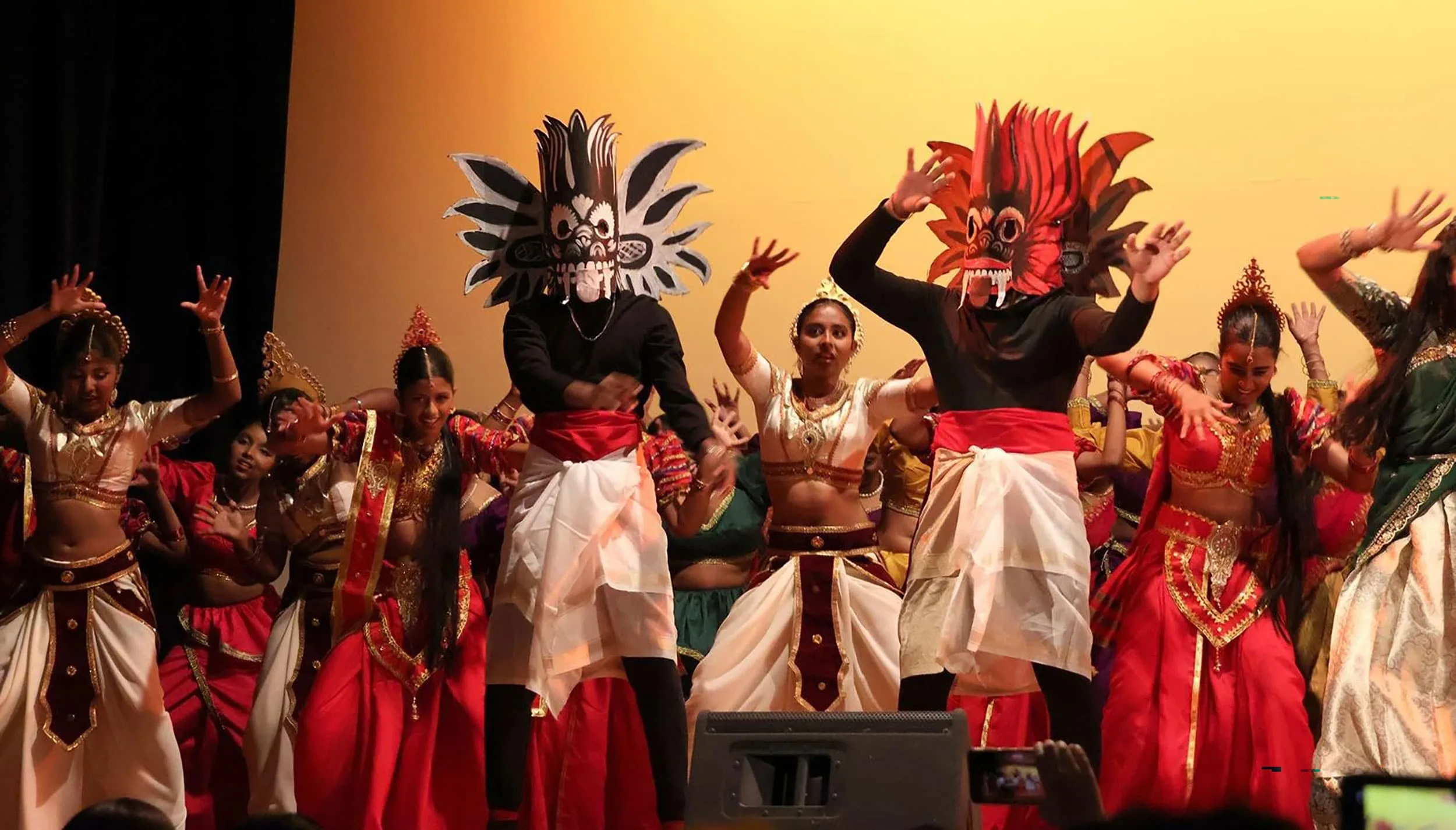
Students performing at the Epsom Girls' Grammar School Fia Fia Night

Students performing at the Epsom Girls’ Grammar School Fia Fia Night.

Form 7 student Bobby Neels looks to pass during the 1A final against Kelston Boys' High School

11Sport

Snowsports

The School’s Skiing team competed at the annual Auckland Secondary Schools Skiing Championships at Snowplanet in June. The competition included 90 students from across the region.

In the Ski Race, held over two runs, Form 6 student Nicholas Wu was fifth with a combined time of 31.28 seconds, with Form 7 student Tom Pilkington in seventh place with a time of 31.86 seconds. Not too far behind were Form 6 student Samuel Mace in 32.77 seconds and Form 7 student George Turner with 33.36 seconds. In the Slopestyle competition, Form 7 student Cameron Symonds was third in the seniors.

In the Ski Dual Championship — a knock-out competition — Form 6 student Nicholas Wu was third, with classmate Liam Zeng taking fourth place in the Dual Plate final. The team placed third overall in Auckland, with several junior students performing well.


Hockey

The 2026 season for the 1st XI Hockey team, captained by Form 7 student Joel Sansom, was one of steady growth, resilience and a number of memorable performances.

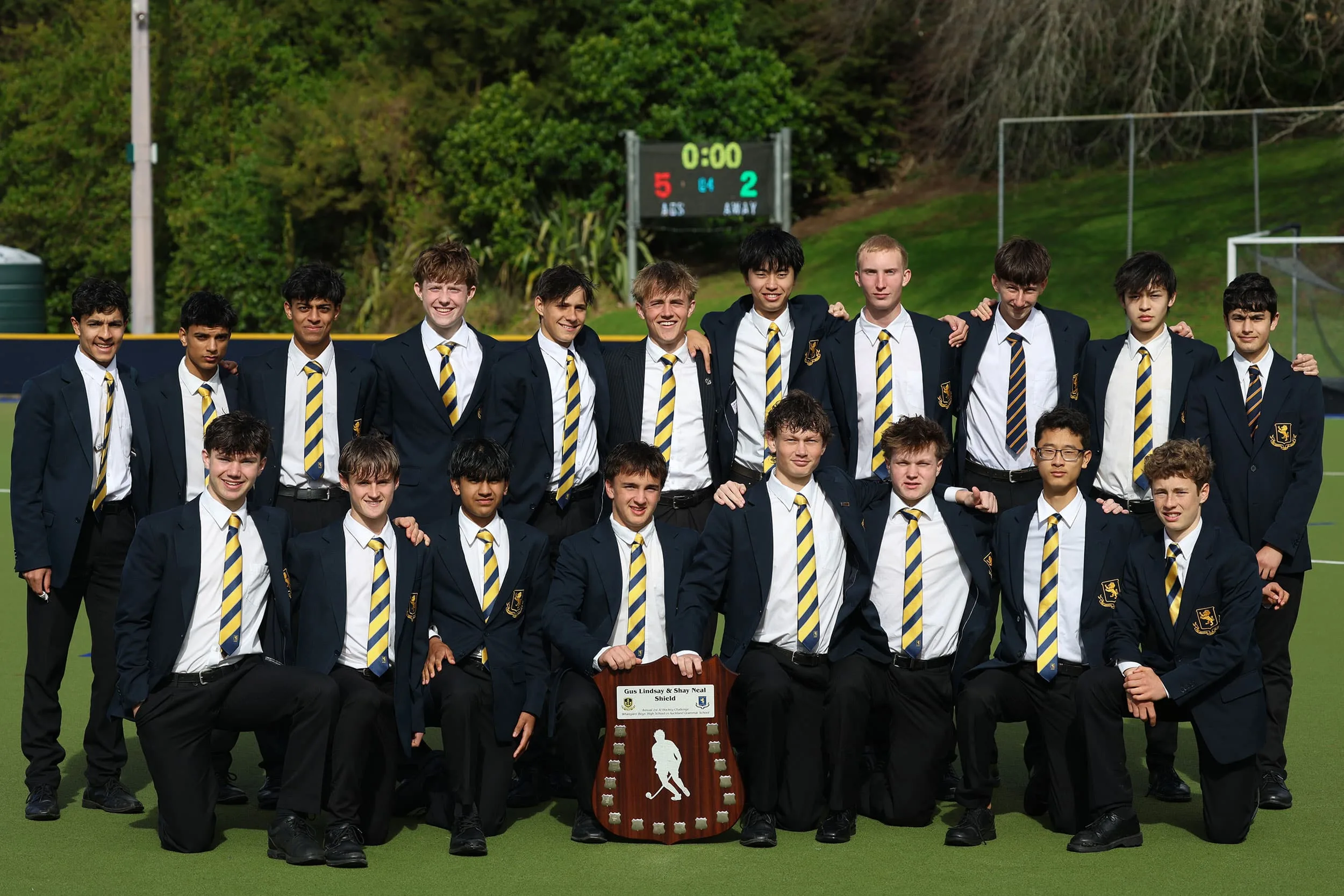
Traditional fixtures remained an important part of the season, including a 1-1 draw against Tauranga Boys’ College. A major highlight of the season came in the traditional fixture against Whangārei Boys’ High School, where the 1st XI claimed a commanding 5-2 victory to secure the Shay Neal/Gus Lindsay Shield.

In the regular College Sport competition, the 1st XI team produced victories over Sacred Heart College, Pakuranga College, Rangitoto College, St Kentigern College and Mount Roskill Grammar School.

The team remained competitive throughout the season, showing attacking quality, determination and strong team spirit. A 2-2 draw with St Kentigern set up a final playoff, in which the 1st XI team narrowly lost 3-2, finishing fourth in the Auckland competition.

The team look to the New Zealand Secondary Schools Championships in Dunedin (also known as the Rankin Cup), where they will aim to finish the 2026 season strongly on the national stage.

The 1st XI Hockey team with the Shay Neal/Gus Lindsay Shield

The 1st XI Hockey team with the Shay Neal/Gus Lindsay Shield.


Rugby

Auckland Grammar School has had a busy and successful 2026 Rugby season. A total of 14 teams were represented across different age groups and weight grades, with four teams qualifying for their respective finals.

The 1st XV team had a phenomenal season, finishing with a 17 win, one loss record. They played an exciting and impressive brand of Rugby throughout the season, which saw them progress to the final held at Eden Park against Kelston Boys’ High School. The team gave their all throughout the game despite an unfortunate 15-27 loss.

The Rugby grade finals were held in August, with the 6A and 7A teams winning their games to be crowned champions. 6A had a fantastic season, training hard and playing consistently, winning their final 53-5 against King’s College. 4B played spirited, gritty Rugby and was up for it in the final against an in-form Sacred Heart College. Unfortunately, the opposition proved too good and managed to come away with a 19-10 win. 7A trained with dedication and consistency, and had to dig deep for most of their results. They finished in the top two teams, setting up a final against Howick College. Their final was played in incredibly tough conditions, and they played with incredible heart and grit to come out victorious against a strong and ever-improving Howick team 30-0. That makes it seven years in a row for 7A, which is a remarkable achievement and a new record.

Congratulations to the following students who have been named in Auckland Rugby representative teams — Kelekolio Asi, Sol Anderson, Louie Du Plessis, Ashton Kirke, Connor Murdoch, Bobby Neels, Nico Stanley, Luke Thomson and Matayas Thomson made the Auckland Under 18 team, while Ethan Halaapiapi and Ben Stewart made the Auckland Under 18 Gulls side. In late September, Nico was also selected for the New Zealand Schools team, and Sol Anderson was selected for the New Zealand Māori Under 18 squad. We congratulate these young men on their achievements.

Form 7 student Bobby Neels looks to pass during the 1A final against Kelston Boys' High School

Form 7 student Bobby Neels looks to pass during the 1A final against Kelston Boys’ High School held at Eden Park.


Squash

In early August, the Premier Squash team competed in the National Secondary Schools Squash Championships in Christchurch, with 54 teams competing, including 31 teams in the boys’ draw competing across two separate divisions.

The Premier team, captained by Prefect Campbell Dunwoodie, began the tournament with a bye in the first round of matches, followed by 4-1 wins over both Palmerston North Boys’ High School and Wellington College. The fourth round and semi-final was against third-seed, Christchurch Boys’ High School. The Premier team rose to the occasion, securing a resounding 4-1 victory.

The final was against top-seeded Tauranga Boys College. Their team had a significant advantage in squash grading points, with three of the four students representing New Zealand at the World Junior Squash Championships in July. Tauranga Boys’ College had not conceded a single game at the tournament and, despite a determined effort, the Premier team lost 0-5 in the final, earning second place and the National Secondary Schools’ Silver medals.

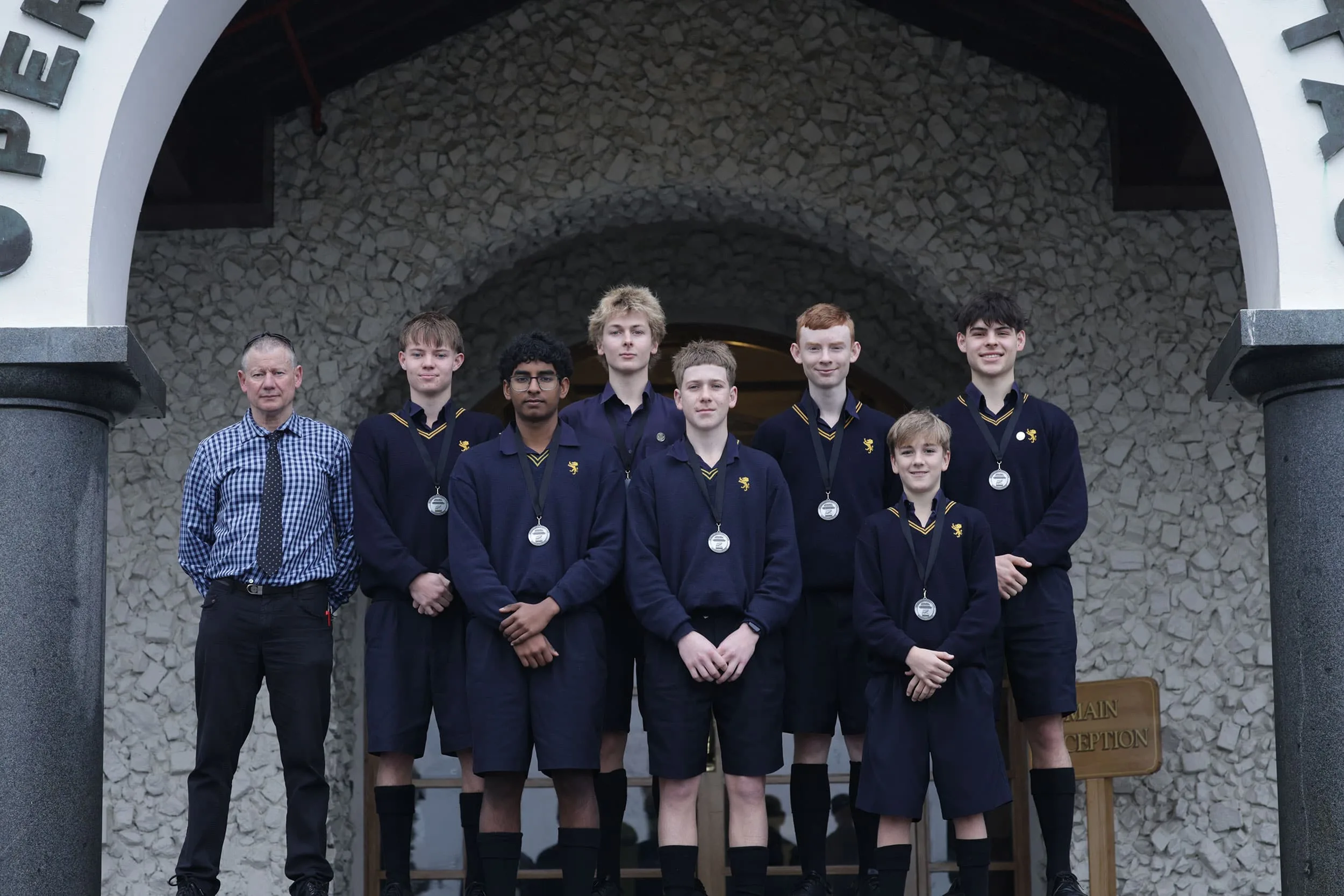
Congratulations are extended to Thevan Gunawardena who was named as a non-travelling reserve in the New Zealand Secondary Schools’ Junior Squash Team at the prizegiving ceremony. Special thanks go to the team’s manager, Simon Lassche, for his ongoing support and guidance of the students.

The Premier Squash team, captained by Campbell Dunwoodie

The Premier Squash team, captained by Campbell Dunwoodie (back row, centre).


Orienteering

During the Term 2 holidays, the School’s Orienteering team competed at the New Zealand Secondary Schools Orienteering Championships.

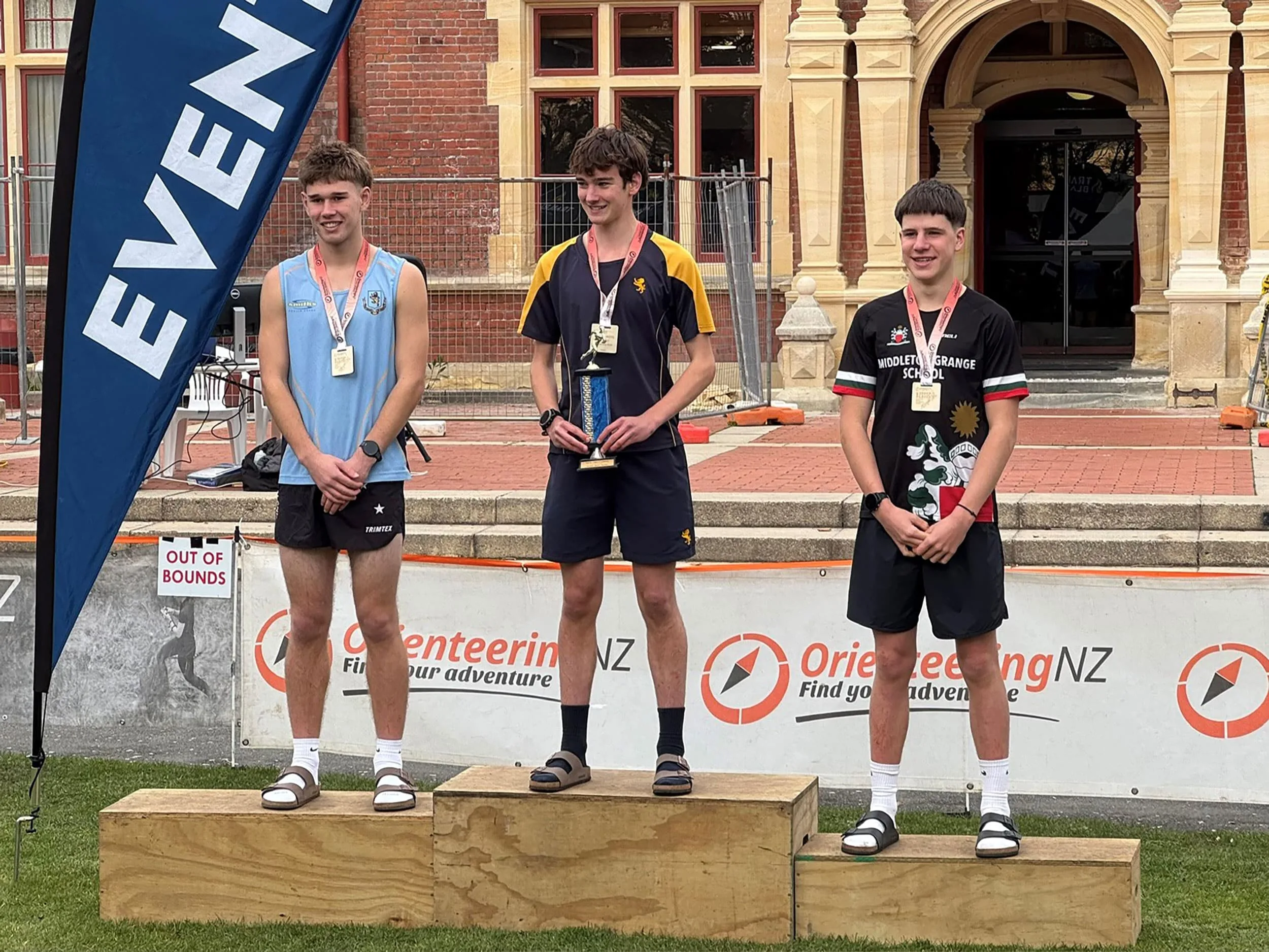
The Senior Relay team finished in fourth place, while Form 6 student Isaac Stewart placed second in the Long event and was the winner of the Sprint race held at Lincoln University. This earned him the title of National Champion in the Senior Boys’ Sprint.

On the final day of competition, the three-hour Rogaine race saw Isaac team up with Prefect Lachlan Cameron, using the hills to their advantage to place second with the Junior team of Tristan Jayasuriya, Frederik McGregor-MacDonald and Shuhan Xu finishing in fourth place. The strong results from the team over the course of the races saw the Orienteering team earn third place in the Premier Boys competition.

Form 6 student Isaac Stewart as the winner of the New Zealand Secondary Schools Orienteering Championships

Form 6 student Isaac Stewart (centre) as the winner of the New Zealand Secondary Schools Orienteering Championships.


Cycling

The School’s Cycling squad has delivered an exceptional campaign across road and track racing.

In the College Sport Secondary Schools Team Time Trial series, the Senior A team captured the WH Bigwood Memorial Trophy with a victory on Finals Day, while the Junior A squad earned third place overall.

The team also performed strongly in the Points Race, highlighted by gold-medal performances from Heston Lubeck in the Under 14 race and Levi Mitchell in the Under 17 division, with Thomas Still finishing second.

At the North Island Secondary Schools Road Championships, Auckland Grammar School placed second overall for boys’ secondary schools. The Senior A Team Time Trial squad was second, while Heston Lubeck won the Under 14 Road Race and placed second in the Criterium.

Oliver Patterson (Under 15 Road Race) and James Fearon (Under 17 Road Race and Criterium) both added second-place finishes, supported by Louie Ulmer’s third-place finish in the Under 16 Road Race.

At the Track Cycling Championships, Oliver Patterson and James Fearon secured silver medals in the Under 15 and Under 17 Individual Omniums, respectively, with James winning both the Scratch and Points races. The momentum continued in the team events, where the Senior A squad won gold in the Under 20 Team Pursuit, and the Junior A squad placed third in both the Team Pursuit and Team Sprint.

Overall, it has been a successful season for the Cycling squad. At the time of printing, the team was preparing for the New Zealand Secondary Schools Road Championships just prior to the end of Term 3.


Swimming

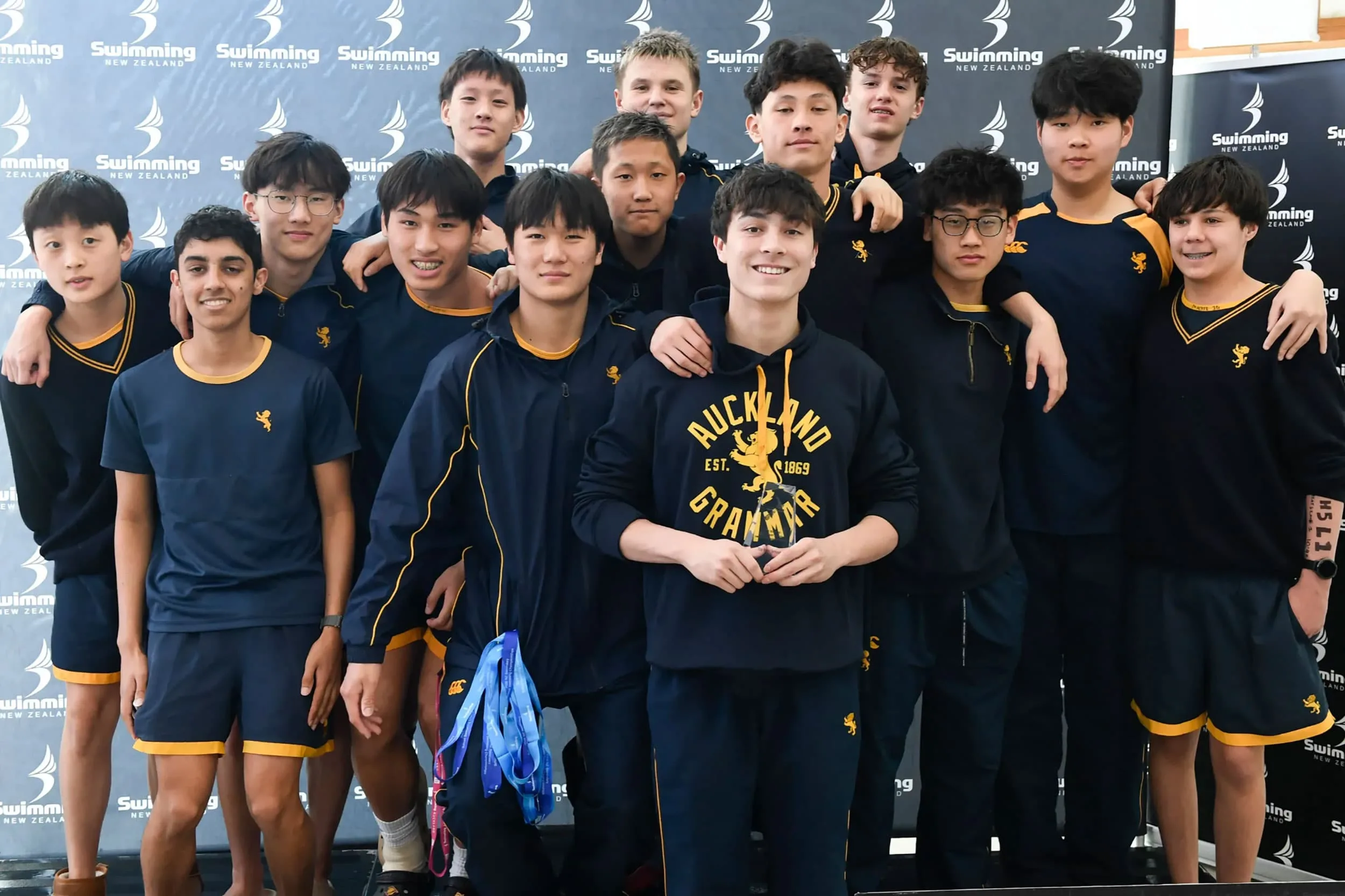
In July, 15 students represented the School at the New Zealand Secondary Schools Swimming Championships. Many swimmers set new personal bests in their individual events, while relay teams continued to secure five medals.

Form 7 student Yen-Cheng Lee achieved a personal best time of 1:07.88 in the 100m Breaststroke final, with Form 6 student Daniel Ecclestone securing Gold in the 100m Butterfly in a personal best time of 55.73 seconds.

In the 200m Freestyle, Form 5 student Tyler Lushkott sprinted back from sixth place to third in the last 50m, earning a well-deserved Bronze medal. He also won the Intermediate National title for the 400m Freestyle.

The Senior 4x50m Relay team displayed real grit to earn Bronze, while momentum continued in the 8x50m relay race with the team earning the Silver medal, beating Hamilton Boys’ High School by just 0.21 seconds. The greatest achievement of the tournament was winning the National title of Top Boys’ School, demonstrating the team’s strength throughout the competition.

The Swimming team, winners of the Top Boys' School title

Football

After losing the core of the team after the 2025 season, a number of new players earned selection to the 1st XI Football team for the 2026 season, which was exciting for the programme. However, the 1st XI had a mixed season.

The team unfortunately lost all four traditional fixtures against Tauranga Boys’ College, New Plymouth Boys’ High School, Hamilton Boys’ High School, and King’s College. The loss to King’s College at the end of the season meant the 1st XI relinquished their grasp of the Morris-Kelley Cup for the first time since 2019, which they are already eager to win back in 2027.

The Auckland Premier League saw the 1st XI team produce some more positive performances and results. They ended the season with a five win, seven loss, and two draw record to place fifth in the competition. The highlight of the season was the team’s 2-1 away win over Westlake Boys’ High School. This match ultimately set the tone and direction for the 1st XI team’s successful National Tournament campaign just a few weeks later.

This year the 1st XI unfortunately did not make a ‘Cup run’, as they drew neighbours St Peter’s College in an unusual preliminary round. Despite controlling long periods of the match with superior ball control, the team failed to create enough clear-cut chances, and instead conceded goals from errors to lose 0-3, which meant the team progressed no further in this competition.


Basketball

The Premier Basketball team began their 2026 season with three convincing wins in their traditional fixtures against Hamilton Boys’ High School, New Plymouth Boys’ High School and Tauranga Boys’ College.

In the Auckland Premiership, the team won their semi-final against Dilworth School, before progressing to the final against Westlake Boys’ High School. It was an evenly matched affair, ending in a 95-107 defeat. The team also qualified for the National Tournament after coming second in the AA Zone 1 Regional Qualifiers, losing only to Westlake again in the final, 84-96.

The Under 17A team were second in the Auckland Secondary Schools’ Central West Zone Competition, losing 40-47 to Mount Albert Grammar School in the final. They went on to win the Greater Auckland Championships for the fourth consecutive year. The Under 17B Team won their Auckland Secondary Schools’ Central West Zone Competition, winning 77-45 against Mount Albert Grammar School.

The Junior A1 Team were undefeated in their Auckland Secondary Schools’ Central West Zone Competition, winning 65-52 in the final against Liston College. They then went on to win the Greater Auckland Championships, with a 40-33 victory over Dilworth School. The Junior A2 team were fourth in their competition with a nine win, three loss record, including a nail-biting 62-60 win over Western Springs College in their final game.

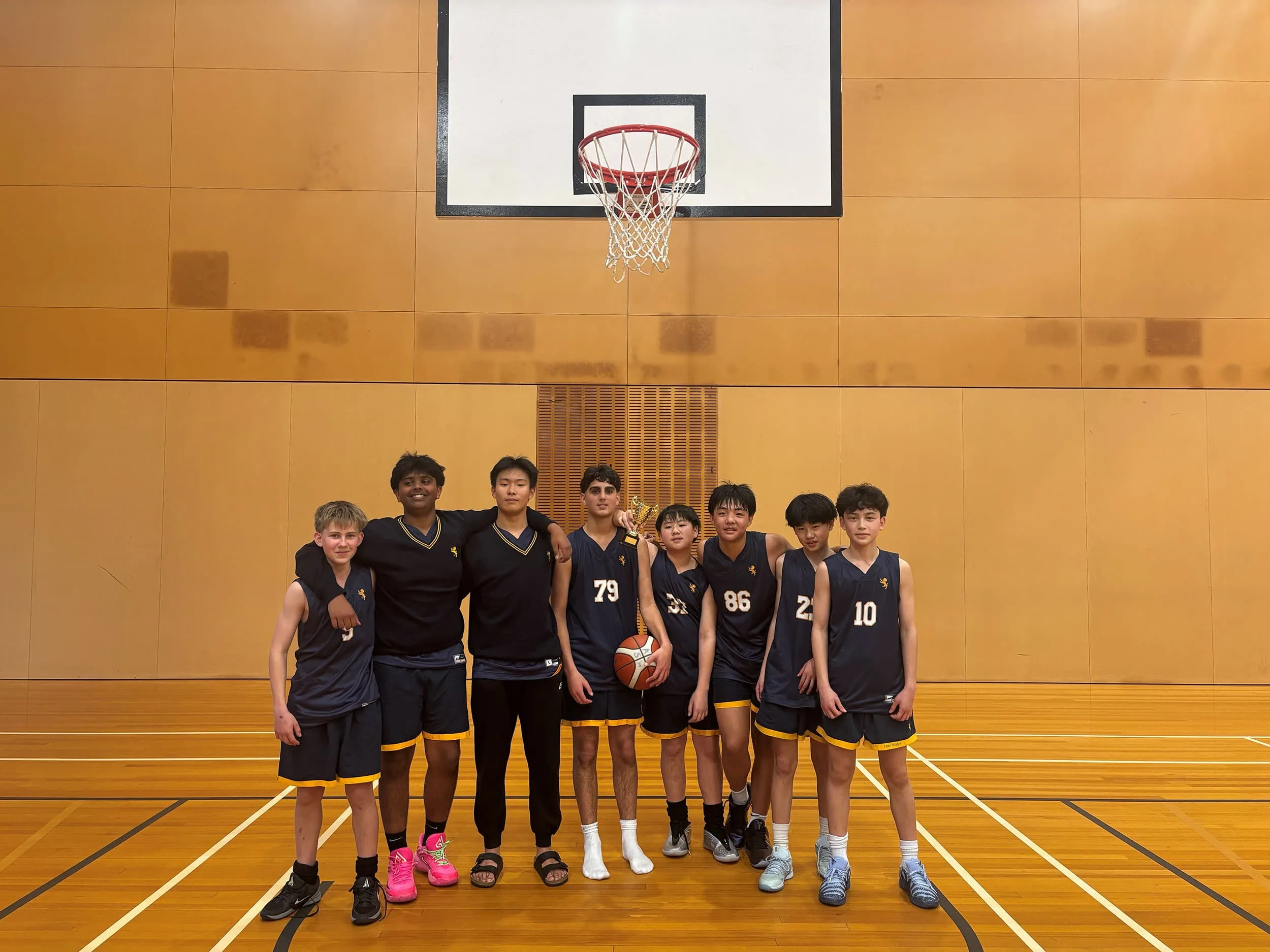
This year also saw the introduction of the Junior Interschool Basketball Competition, with Grammar competing against St. Peter’s College. The season included a round-robin, as well as semi-finals and finals, from which AGS 3 emerged victorious.

A total of 28 teams competed in the Social Basketball League this year. The grand final against Skibidis and the Teachers saw Skibidis come away with the win.

The winners of the Junior Interschool Competition, AGS 3

The winners of the Junior Interschool Competition, AGS 3.


Winter Tournament Week

At the New Zealand Secondary Schools Badminton Tournament in Porirua, the Premier Badminton team had a superb week, remaining undefeated through pool play. In the final against Wellington College, the teams won three matches each, so the result was decided by the total number of points, which the team won to earn the Division 2 National Title.

At the Regional Invitational Tournament held in Hawera, the Junior Basketball team lost 78-83 to Westlake Boys’ High School in the final to finish second overall.

The Premier Basketball team performed well, finishing second at the Regional Qualifying Tournament in Auckland. The team beat St Peter’s College in the semi-final, but unfortunately lost 84-96 to Westlake Boys’ High School in the final. This means they are seeded fourth and qualified for the National Secondary School Championships which took place in the first week of the Term 3 holidays in Palmerston North.

During the annual Northern Tour which was held at the end of Winter Tournament Week, the Cycling team earned a total of 13 medals across the three days of competition.

The Sabre Fencing team, captained by Form 6 student Oscar Ardern, competed at the New Zealand Secondary Schools Sabre Championships in Auckland. In the Men’s Individual Sabre, Form 6 student Isaac Yim battled a large pool of 29 to make the semi-final, where he fell to one of the top-seeded players in New Zealand, winning a joint Bronze podium finish. The Sabre team beat a combined team from the Hawkes Bay 45-13 in the semi-final, and, in the final, beat St Kentigern College by four points to secure the Gold medal and the National Title.

The 1st XI Football team placed eighth at the New Zealand Secondary Schools Championships in Palmerston North. The team unfortunately lost their quarter-final 1-3 to defending champions and eventual finalists, Scots College. In their playoff matches, the 1st XI team lost to Wellington College in a penalty shootout after being 1-1 at the end of ordinary time and then lost 0-3 to New Plymouth Boys’ High School.

The New Zealand Secondary Schools Golf Finals were played at the start of Winter Tournament Week. The Grammar team finished 11th.

The 1st XI Hockey team placed 11th at the New Zealand Secondary Schools Tournament (known as the Rankin Cup) held in Dunedin. In their final two games, the team lost 3-4 to Hastings Boys’ High School, then went on to beat St Andrew’s College on shootouts, after scores were locked at 1-1 at the end of ordinary time.

The Under 15 Rugby team placed sixth at the Under 15 Invitational National Tournament held in Rotorua. The team lost 7-12 in a closely contested match against Napier Boys’ High School in the quarter-final. They beat Palmerston North Boys’ High School 19-10, and their final game was against Christchurch Boys’ High School, which they lost 26-41.

The Premier Table Tennis team was unbeaten throughout the New Zealand Secondary Schools Championships, dropping only one set. In the round robin section, the team beat a Palmerston North composite team, Havelock North High School and Hobsonville Point Secondary School. In the quarter-finals, the team beat third-seeded Westlake Boys’ High School and in the semi-finals, they beat Macleans College. The final played out according to seedings, with the team meeting the second seeds, St Kentigern College, whom they beat 4-0 to secure the National Title for the fifth consecutive year. In the Individual Under 19 competition, captain Hao Jiang met teammate Victor Li in the final, with Jiang winning Gold and Li Silver.

At the New Zealand Secondary Schools Weightlifting Championships, the team of six weightlifters registered personal bests, with four students getting to the podium, including Form 5 student Severyn Yushchenko who won Silver in the 95kg class. Severyn has only been in the sport for a term, and his total of 183kgs over the snatch and the clean and jerk would have been enough to win Gold in the 110kg weight class.

Form 6 student Finlay Duncan during the New Zealand Secondary Schools Weightlifting Championships Captain of Fencing Oscar Ardern congratulates his opponent The 1st XI Football team at their national tournament in Palmerston North

Form 6 student Finlay Duncan during the New Zealand Secondary Schools Weightlifting Championships. Captain of Fencing Oscar Ardern congratulates his opponent. The 1st XI Football team finished eighth at their national tournament in Palmerston North.

Student Stories

12FIBA Under 17 World Championships

Form 7 students Jackson Couper, Lawson Pryor and Taye Thomson were named as members of the Junior Tall Blacks, New Zealand’s Under 17 boys’ basketball team. They travelled to Istanbul to compete at the FIBA Under 17 World Championships in late June, New Zealand’s fourth World Cup appearance, following an historic fourth-place finish from the 2024 tournament.

Drawn into a difficult group with the host nation Türkiye, Puerto Rico and Slovenia, the Kiwis showed from game one that they belonged. The team played Türkiye on the opening day of the tournament, where the team had a 25-point lead going into the third quarter. Unfortunately, the team eventually lost 100-112 in a double-overtime battle. Their second game against Puerto Rico was unfortunately much the same, with the team being 13 points ahead before a tough 77-85 loss.

The team’s final pool play game against Slovenia was a must-win if they wanted to advance to the Round of 16. It was another very close game, but the team came away with their first win of the tournament (79-74). The team then played four further games in the classification rounds, recording losses against Serbia (91-121), China (79-92) and Cote d’Ivoire (81-85) as well as 104-83 win over Japan. These results meant the New Zealand team finished 12th place overall out of 16 teams.

The 2026 FIBA Under 17 World Cup was the conclusion of a three-year journey for Jackson, Lawson and Taye. Jackson is a steady facilitator, defender and 3-point shooter. Lawson is a sharp-shooting guard who showed his scoring ability with several double-digit outings, while Taye is a reliable and physical defender and balances his Basketball responsibilities alongside those of Deputy Head Prefect. All three students are members of the School’s Premier Basketball team and have been a part of New Zealand’s junior pathway since 2024, when they qualified at the Oceania tournament for the Asia Cup in 2025. Their top four finish was enough for them to qualify for the 2026 World Cup.

Taye Thomson, Jackson Couper and Lawson Pryor

Taye Thomson, Jackson Couper and Lawson Pryor (front).


New Zealand Representatives

At Auckland Grammar School, the New Zealand Representative badge, along with Colours, is one of the highest sporting honours a student can receive. In 2026 to date, New Zealand Representative badges have been awarded to 19 students across a range of sporting codes, including Archery, Athletics, Cycling, Orienteering, Open Water Swimming, Rowing and Softball.

Form 6 student Ethan Mora represented New Zealand at the Oceania Athletics Championships in Darwin in May. Competing in the 3000m, the race started fast, with only three athletes, including Ethan, breaking from the rest of the field. The race then became tactical, with the chasing group too far back to catch up. In the final kilometre, the pace progressively increased, with Ethan making his move with 300m to go. He held on to win the Oceania title by only 28 milliseconds in a time of 8:40.88.

Form 6 student Max Allan represented New Zealand at the Tour de l’Abitibi, an International junior Cycling stage race held annually in Quebec, Canada. As part of the prestigious UCI Junior Nations Cup series, the tour consisted of seven stages totalling 708km across six days. Max competed against national teams from across the world, finishing 13th on General Classification and seventh on Youth General Classification in a field of over 80 riders. This included three top-25 stage finishes over the week.

In July, three senior students represented New Zealand sailing at the 29er World Championships in Kiel, Germany. Form 5 student Matteo Barker, Form 6 student Hugo Smith and Form 7 student Oliver Stone took part in the six-day regatta across the Baltic Sea which featured a range of conditions, with mainly tough offshore winds that proved challenging for everyone. With a record-breaking fleet of 276 boats from 35 countries, New Zealand won the Nations Cup as the best overall nation.

The New Zealand Representative badge is not simply celebrating selection; it is an affirmation of ‘The Grammar Way’ — achievement built on humility, hard work, and loyalty to team and School.

Ethan Mora competing at the Oceania Athletics Championships

Ethan Mora (pictured in front in blue). Credit: Athletics New Zealand.


Gateway

Learning doesn’t always happen in the classroom. In 2026, 33 Auckland Grammar School students took part in the Gateway programme, stepping into workplaces across a wide range of industries including electrical, freight and logistics, construction, laboratory science, aviation, dairy farming and customer service.

Gateway continued to grow this year, with new employer connections including Lazer Plumbing Grey Lynn, Bracewell Construction, Leck Electrical and Commuto Construction. The School was also fortunate to have the continued support of returning employers including Mainfreight, LabPlus, Avanti Automotive, the Auckland Aero Club, Grammar Electrical and Wrightson Construction.

Two highlights this year were our new connections with Winstone Aggregates and Southern Cross Surgical Centre. These placements gave students the opportunity to experience specialised workplaces and see first-hand what working in these industries is really like.

The value of Gateway was clear in the feedback from students. They gained a better understanding of the workplace, developed practical skills and learnt more about the career pathways they are considering. For some, the experience confirmed that they were heading in the right direction. For others, it showed them that a particular career wasn’t for them. Knowing what you don’t want to do can be just as useful when making decisions about the future. Students also valued the chance to meet people working in their chosen industries, build their confidence and experience the expectations of a real workplace.

A huge thank you goes to the Gateway employers. Giving up time to welcome a student into the workplace, sharing knowledge and providing an honest insight into an industry makes a real difference. These experiences give the students a chance to see what lies beyond school and begin making connections between their interests, their strengths and their future.

Senior students Barnaby Cameron and Jet de Marco on their Gateway placement A Gateway placement at the Auckland Aero Club

Senior students Barnaby Cameron (left) and Jet de Marco (right).


Headmaster’s Heritage Committee

Led by Masters in Charge Amanda Booth and James Floerchinger, the Headmaster’s Heritage Committee comprises a small group of Form 6 and 7 students, whose aim is to document the forming legacies of current students, how they have made an impact on the Grammar community and how they will in the future too, as Old Boys of Auckland Grammar School. The committee looks to uncover the stories of the men whose names appear on the Honours Board in the Great Hall and of those others who have lived interesting and adventurous lives.

In 2026, the committee was tasked with a project in the form of ‘shadowbox presentations’ — posters that show the depth and breadth of prominent Old Boys. Several posters have already been created and printed, including Cyril Bassett (class of 1905), Sir Edmund Hillary ‘31, Hamish Kerr ‘10 and Sir Leslie Munro (class of 1915). The group worked together to come up with a list of other Old Boys to research, with the Headmaster issuing a challenge to the group to produce a poster for each Main Block classroom.

Student leader Rupert Glaetzer is enjoying the opportunity to learn more about the history of the School and the Old Boys that have walked the halls. “Leading the Heritage Committee has been one of the most rewarding opportunities for me this year. It feels so special to be deeply in touch with the legacy of the School, in ways of preservation of history and acknowledgement of the past. Students will see these Grammar men on the walls of classrooms and feel proud to be a member of our School. These men will be an inspiration for them; those who were once students like us, who have done extraordinary things in the world just like we can.”

The Headmaster’s Heritage Committee is dedicated to capturing achievements of current students and Old Boys of all ages. With more than 2,800 current students and a vast network of Old Boys that grows each year, there is much to document, and the committee is looking forward to uncovering these stories in 2027, doing its part to preserve the history of the School.

Heritage Committee poster of Sir Edmund Hillary '31 Heritage Committee poster of Hamish Kerr '10

Posters of Sir Edmund Hillary ‘31 (left) and Hamish Kerr ‘10 (right).

Staff News

13Passing the Baton at Tibbs House

A changing of the guard for the School’s Director of Boarding.

The Director of Boarding changes at the end of the School year. After six years at the helm of Tibbs House, Frank Haszard ‘93 and his family are moving out and current Deputy Director of Boarding Matt Cuming and his family are moving in. Frank will continue to teach Economics, but with a longer commute.

The current Form 7 boarders are the cohort that Frank selected for their Form 3 start at Tibbs in 2022, so his timing to move on coincides with the end of their schooling. “I remember each and every interview with them back then. To see their growth and maturity and compare this to the sometimes nervous 12-year-olds they were, arriving for the first time, demonstrates the value of their Tibbs experience and the quality and strength of their character.” When asked about what he has loved about the job, he has a long list. “The goodwill of our community. Willingness to support the School and each other. Seeing the successes of our boarders across such a range of different fields. Seeing boys take advantage of the opportunities on offer with a Grammar education and seeing that potential being reached.” He will also miss the team. “Working with such a talented and committed group of quality staff has been fantastic.”

The boarding environment is also familiar to Matt, and he too appreciates seeing the journey first-hand from boy to young adult. “The most rewarding aspect has been guiding young men through critical stages of their growth — watching them build self-reliance, character, and lifelong friendships. In a boarding environment, you play a pivotal role through the turbulent teenage years.”

Next year Frank and his wife Ella have a daughter starting intermediate and a son starting at Grammar. “They were born here in my first stint as a boarding master at Tibbs from 2011-2016 and grew up here as Tibbs kids, with all the benefits of that: security, regular interaction and making friends with other families, and the biggest and best backyard in Auckland across the road. Tibbs has been like an extended family for us all.”

Matt and his wife Rose have three children under the age of seven and also enjoy being part of the vibrant community. Matt feels having families living on site is also good for the boarders. “Living on site creates a natural, warm household dynamic rather than an institutional one. Having a young family around brings an authentic sense of home to the boarding house, which helps the boys, especially those far from their own families, feel grounded and comfortable.”

Matt is looking forward to his new role in 2027. “I am excited to continue refining our boarding environment, strengthen our house culture, and find new ways to support our boarders as they navigate various challenges.”

Outgoing Director of Boarding Frank Haszard with incoming Director Matt Cuming

Outgoing Director of Boarding and Old Boy Frank Haszard ‘93 (left) with Matt Cuming who will step into the role at the start of the 2027 academic year.


Reading Aloud

When Director of Library Catherine Ross approached members of staff with an idea to help grow engagement across the student body and to model and share reading, the response was immediate. The Reading Aloud series saw several staff, including Head of Latin Frances Hay-Mackenzie, English master Henry Lello and Head of English Charles Laing, read from a well-known novel to students in the presentation forum of Te Ara Mātauranga.

The idea came about after a session when well-known Old Boys would come in to read to students, so Catherine was excited to engage with the staff and students of the School. “It is really important for the students to see adults modelling reading, as we have seen that many of them don’t have adults that read, or even have any books, at home.”

Treasure Island by Robert Louis Stevenson was the book chosen for the series, a favourite of Henry’s. “Treasure Island is a complex literary text, but it is also a swashbuckling adventure. I think it is both fun and edifying for students and adults.” The book centres around Jim Hawkins, who finds a treasure map among the belongings of a dead pirate lodger. He sets sail aboard the ship Hispaniola to find the buried gold, unaware that the one-legged Long John Silver has secretly recruited much of the crew from his old pirate gang. When mutiny breaks out, Jim’s bravery helps the loyal men outwit the pirates, recover the treasure, and sail home.

Catherine sees a number of benefits in adults reading aloud to students. “There is considerable evidence that reading aloud to children enables them to process challenging content, text features and vocabulary, even in subjects not normally associated with reading aloud, such as science and technology.”

The Library staff are looking forward to the Reading Aloud series becoming a regular fixture throughout the year.

Head of English Charles Laing reads Treasure Island aloud

Head of English Charles Laing reads Treasure Island aloud in Te Ara.


Staff Harmony

Each year, Headmaster Tim O’Connor issues a challenge to the School’s Staff Band — to perform on stage in assembly at least once before the end of the academic year. This year’s performance took place in the penultimate week of Term 2, continuing a tradition that spans more than three decades.

With founding member Doug Newton on lead guitar accepting the challenge, the group took to the stage with Head of Performing Arts James Ioelu on piano and vocals, Nico Leiseder on drums, English master Henry Lello on bass, and John Wilson on rhythm guitar. The band also welcomed two new vocalists in Chemistry master Lauren Jeffares and Old Boy Anton Elliot ‘11, the School’s Property Manager. Anton was invited by James to have a jam session with the band, but the penny dropped pretty quickly. “James didn’t specify where or when the jam would take place — he failed to mention it was on the Main Block stage during assembly.”

The band, now going under the moniker Period Zero, played three songs — Rocking in the Free World by Neil Young, Rock n’ Roll by Led Zeppelin as well as Anton’s personal favourite, Metallica’s Enter Sandman. “It provided the best entertainment to the students.”

Anton is no stranger to the stage, growing up in a house of performers, as both his parents were singers and theatre actors. “My brother Keegan ‘12 and I used to go with them and sit backstage while they would rehearse. During our time at Grammar, we did several of the School musicals (including Sweeney Todd in 2014), and we both remain active performers today.”

Anton received a number of overwhelmingly positive comments from both staff and students for his performance, his first time standing on the Great Hall stage. “I really enjoyed it though. It is nice to give the students a bit of a change from the normal assembly routine and I think this feeds a good culture.”

Chemistry master Lauren Jeffares performing with the Staff Band Old Boy Anton Elliot '11 performing with the Staff Band

‘Period Zero’ vocalists Lauren Jeffares and Anton Elliot ‘11.

Faculty Profile

14The Commerce Faculty

Understanding how business works.

Form 4 students learn about Consumer Law and Insurance from Business Studies master Doug Newton Form 7 students Jonathan Hu and Aarush Kumar made the New Zealand Economics Olympiad team

Form 4 students learn about Consumer Law and Insurance from Business Studies master Doug Newton. Form 7 students Jonathan Hu (far left) and Aarush Kumar (second from right) both made the New Zealand Economics Olympiad team that went to Greece this year.

Head of Faculty — Commerce and Head of Economics John Wilson enjoys bringing academic learning into the real world for students. “I tell every student that they can’t avoid economics in life; it is everywhere.” He also reminds them that they make choices constantly about how they spend their money, their time, and what their priorities are, just as a business or government does.

The Commerce Faculty’s subjects — Business Studies, Economics and Accounting — give students the language and tools to understand those choices, whether they are considering the price of a purchase, the cost of borrowing, the forces affecting a market, or how decisions are made.

That relevance helps explain the Commerce Department’s enduring popularity at the School. While Business, Economics and Accounting offer pathways into the more obvious career fields associated with finance, entrepreneurship and business management, they also provide a valuable foundation for students whose futures may lie elsewhere.

“Many of our Commerce students will go on to complete Commerce degrees or conjoint them with another degree. However, I think exposure to some of the fundamental principles of Economics, Business and Accounting, even if only at Form 4 level is good for any student. The life skills that knowledge imparts are helpful. The government is aware of this too, with their wish for more financially literate students across the country.”

The journey begins for many students with Business Studies, Economics and Accounting in Form 4, one of the School’s most popular option choices. From Form 5 to Form 7, students can pursue each subject separately or combine two of the three. The faculty supports students working through NCEA and Cambridge pathways. Economics also attracts a notable number of Form 7 students who take it up as an additional subject alongside their established A-level programme.

Economics as a subject, John says, has broad appeal because it helps students connect classroom concepts to the world around them. “Students examine the behaviour of consumers and firms, the working of markets, macroeconomic questions and the role of government.” It is a subject that has a personal benefit too he adds. “We are all consumers. We all face opportunity costs and demands on our time, our income and our skills, and the subject gives students a structured way to think about those pressures.”

The subject of Business Studies brings a more direct focus on how organisations operate: planning, marketing, leadership, systems and decision-making. John has watched this subject grow hugely in popularity and importance at the School since its inception in the mid-1990s, both in NCEA and Cambridge.

NCEA Level 2 Business Studies hold an annual Market Day

NCEA Level 2 Business Studies hold an annual Market Day. The food-based businesses are very popular with the Grammar School customer base.

Accounting as a subject offers the more technical discipline of financial information and analysis.

The rapid rise of Artificial Intelligence (AI) and the place of it in education is a question every teacher must currently address. In the Commerce Faculty, John sees AI as a tool students will inevitably use, but he does not see it as a replacement for thinking. “You still have to understand the fundamentals,” he says. “There is no point having a calculator if you do not have a rough idea of what you expect in an answer.” Assessments have accordingly shifted toward supervised, in-class work, including handwritten responses and closely controlled digital tasks. The goal is not to reject technology, but to ensure it supports learning rather than substitutes for it.

The annual Market Day gives Year 12 Business students the chance to test their ideas in public. Students create a business plan, develop a product or service, establish systems, market their offering and then evaluate the outcome. Food and drinks are popular choices for student customers at lunchtime, but the most important learning lies in more than calculating profit. It is in the planning, execution and review of their product launch and sales. There may also be the ability to adapt when a real customer stands in front of them.

The Economics Department’s academic ambition was evident this year in international Economics competitions. Form 7 students Jonathan Hu and Aarush Kumar represented New Zealand at the International Final Round of the Economics Olympiad in Ancient Olympia, Greece in August. To get there they had to advance through national qualifying rounds that included multiple-choice testing, written essays and oral presentations. Competing across microeconomics, macroeconomics and finance, Jonathan placed 11th among 147 competitors, just one point short of a Gold medal. Aarush placed in the top 50 and earned Bronze. Their performances contributed to New Zealand finishing sixth overall, with the team collecting two Silver and two Bronze medals. Beyond the testing, the event offered students the chance to take part in an Economics Policy Challenge, a traditional Greek Glendi celebration and some sport with peers from around the world.

The School also had representation at the International Economics Olympiad in China, underlining the level at which Commerce students are engaging beyond the classroom. Selection for such teams is demanding as national representatives are among the strongest economics students in New Zealand. After a rigorous testing process, Form 7 student Toby King was selected as captain of the New Zealand team (you can read of Toby’s success on page 08).

Locally, the University of Auckland New Zealand Economics Competition has grown in size and reputation since its inception in 1997, becoming the largest and most prestigious competition of its kind for secondary students. It is a 50-minute examination paper containing 50 questions that test classroom theory and general knowledge of current economic issues.

In 2026, approximately 2,500 students from 69 schools throughout New Zealand entered the Competition. Auckland Grammar School entered 29 students across Division 1 (studying at Year 13) and Division 2 (studying at Year 12) and earned 11 High Distinction (top 5%), 14 Distinction (next 15%) and 4 Credit (next 20%) awards. Most notably, Form 7 student Jonathan Hu gained first in New Zealand in Division 1 and First in New Zealand overall with a perfect score of 50/50.

The Commerce Faculty connects students to the real world. They gain hands-on experience from basic accounting and running a hot dog stall to preparing for tertiary education and competing on the international stage. And as John reiterates, “studying Commerce gives students a more informed way to navigate the decisions that will shape their adult lives.”

Students run a Market Day business stall Students at a Market Day business stall
International Department

15A Home Away from Home

The joy of becoming homestay parents.

Stephen and Jing Ecclestone reflect on the enjoyment of being a Homestay family for one of Auckland Grammar School’s international students.

Our international student, Ko Moriya, from Japan, is in the same year at school as our son Daniel (Form 6). Ko arrived at the beginning of Term 1, and we had initially agreed to host him for two terms. However, within just a few weeks of his arrival, we decided to extend this and host him for the full year.

If we had any trepidation about hosting a 16-year-old boy from another country, it completely disappeared once we met him and he settled into our family. We are sure it must also have been a nerve-wracking time for Ko, arriving in New Zealand and adjusting to life in a culture quite different from his own. Perhaps because we are both first-generation New Zealanders, it helps us understand some of the feelings a young person might experience when making that adjustment.

Ko has been a mature and engaged student, keen to learn about life in New Zealand, improve his English and generally make the most of his study-abroad experience.

The first term was largely about settling into life at Grammar and becoming familiar with the routines of school. We took Ko around Auckland and showed him some of the local sights, both to give him a broader picture of the city and to introduce him to life here from a more social perspective. We also had the opportunity to take him north to Waipu Cove, visit the glowworm caves and spend a weekend in Rotorua. As a family his arrival was a great reason for us to engage in some iconic New Zealand experiences. These included visiting Te Puia to experience its geothermal attractions and Māori culture, walking among the trees at the Redwoods Tree Walk, and tackling the Canopy Tours ziplining experience.

By the second term, we had settled into the normal rhythm of daily life: school, homework, family time and social activities. Ko had quickly made friends with a number of his fellow students, helped in part by his involvement in social basketball.

Ko has enjoyed his time at Auckland Grammar School so much that he is considering staying for a second year. This would allow him to complete his secondary schooling in New Zealand and work towards gaining his university entrance qualifications.

Hosting Ko has been an extremely positive experience for our family. What began as an agreement to welcome an international student into our home for two terms quickly became a full-year commitment and an opportunity to share our family life, our city and some memorable New Zealand experiences with him. In return, Ko has brought his own culture, personality and perspective into our home, making the experience rewarding for all of us.

To enquire about becoming a Homestay parent please contact International Student Welfare Manager Sandra Heslin Boroughs via email at s.boroughs@ags.school.nz

Jing Ecclestone and Ko Moriya enjoying the New Zealand summer The Ecclestone family get ready to zipline in Rotorua

Jing Ecclestone and Ko Moriya enjoying the New Zealand summer. The family get ready to zipline in Rotorua.


From the No. 1 Field to Ellis Park

Former international student Saula Ma’u pulls on the All Black jersey.

International Student Welfare Manager Sandra Heslin Boroughs reflects on the Grammar Journey of new All Black Saula Ma’u ‘14. She and husband Justin Boroughs have come to refer to him as ‘their Tongan son.’

When Saula arrived from Tonga as a Form 4 student, no one could have known just how remarkable his journey would become. Quiet, humble, and gentle by nature, he arrived with a strong work ethic, a natural talent for rugby and a determination to make the most of the Auckland Grammar opportunity.

His English was limited, and communicating confidently in the classroom was initially a challenge. Rather than allowing this to hold him back, he quietly set about building his confidence, one step at a time. Saula’s progress was never about seeking attention or recognition. He developed in his own modest and unassuming way, steadily finding his voice in the classroom, building confidence with his peers, and becoming an increasingly influential presence both academically and on the rugby field.

Saula excelled at sport. His talent, commitment and work ethic saw him develop into an outstanding rugby player. He worked hard to continually improve his skills and fitness, setting himself high standards and pushing himself to achieve his very best.

But perhaps what makes him most special is the way he has used his own experiences to support others. As a senior Pasifika student, Saula became a mentor and role model for younger Pasifika boys. He understood what it was like to arrive at Grammar, find your feet in a new environment and face the challenge of building confidence in a different language and culture. He quietly encouraged others, offered support and led by example. He has always been a gentle giant — a young man whose presence commands respect, not because he demands it, but because of the person he has become.

Saula has embodied the seven Grammar values throughout his time at the School. These values have not simply been words for him; he has lived them every day through his actions, his attitude, his respect for others, his commitment to his studies and his dedication and passion for his chosen sport. His journey is a wonderful example of what can be achieved through determination, humility, hard work, and perseverance. Academically, he has continued to challenge himself and achieve at a very high level. On the rugby field, he has worked tirelessly to reach his potential. As a mentor, he has given back to those coming behind him. And as a young man, he has conducted himself with a quiet dignity that has earned him the respect and admiration of staff and students alike.

We are immensely proud of the accomplished young man he is today. His journey has been one of finding his voice, steady growth, resilience, and excellence. He has never needed to be the loudest in the room. Instead, he has let his actions speak for him. He leaves a wonderful legacy as a scholar, an outstanding sportsman, a mentor, a role model and, most importantly, a young man of great character. We know that wherever his journey takes him, he will continue to strive for excellence, support others, and remain the humble, respectful, and gentle giant we have been so privileged to know.

Saula Ma'u receiving his Prefect's badge from Headmaster Tim O'Connor in 2018 Saula Ma'u with Justin and Sandra Boroughs at the Highlanders' headquarters Saula Ma'u with All Blacks coach Dave Rennie after his first game as an All Black

Saula Ma’u ‘14 receiving his Prefect’s badge from Headmaster Tim O’Connor in 2018. Saula showing art teacher Justin Boroughs and wife Sandra Heslin Boroughs around the Highlanders’ headquarters in Dunedin in 2025. Saula with All Blacks coach Dave Rennie after his first game as an All Black on 25 August 2026 at Ellis Park in South Africa. Photo credit: Myth Rugby.

Events

16Events

Foundation Trust Gala Dinner

The popular mid-winter dinner was a resounding success.

A highlight of the School’s calendar, the 21st annual Foundation Trust Gala Dinner, in association with Barfoot & Thompson, took place on Saturday 23 May 2026 with 360 guests enjoying a wonderful evening in a beautiful setting in the Great Hall.

With performances from the Kapa Haka group, led by Prefect Nikau-Te Ha Thorpe, and country singer Tami Neilson backed by Grammarphonics, the event was MC’d by Old Boy Scotty Stevenson ‘90 for the fifth consecutive year. The evening helped to raise over $320,000 for the School’s Academic Endowment Fund.

This year’s Gala Dinner Committee was chaired by current parent Sophie Anderson in her first year in the role. The School wishes to thank everyone who helped to make the Gala Dinner a fun and hugely successful evening.

A thank you to Gold sponsor, Barfoot & Thompson, to Silver sponsors Dominion Residential and Generate Wealth, and to all the Event Supporters: Bluestar, Bracewell Construction, Forsyth Barr, Gallagher Insurance, No 1 Currency, The Staging Project and Wynn Williams.

1) The exterior of the Main Block with the lion illuminated on the School’s motto; 2) The interior of the Great Hall with lighting thanks to Lux Productions; 3) Country singer and current parent Tami Neilson performed a song with the School’s auditioned choir, Grammarphonics; 4) From left: Melissa and Chris Hart ‘93 and Chris Sixton ‘86 and his wife Louise; 5) The Kapa Haka group perform, led by Prefect Nikau-Te Ha Thorpe (standing).

1) Captain of the 1st XI Cricket team and Prefect Ben Lucas models a BLACKCAPS shirt, signed by Old Boy Lockie Ferguson ‘05, as one of the live auction items; 2) Prefects Connor Clark (left) and Luke Matuschka making the rounds, selling raffle tickets to guests; 3) A selection of art from Grammar master Justin Boroughs displayed on stage was included as part of the silent auction; 4) Current parents Jeroen and Justine Went.

1) Head Prefect Nico Stanley speaks to guests about the Academic Endowment Fund; 2) Country singer Tami Neilson and her son Charles perform, backed by Grammarphonics; 3) Old Boy Gerald Bethell ‘87 is congratulated by a group of Prefects after winning one of the live auction items; 4) From left: Rob Hamilton ‘81, Peter Thompson, CNZM ‘76 and Graeme Hart; 5) From left: current parents Lisa and Ryan Clark, and Rachel Stewart.


Intergenerational Breakfasts

Generations of Grammar families.

1) Senior Prefect Xavier Clark (far right) with his mother Lisa, his grandmother Jeanette and younger brother Alexei (Form 5); 2) Guest speaker Roanne Jacobson with Jude Dobson; 3) Roanne Jacobson with Anne O’Connor; 4) Form 7 Prefect Jack Ballie with his mother Lisa (left) and grandmother Mary (right); 5) Prefects Aarush Kumar (left) and Thomas Went (right) help serve breakfast to guests; 6) Pip Eriksen and her sons, Samuel (left, in Form 3) and Oliver (Form 4); 7) Head Prefect Nico Stanley speaks from the lectern; 8) Form 3 student William Skinner and his mother Rhea.

Shakespeare Orthodontics The Grandmother, Mother and Son Breakfasts were proudly supported by Shakespeare Orthodontics.

Keeping the Grammar tradition and legacy alive.

1) Form 5 student Leo Williams with grandfather Bruce (left) and father Matthew; 2) 1st XV Head coach David Askew ‘93 with guest speaker Hadleigh Parkes; 3) Form 6 student Ashaan Cordwell with father Lester; 4) Senior Prefect Rupert Glaetzer shakes hands with guest speaker John Hart; 5) Form 7 Prefect Jacob Bethell (second from right) with his father Gerald, brothers Daniel and Liam, and grandfather David; 6) Deputy Head Prefect Matayas Thomson; 7) Form 7 Prefect Thomas Went with grandfather John and father Jeroen; 8) Prefect Marlee Jacobs helps serve breakfast to guests.

Shakespeare Orthodontics The Grandfather, Father and Son Breakfasts were proudly supported by Shakespeare Orthodontics.


Combined Trust Event

Former Headmaster’s Council member Doug Wilson ‘61 (centre) speaks with Director of Advancement Jeff Blackburn ‘67 (left) and former Board member David Simcock ‘65 at the Combined Trust Event, held in the Heritage Room for trustees, Board members and the Old Boys’ Association.

1) Former Headmaster’s Council member Doug Wilson ‘61 (centre) speaks with Director of Advancement Jeff Blackburn ‘67 (left) and former Board member David Simcock ‘65; 2) Peter Hay-Mackenzie and immediate past President of the Old Boys’ Association Murray McKinnon, QSM ‘59; 3) Chris Sixton ‘86 (left), who was sworn in as the new President of the Old Boys’ Association at the AGM in June, speaks with Board Chair Grant Trethewey ‘76; 4) Senior Prefect Xavier Clark with his grandparents, Jeanette and Dr Rob Kirkpatrick ‘64; 5) Foundation Trust trustee Campbell Batts ‘74 (centre) speaks with Phillip Bell ‘74 and Head of Classics and Latin Frances Hay-Mackenzie; 6) Former Board member Deborah George (left) speaks with Jan Evans and Deputy Headmaster Pastoral — Junior School Joe Gunson ‘05; 7) Doug Wilson ‘61 and Jan Evans share a laugh; 8) Old Boys’ Association Executive Committee member Jithin Chittibomma ‘02 (right) speaks with Headmaster Tim O’Connor in the Heritage Room.


Where Creativity Comes Alive

Tickets are now on sale for the sixth biennial Art House Tour.

The Auckland Grammar School Foundation Trust launched the annual Art Expo in 2002. In 2016, the Art Expo became the Art House Tour to help establish a point of difference from the other fundraising art shows hosted by other Auckland schools.

2026 marks the sixth biennial Art House Tour, and tickets are now on sale for this one-day event, taking place on Saturday 21 November. The Tour offers attendees the opportunity to take in seven beautiful homes in and around the Grammar community whilst viewing an extensive range of curated artwork. The experience is set to delight with over 70 artists (including Old Boys Brad Novak ‘89 and Logan Bow ‘17) exhibiting alongside Auckland Grammar School’s emerging young artists.

Each of the seven houses on the Tour has a story to tell, including an historic heritage property in Epsom, two 1920s homes in Remuera, and an award-winning home in Herne Bay. In addition to each of the homes, the Gallery located in the Old Boys’ Pavilion on campus will also display works of art for sale. This will be open to both Tour attendees and the general public on Friday 20 and Saturday 21 November.

All proceeds from the Tour go towards supporting the Academic Endowment Fund, which allows Auckland Grammar School to recruit, retain and reward exceptional teachers for our young men in the classroom. Tickets for the Tour are $110 per person and can be purchased via the Art House Tour website (arthousetour.co.nz). Enjoy a fabulous day out with friends and family — we look forward to seeing you there.

Some of the seven beautiful homes featured on this year’s Art House Tour.


Advertisement
Matassa Property Services — advertisement
ASPEC Construction — advertisement
Kate McLean — advertisement
Dominion Residential — advertisement
Generate Wealth — advertisement
Barfoot & Thompson, Gold sponsor
Dominion Residential, Silver sponsor
Generate Wealth, Silver sponsor
Giving to Grammar

17Volunteering for the School

Giving your time to Auckland Grammar School.

Time is a precious commodity, so how you spend it is important. Auckland Grammar School is fortunate to have a sizeable number of parents who chose to spend some of their time volunteering in a chosen activity associated with the School.

For Nicci Magnusson, that is the biennial Art House Tour, taking place on Saturday 21 November 2026. “As a landscape designer, I have a passion for beautiful homes and gardens, so I love the concept. It’s incredibly rewarding to work alongside like-minded parents and be part of something that brings the community together. Supporting local artists, and particularly having our Old Boys exhibit their work, makes it feel even more special.” It is a key fundraiser for Grammar and as Chair she is well involved. However, she says volunteers don’t need to commit huge amounts of time to be involved. “Whether it’s helping at an event, reaching out to potential sponsors, or supporting behind the scenes, there are plenty of ways to contribute. Just find something that works for you.”

For Isabel Mabey, helping with rowing is her focus. “Being involved is a way of supporting my son and showing him that I recognise how important it is to him. It’s also a valuable opportunity to set him the example of giving one’s time and energy to help others. You don’t need any particular skill to volunteer, just enthusiasm, teamwork and a ‘can do’ attitude. I have been everything from cleaner to driver to photographer to cook. We all have life commitments, so it can be an hour, a day, a weekend, whatever works with your own family.” She enjoys seeing the sport up close. “The commitment, dedication and sacrifice of the students is inspiring; I feel lucky to have the opportunity to be around that energy.”

Sophie Anderson is Chair of the Gala Dinner Committee. The mid-year event is an annual fundraising event that, like the Art House Tour, raises funds for the Academic Endowment Fund. This fund is in place to help recruit, reward and retain excellent teachers for the School and is something Sophie is more than happy to fundraise for. “My two sons have benefitted hugely from the fantastic teaching staff at Grammar, and I am passionate about the Endowment Fund initiative and the School’s ability, as a result of this fund, to reward teachers more generally.” Sophie enjoys the group of people she works with to make the popular event a success. “The Committee consists of an incredibly strong and diversely skilled group of motivated Grammar parents who I feel privileged to have the opportunity to work with and get to know.”

Sophie recommends volunteering to anyone musing on the idea. “It is a wonderful way to feel involved at Auckland Grammar School, to be connected to something bigger than yourself and for me, it has deepened my understanding of the School community and the people who work and volunteer within that environment.”

Nicci Magnusson with artwork purchased at the 2024 Art House Tour Isabel Mabey feeding the rowers Sophie Anderson and Headmaster Tim O'Connor at the Gala Dinner

1) Nicci Magnusson with artwork purchased at the 2024 Art House Tour; 2) Isabel Mabey (left) feeding the rowers; 3) Sophie Anderson and Headmaster Tim O’Connor at the Gala Dinner.


Insurance for Good

Supporting the School through your business insurance.

What if there was a way to donate money to Auckland Grammar School but it did not cost you anything? In fact, it may even save you money. Such is the case with the association between the School and Raizor.

The initiative is called ‘Insurance for Good’ and the name says exactly what it means. For any new business insurance policy taken out with their partners Gallagher Insurance, 15% of the commission is donated to a nonprofit. For the Grammar Community, that nonprofit is the Foundation Trust at the School. The hope is that the wider Grammar community will embrace the concept and support the School through this ongoing, passive giving opportunity.

A handful of businesses have already come on board, donating $7,000 to date with nearly twice that already committed this year. Among them are past parent Richard Miles, founder of 3 Wise Men, who said the programme made supporting the School effortless. “Gallagher made the renewal streamlined and easy. The concept is a win-win for both parties and an excellent way to continue to support the School that had such a positive impact on our son.”

Carmen Platt has also signed on and says it delivers benefits for both the School and her business CFX Signage. “We’ve found Insurance for Good well worth doing. We get to check our insurance is competitively priced, with the bonus of a donation to the School, and it takes next to no time.”

Jared Thomas, co-founder of Raizor, is the connection point between the client and Gallagher. He said finding broker expertise and value for the client is not a difficult task. ”Whatever sector your business is in, chances are that Gallagher already has deep, specialist experience there. As one of New Zealand’s leading insurance brokers, they have spent decades building trusted, industry-specific expertise.”

Gallagher’s specialist areas include construction and development, architects and consultancies, transport and logistics, financial and professional services, manufacturing and commercial property to name a few.

So far, Raizor has donated $625,000 to non-profit organisations nationwide. If the School’s Foundation Trust became a regular entity for donations, Major Gifts and Bequests Manager Daniel Reddish says it would make a huge difference to the School.

“Having a steady stream of income coming in is obviously very helpful. If multiple businesses signed on, even if their annual insurance costs are minimal, the aggregated effect is good news for Grammar, and good news for the business too if they can better manage their risks and market-test their pricing. It’s an easy and passive way to give back and we hope our community supports it.”

To find out more, contact Daniel Reddish via email at d.reddish@ags.school.nz

Gallagher Insurance — Insurance for Good

Giving to Grammar

Auckland Grammar School and the Foundation Trust would like to thank the following people and organisations for their generous support of the School, our teachers and our young men. This list includes donations made from 1 April 2026 to 30 September 2026. Some of our donors have chosen to give anonymously.

10 Clive Road

  • David Appleby
  • Auckland Grammar School Old Boys’ Association
  • Auckland Grammar School Foundation Trust
  • Scott & Kate Baguley
  • Phillip & Treacy Bell
  • Steve Beston
  • Kevin & Magda Biggar
  • Simon & Natalie Bridges
  • Graeme Brighouse
  • Grant & Pip Cameron
  • Sir Ron & Lady Carter
  • Geoff Clarke
  • Jon Cooke
  • Ron & Rachelle Curteis
  • Dr Rick Cutfield
  • Harry & Rosemary Delamare
  • Dev Dhingra
  • Mike Edgar
  • The Rainger Family
  • Remy Lim & Eva Fong
  • Mark Foy
  • Edward & Julia Glennie
  • Michael & Gwyn Gray
  • Taehyeon Kong
  • Steve & Hayley Lewis
  • Jimmy C P Lin Family
  • Matthew & Kate Lines
  • Brendon & Anna Mahood
  • Pam & Arthur Mahy
  • Murray McKinnon
  • Euan Crump & Prue McLafferty
  • Jonathan & Juliette Milne
  • Jason & Rachel Paris
  • Rackham Family
  • Dan Reddish
  • The Rev Lester Simpson
  • Ben & Bridget Snelling
  • Shelley & Paul Stoddart
  • Felicity Thompson
  • Went Family
  • Thornton & Bronwyn Williams
  • Sean Zhang, Joyce Guo, Arthur Zhang Family

Academic Endowment Fund

  • Jeff Fearon & Sophie Anderson
  • Auckland Grammar School Headmaster’s Council
  • Auckland Private Education Charitable Trust
  • Bassett Family
  • Body Family
  • Michael Boddy & Joanne Austad
  • Callander Family
  • Sir Ron & Lady Carter
  • BC Cho
  • Yong Tiong & Emily Chua
  • Mr M.P. Coleman
  • Graeme Coop
  • Tom Everitt
  • Simcock Family
  • Professor Keith Farquhar
  • Mary Farrell
  • The Mace Charitable Foundation
  • Malcolm Frith
  • Edward & Julia Glennie
  • Bruce & Wendy Hadden
  • Capt Craig Harris
  • Chris Hobson
  • S H W Jayasuriya
  • Simon Ladd
  • Jimmy C P Lin Family
  • Hongbin & Jieli Ma
  • Karen Potter Masoe
  • Euan Crump & Prue McLafferty
  • Derek Neutze
  • Mr R.J.F. & Mrs K. Novak
  • Keishi Ogura
  • Mika Taito
  • 3 Wise Men
  • Terry Wilson ‘57

Bequest

  • John Imperatrice

Hardship Fund for Students

  • Michael Boddy & Joanne Austad
  • Seth Bracewell
  • Grahame Brown
  • Will & Vicky Carnachan
  • Deb Cook
  • Dr Lindsay Diggleman
  • Akolo Family
  • Richard Frater
  • Stewart Hobbs
  • Richard Holden
  • Joel Hung
  • Yas Imai
  • Simon Ladd
  • David Lyon
  • Hongbin & Jieli Ma
  • Scott Optican
  • Peter & Barbara Raudkivi
  • Hamish Sansom
  • Alison Simester
  • David Steytler
  • Dianne Goh & Nathan Stowell
  • James & Rachel Wadham
  • Steve Wilson
  • Huadan Wang & Tsung Hsi Wu

Scholarships

  • Val Bolsover (in memory of Roger Harris)

Sponsorship

  • Aotea Asset Management
  • ASPEC Construction
  • Barfoot & Thompson
  • Bauhaus
  • Bracewell Construction
  • Buddle Findlay Christchurch
  • Cooney Lees Morgan
  • Craigs Investment Partners
  • Dominion Residential
  • ECC
  • Eye Institute
  • Forsyth Barr
  • Functional Physio
  • Gallagher Insurance
  • Generate
  • Matassa Property Services
  • Morrell Bistro
  • No1 Currency
  • New World Botany
  • Studio Italia
  • Shakespeare Orthodontics
  • Wynn Williams

School Support

  • Akarana Community Trust
  • Asahi
  • Barfoot & Thompson
  • Bauhaus
  • Blue Sky Community Trust
  • Bluestar
  • Bracewell Construction
  • Clean Collective
  • Craigs Investment Partners
  • Dominion Residential Ltd
  • Dragon Community Trust
  • ECC
  • EuroVintage
  • Eye Institute
  • Forsyth Barr
  • Gallagher Insurance
  • Generate Investment Management Limited
  • Lion Foundation
  • Little Wolf
  • Morell
  • Neat Meat
  • No 1 Currency
  • North & South Trust
  • NZCT
  • Onslow
  • Pandoro Panetteria
  • Shakespeare Orthodontics
  • Studio Italia
  • Sutcliffe Jewellers
  • Tami Neilson
  • The Staging Project
  • Trillian Trust
  • TTCF
  • Wynn Williams

Staff Hardship Fund

  • Michael Boddy & Joanne Austad
  • Mike & Christine Barnes
  • Seth Bracewell
  • Burridge Family
  • In memory of Kirsten Davidson
  • Simon Ladd
  • Jinghong Yan & Guilin Liu
  • Dr R.P. & Dame Lesley Max
  • Santhosh Sylvester & Reema Santhosh
  • Jamie Tran
  • Lorne Weir
  • Huadan Wang & Tsung Hsi Wu

Te Ara

  • Michael & Jane Carolan
  • Matthew & Jennifer Duder
  • Simon & Inge Morton
  • Vivian Li
  • Richard & Melanie Mora
  • Akash Mudaliar
  • Ed & Natalie Robinson
  • Cam & Kristen Tingey

We would also like to thank our 19 donors who have chosen to remain anonymous.

Sunset over the Main Block
Giving to Grammar

18Augusta Fellowship Luncheon

Celebrating those who will give back to Grammar.

Old Boys who reach 100 years of age are honoured by the School at the Augusta Fellowship Luncheon, where they are presented with a special 1st XV cap embroidered with their name, peer year and ‘100 Not Out’ on the back. Headmaster Tim O’Connor greeted guests and presented centenarian Thomas (Tom) Doo ‘39 and Jim Espie ‘38 with their caps at this year’s event.

1) Centenarian Thomas (Tom) Doo ‘39 with Gordon Andreassend ‘48 who had travelled from Hong Kong to join guests at the Augusta Fellowship Luncheon; 2) Deputy Head Prefect Matayas Thomson speaks with Jim Espie ‘38; 3) Old Boys who reach 100 years of age will be presented with a special 1st XV cap with their name, peer year and ‘100 Not Out’ embroidered on the back; 4) Technology master Alex Johnson (left) shows Old Boy Ron Studman ‘52 (middle) and Dr Stephen Clarke around her classroom; 5) Headmaster Tim O’Connor greets guests; 6) Tim presents Tom with his ‘100 Not Out’ cap; 7) Jim speaks to guests after receiving his centurion cap; 8) John Sparling, MNZM ‘51 (right) speaks with Greg Kasper ‘57 at the event.

Chris Sixton, President of the Old Boys' Association

19President’s Report

“In June, I was honoured to be elected President of the Old Boys’ Association. It is a privilege to continue the legacy built by generations of Old Boys who have given their time over many decades.” Chris Sixton, President of the Auckland Grammar School Old Boys’ Association

Chris Sixton, President of the Old Boys' Association

19President’s Report

“WIn June, I was honoured to be elected President of the Old Boys’ Association. It is a privilege to continue the legacy built by generations of Old Boys who have given their time over many decades.” Chris Sixton, President of the Auckland Grammar School Old Boys’ Association

I would also like to acknowledge outgoing President Murray McKinnon ‘59, whose leadership over the past four and a half years has been outstanding. Murray’s contribution will be formally recognised at the Old Boys’ Dinner in early November. Since its creation over 130 years ago, the strength of the Old Boys’ Association lies in the generations of Old Boys continuing to give back, gather together and carry the story forward.

I had the pleasure of notifying three Old Boys that they were the 2026 Augusta Award recipients: Professor Richard Douglas ‘75, Jonathan Moses ‘75 and John Sparling ‘51. They will be formally honoured at the Old Boys’ Dinner. Jonathan Ridler ‘03 is the 2026 Lion Award winner and he will also be recognised at the event. All four are featured on pages 21 of this edition of Ad Augusta.

We note with sadness the recent passing of Stewart Matthews ‘48. Stewart was a Prefect, Captain of the 1st XI Cricket team, a member of the Senior Athletics team and the founder of the Augusta Fellowship. We also note the passing of prominent Old Boys Peter Riley ‘56 and Paul Cavanagh, KC ‘52.

It has been a busy period for Old Boys events. In July, the Vintage Lunch welcomed 45 Old Boys and carried a special sense of occasion. It was from that event that a tradition, which began over 10 years ago, was re-established. Old Boys who reach 100 years of age will be presented with a special 100 Not Out 1st XV cap. The Headmaster had the honour of presenting these caps to Jim Espie ‘38 and Thomas Doo ‘39 at the annual Augusta Fellowship Luncheon in September. Laurie Hampton ‘39, Cliff Hart ‘40, John Kernohan ‘39 and Bruce Leighton ‘39 were sadly unable to make the luncheon, but their caps have been or will be delivered to their respective homes. Needless to say, when told, all six recipients were thrilled to have received such a thoughtful gift from the School.

Lastly, I would like to thank all current members of the Old Boys’ Executive Committee. Their involvement, together with the service of so many others, ensures the Association remains not only a guardian of tradition, but a living community; one that honours the School’s past, celebrates achievements, and continues to bring Old Boys together wherever they may be.

Per Angusta Ad Augusta.
Chris Sixton ‘86 — President of the Auckland Grammar School Old Boys’ Association

Chris Sixton's signature
King’s Birthday Honours

20Peter Thompson, CNZM ‘76

Peter Thompson at his investiture

Peter Thompson ‘76 was appointed as a Companion of the New Zealand Order of Merit for services to philanthropy and rugby.

Peter has been Managing Director of Barfoot and Thompson since 2005, continuing a proud family legacy that stretches back more than a century. Beginning his career with the company in 1981, he progressed through a range of roles before taking on the leadership of one of New Zealand’s most successful real estate organisations. Barfoot & Thompson has developed a long-standing partnership with the Starship Foundation, raising more than $6 million since 2003 to support New Zealand children.

More broadly, Barfoot and Thompson have sponsored Mercy Hospice, major Auckland and Northland sports teams, community organisations and charities and events such as Ironman, Auckland Writers Festival, Auckland Marathon and Diwali celebrations. Peter also drove Barfoot and Thompson’s sponsorship of the World Masters Games in 2017 and has been involved as a sponsor with the New Zealand Olympic Committee since 2010.

Peter has been a Director of the Auckland Business Chamber since 2019. He has been a member of the Barbarians Rugby Club since 2008 and a key sponsor. He was Chairman of College Rifles Rugby Club from 1993 to 2007, helping instigate the first artificial turf at the Club.

Giving back to his community, Peter has coached or managed numerous rugby teams from school age with College Rifles to provincial sides for Auckland Rugby Union (ARU), also sitting on the ARU Board from 2008 to 2016.

Peter was thrilled to receive the award. “It is a great honour. It is not something one aims to get but a privilege to receive when offered — not just for me but also my family, particularly my wife Fiona who has attended many charity events over the years supporting me. In my early years of leadership, I was told that the more you put into something, the more you will get out of it.”


Evan Davies

Evan Davies, ONZM ‘73

Evan Davies ‘73 was appointed as an Officer of the New Zealand Order of Merit for services to business and governance.

Evan has made a significant contribution to New Zealand’s corporate, public and charitable sectors over more than three decades. As the inaugural Chief Executive Officer of SkyCity Entertainment Group from 1996-2007, he oversaw the conception, licensing, construction, opening and operation of SkyCity Auckland, including the development of the iconic Sky Tower. Under his leadership, SkyCity was recognised as Deloitte’s Company of the Year in 2001, following Evan’s selection as Chief Executive of the Year in 2000.

Evan is currently Group Chief Executive Officer of Todd Corporation, one of New Zealand’s largest family-owned companies. He is also the Crown Manager for the new Dunedin Hospital In-patient Building Project, which he began in June 2025.

Appointments have included Chair of the Health Capital Investment Committee, Chair of the Hospital Redevelopment Partnership Group Canterbury, Deputy Chair of the Hawke’s Bay District Health Board during the COVID-19 pandemic in 2020, Board Member of Waterfront Auckland and Chair of the Tāmaki Regeneration Company.

Evan has also dedicated many years to community service, serving as a Trustee of the Melanesian Mission Trust Board since 1998 and the Anglican Trust for Women and Children since 2005. He is also a Director of the Auckland City Mission and chairs the Finance Committee of the Auckland Arts Festival.

Throughout his career, Evan has demonstrated an ability to lead complex organisations, navigate significant challenges and create enduring value for the communities and organisations he has served. His breadth of experience across the private, public and community sectors reflects a commitment to responsible leadership and making a meaningful difference in Aotearoa.


Rodney Wong

Rodney Wong, ONZM ‘71

Rodney Wong ‘71 was appointed as an Officer of the New Zealand Order of Merit for services to business and the community.

Rodney was the co-founder of the Wildbase Recovery Centre, securing funding and helping lead the development of the nationally significant native wildlife hospital and rehabilitation facility. As a Trustee of the Palmerston North Hospital Foundation, he supported the funding and development of a children’s emergency treatment room, while his leadership of the charitable social service agency Manchester House strengthened support for vulnerable members of the community.

Rodney was Chief Executive of International Fine Foods for a decade and previously owned and led Yoplait New Zealand. He chaired the New Zealand Institute for Crop and Food Research, guiding its merger to form Plant & Food Research, and has held national leadership roles in the promotion of Chinese New Zealand heritage. He has also served as District Governor, reflecting a lifelong commitment to service and leadership and is a Distinguished Fellow of the New Zealand Institute of Directors.


John Sparling

John Sparling, MNZM ‘51

John Sparling ‘51 was appointed as a Member of the New Zealand Order of Merit for services to cricket.

John first played cricket for Auckland in 1957 at age 18. The following year he toured England with the New Zealand team, playing his first Test match at Leeds. He then played 11 Test cricket matches for New Zealand.

In 1962, John was appointed Captain of the Auckland Cricket team and filled the role for nine consecutive seasons. He has served the Auckland Cricket Association as Selector, President, Life Member and Patron, and has given his name to the annual J. T. Sparling Super Series junior interclub tournament. In 2008, he was named Auckland University Cricket Club’s Player of the Century. He holds Honorary Membership of New Zealand Cricket.

John is a Life Member of the New Zealand Cricket Players’ Association, The Cricket Society in Auckland, the Auckland Grammar School Old Boys’ Association, and the Eden Park Trust Board, serving on the latter from 1988 to 2007.

In 1971, John became a Foundation Member of the Carbine Club of New Zealand, an organisation that raises funds to support athletes with disabilities. With a career in law until 2018, John has provided Honorary Solicitor services to many organisations.


Professor Richard Douglas

Prof. Richard Douglas, MNZM ‘75

Professor Richard Douglas ‘75 was appointed as a Member of the New Zealand Order of Merit for services to rhinology.

An internationally recognised rhinologist, ENT surgeon and academic, Richard is a former Head of the Department of Surgery at the University of Auckland. He established a leading research programme in rhinology and skull-base surgery, supervising numerous doctoral candidates and helping strengthen New Zealand’s international reputation in academic surgery. He continues to lead an active research group and directs the rhinology clinical fellowship programme at Auckland Hospital. His research into bacteria and mucosal immunity in chronic rhinosinusitis has resulted in more than 200 publications.

Richard performs advanced sinus and skull-base surgery at Auckland City and Gillies Hospitals. A former President of the Australia and New Zealand Rhinologic Society, he also founded the Tarāpunga Charitable Trust, which donated a mobile ENT clinic to improve access to specialist healthcare for remote communities across Te Tai Tokerau.

Old Boys’ News

212026 Augusta and Lion Awards

The annual Augusta Awards honour Old Boys who have made an outstanding contribution to, or demonstrated leadership, in their profession, their community, New Zealand or the world.

Professor Richard Douglas

Prof. Richard Douglas, MNZM ‘75

Richard started at Auckland Grammar School in 1975, and was an A stream student. He was a Prefect in 1979 and was named joint Dux of the School. He was the recipient of both the O’Sullivan and Churchill Scholarships. Richard completed a Bachelor of Science, majoring in Human Biology, and his MBChB degree from the University of Auckland, before spending three years undertaking doctoral research towards his Doctor of Medicine degree.

After passing the Membership of the Royal Colleges of Physicians (UK) examinations, Richard completed training back in Auckland before completing a fellowship in Clinical Immunology and Allergy at the Alfred Hospital in Melbourne.

He then held the role of Clinical Director of the Clinical Immunology and Allergy Service at Auckland Hospital. He subsequently trained as an ORL surgeon, becoming a Fellow of the Royal Australasian College of Surgeons in 2005. He then completed a fellowship in Rhinology and Skull-Base Surgery in Adelaide before returning to Auckland.

With a passion for research and teaching, Richard has authored more than 200 academic publications with particular interests including the role of bacteria in the pathogenesis of chronic rhinosinusitis and improving healing after sinus surgery. In addition to his work as an Ear, Nose and Throat (ENT) surgeon at Auckland Hospital, Richard founded the Tarāpunga Charitable Trust, which donated a mobile ENT clinic to improve access to specialist healthcare for remote communities across Northland.


Jonathan Moses

Jonathan Moses ‘75

Jonathan’s tenure at the School started in 1975, where he started in 3B before finishing in 7A. He was heavily involved in sports including Cricket and Rugby, playing throughout his five years. His masters described him as a “cheerful, friendly and mature student, who had good working habits.”

Jonathan is a New Zealand District Court Judge with a legal career spanning 40 years. He was admitted to the bar in 1985. His broader legal career has spanned community law, criminal justice, and international legal systems. Prior to his appointment as a District Court Judge, Jonathan was a prosecutor for the International Criminal Tribunal for Rwanda, spending nine years in Tanzania holding accountable those most responsible for the genocide in the country. Jonathan is the first and, thus far, the only New Zealander to have led the case against someone charged with genocide.

Jonathan has built a reputation over the years for steady judicial leadership. He went on to hold the senior position of Executive Judge at the Manukau District Court, one of the busiest courts in New Zealand, a role that placed him at the centre of one of the country’s highest-volume judicial operations.

Jonathan was named New Zealand’s first-ever Chief Community Magistrate in May 2026, a newly created position designed to oversee the training, quality, and consistency of community magistrates across the country. It cements his place as a pioneering figure in this area of New Zealand’s justice system.


John Sparling

John Sparling, MNZM ‘51

John started at Auckland Grammar School in 1951 and quickly established himself as one of the School’s outstanding cricketers, representing the 1st XI and earning recognition as one of New Zealand’s most promising young all-rounders. His performances at Grammar laid the foundation for an exceptional cricket career, with the School acknowledging his achievements as he progressed to representative and international honours. In his final year in 1955, John was captain of three sports concurrently (Athletics, Cricket and Rugby), was Head Prefect and was named Best All-Round Boy.

Following his time at Auckland Grammar School, John enjoyed a distinguished first-class and international cricket career. He represented New Zealand in 11 Test matches between 1958 and 1964 and captained Auckland for nine consecutive seasons, leading the province to two Plunket Shield titles. Renowned as a skilful off-spinning all-rounder and respected leader, he remained deeply involved in the game long after his playing days, serving as a selector, administrator, mentor and Patron of Auckland Cricket.

Despite his achievements beyond the School, John has remained a proud and active Old Boy. He has continued to support School cricket, attend various events and Old Boys reunions, and has maintained strong ties with the Grammar community. His lifelong commitment to excellence, sportsmanship and service reflects the values that have long defined Auckland Grammar School.

In the 2026 King’s Birthday Honours, John was appointed a Member of the New Zealand Order of Merit (MNZM) for services to cricket. The honour recognised more than 60 years of outstanding contribution to the game as a player, captain, administrator and advocate. His appointment was warmly celebrated by Auckland Cricket and the wider sporting community, acknowledging a lifetime of leadership and dedication that has inspired generations of cricketers.

Old Boys’ Association President Chris Sixton ‘86 spoke to John to offer his congratulations on being named as a 2026 Augusta Award recipient, and John was ever-so-humble in his response: “Surely there are others who deserve this award more than me!”


Jonathan 'Jono' Ridler

Grammar’s Lion Award — Jonathan ‘Jono’ Ridler ‘03

Jono was at Grammar for just one year, before heading to the University of Auckland to complete a Bachelor of Commerce.

In 2026, Jono etched his name into endurance sport history, completing an almost 1,400km swim from North Cape to Wellington, the longest unassisted staged swim ever achieved anywhere in the world.

Beginning at Waikuku Beach near North Cape on January 5, Jono spent 90 days battling currents, jellyfish, fatigue and the raw unpredictability of the ocean as he made his way down the length of the North Island’s east coast. He clocked up more than 468 hours in the ocean, wearing only togs, goggles and a swim cap — no wetsuit and no shortcuts.

Jono finished his journey on April 4, when he stepped out of the water at Whairepo Lagoon on Wellington’s waterfront, bringing to an end his 1,367km journey along the coastline of New Zealand’s North Island. He swam the final 6.07km that morning, arriving to a very vocal crowd. His arrival was marked by an emotional moment — he kissed the ground, a quiet but powerful end to a swim that was never just about distance.

The feat wasn’t purely about physical endurance. Jono’s petition Swim4TheOcean, run in partnership with Blair Tuke and Peter Burling’s conservation charity, Live Ocean, aimed to raise awareness about ocean health and the damaging impacts of bottom trawling, rallying public support for change along the way.

The accompanying petition calling for an end to bottom trawling gathered more than 73,000 signatures, well beyond its original goal, and was presented to Parliament at the end of April.

Jono is no stranger to record-breaking swims. In 2023, he swam non-stop for 33 hours from Great Barrier Island to Auckland, the longest continuous ocean swim in New Zealand’s history.

Old Boys’ News

22News

Shakeel Lala ‘09

Since Shakeel Lala ‘09 and his business partners Hardy Michel and Ben Robertson co-founded their company Marloo in 2024, life has been busy. Although their head office is in Wellington, the company’s focus has firmly been on global growth, helped along by a capital raise of over US$12 million in the past twelve months.

Shakeel and his co-founders had previously helped scale retail investing platform Sharesies. Shakeel says it was their time there that made them realise there was an opportunity to help everyday people access financial advice.

Financial advisors, he realised, usually only deal with clients who have considerable assets, given the advisors also have limited time in any one week. Shakeel is keen to see expert financial advice available to a wider base, so a business proposition was born. “Our focus is to increase access for people to financial advisors, by freeing up the advisor’s time to see more people. With many advisors reporting that up to 80% of their time is spent on administration and regulatory work, Marloo’s AI software can take that burden away and vastly speed up the process.” Shakeel says the focus is on allowing advisors to do what they do best, “which is to advise clients, and get AI to sort out the necessary rigorous administrative work associated with providing their appropriate financial advice.”

Shakeel will move to the United States in late 2026 to make inroads into the U.S. market. “The world of AI is fast-moving and global, so that means we are a fast-moving, global company too.” Between offshore visits, Shakeel popped back into Grammar, weaving through the sea of blue uniforms to the familiar Great Hall to see his name on the 2013 Honours Board. It is a building, he reflects, that never changes, “except that the Honours Boards just keep growing around the sides of it.”

Shakeel Lala
Advertisement Belvedere — advertisement

Capped at 100 Not Out

Turning 100 years old deserves recognition from your family and friends, and for Old Boys of Auckland Grammar School, from your alma mater as well. The School recently capped two centurions — James (Jim) Espie ‘38 and Thomas (Tom) Doo ‘39 — with a hat that has their name and peer year embroidered on the side with ‘100 Not Out’ added on the back.

The event took place at the annual Augusta Fellowship Luncheon in mid-September. Tom turned 100 in October 2025, and 101-year-old Jim made the milestone back in December 2024. John Kernohan ‘39, who turned 100 in February 2026, was sadly unable to make the event due to ill health.

Other Old Boys from out of Auckland who received their caps are Bruce Leighton ‘39 in Ashburton and Lawrie Hampton ’39 in Hamilton. Bruce turned 100 in May this year and Lawrie turned 100 in October, just prior to this edition going to print.

At the luncheon, Jim and Tom reminisced about their time at Grammar, during World War II. Jim has vivid memories of Headmaster Colin Littlejohn reading out the names of Old Boys who had been killed in the war. Tom recalled the rationing of petrol and food and how boys left school to voluntarily join the Army, Navy, and Air Force.

The war ended before Jim would have been ‘called up’ and by that time, he was employed by The Fletcher Construction Co. Ltd, a company he would have a 27-year association with. When he started in mid-1941, the company was involved with wartime construction projects. Jim started as a cadet in their drawing office in Auckland and finished back in Auckland as Managing Director of Fletchers in 1968. In between times he worked for the company in both Apia and Sydney.

John Kernohan ‘39 also had longevity in another well-known New Zealand company: Fisher and Paykel. He worked for them for 38 years, and held a number of senior roles, including five years as Executive Assistant to Managing Director Sir Donald Rowlands.

When Tom left school at the end of 1943, he joined the family business that imported manchester, textiles, and later fireworks. After the war, he enrolled at night school to study accounting and built up the business with his three brothers, retiring in 1976. His time was then spent fundraising to build the Chinese Community Centre in Mangere Bridge and Boystown in the city. His work in this area was acknowledged with a QSM for services to the community in 2002.

When Lawrie left school, he became a teacher and taught in primary schools until 1951 before being ordained in the Ministry in 1954. Lawrie worked in four different parishes from Northland to Southland. His final parish was St Andrew’s in Hamilton from which he retired in 1991. Lawrie recalls his Grammar days with pleasure. “I was proud of being a Grammar boy and look back with gratitude for so much that the School, its staff and fellow pupils, offered that enriched my life.” His sentiments are echoed by his fellow centenarians.

All men are thrilled with their caps. John saw an Old Boy capped about a decade ago and never thought he would also have his own one day. “It means a lot to me to have this cap with my name embroidered on it. We are a multi-generational Grammar family and it’s a nice piece of memorabilia to have for us all.” He was delighted to have a personal visit from Old Boys’ Association President Chris Sixton ‘86 who presented him with his cap in his home — and was proudly wearing an old Grammar sweater!

If any reader knows of any of our senior alumnae you think might be lost to the database, please reach out to the team in the School’s Development Office.

Left: Two Old Boys were capped at the annual Augusta Fellowship Luncheon in September. Thomas (Tom) Doo ‘39 turned 100 on 16 October 2025 and 101-year-old James (Jim) Espie ‘38, one of the proofreaders of this magazine, celebrated his centenary on 3 December 2025. Right: John Kernohan ‘39 had his 100th birthday on 2 February 2026. Unfortunately he was unwell on the day of the Luncheon and was unable to attend, so Old Boys’ President Chris Sixton ‘86 later presented John with his cap in his home.


The School’s 55th All Black

23-year-old Fehi Fineanganofo ‘16 was named as All Black #1234 by coach Dave Rennie in June 2026. He also has another number to his name that he is proud of: All Black #55 for Auckland Grammar School. The School has the record of producing more All Blacks than any other secondary school in New Zealand.

Fehi started off playing Rugby League in Onehunga, before switching to Rugby when he started at Auckland Grammar School. Grammar’s All Black Rugby heritage, he says, was something he quickly picked up on, and quietly stashed away as a possible goal one day. When he did make the All Blacks, it made for some poignant reflection of a ten-year journey since entering the Mountain Road gates in 2016. “Being a Grammar boy, I saw all the All Blacks boys that used to go to Grammar. It’s kind of just been a dream, ever since going there.”

His talent at the game saw him make the 1st XV at Grammar in Forms 5, 6 and 7 years (2018 to 2020). In 2023 he started playing in the National Provincial Championship (NPC), with the Bay of Plenty Steamers where they made the finals that year. After turning his hand to the Sevens, competing in the 2024 Paris Olympics, he signed a two-year contract with the Hurricanes, making his official debut in Super Pacific Rugby in 2025. During his second season in 2026, Fehi scored a record-breaking 17 tries, one in the final to help the Hurricanes defeat the Chiefs 60-5 and claim the 2026 title.

Fehi started 2026 with a plan to move to the English Premiership club Newcastle Red Bulls later in the year, but his call up for the All Blacks has seen a welcome change in direction and a schoolboy dream come true.

Fehi Fineanganofo

Fehi Fineanganofo ‘16 made his international test debut against France on 4 July 2026 at the newly opened One New Zealand Stadium in Christchurch. Photo credit: NZ Rugby / action press.


All Black #56 for the School

26-year-old Saula Ma’u ‘14 became All Black #1242 in August 2026, and the 56th All Black for Auckland Grammar School.

Called up to the All Blacks squad as an injury replacement during their tour of South Africa in August, Saula was named on the bench for a midweek match against the Lions. His official start in the black jersey came when he was called up to play the final 20 minutes of the match, with the result being in the All Blacks’ favour with a 41-35 win.

Saula’s first post-match interview was emotional. “I am just grateful for the coaching staff, for the All Blacks giving me a chance to represent my family, my friends and my village back home. Hopefully I made them proud.” It was aptly conducted by former All Black Jeff Wilson. The men share a connection as Harbour Rugby Football Club alumni. And like Jeff before him, Saula currently plays for the Highlanders.

The 140kg, 193cm Tongan-born front-rower was a graduate of the John Jones Steel High-Performance Programme and debuted for the Highlanders in round 3 of the 2022 Super Rugby Pacific Competition. Prior to 2022, a run of injuries had limited his game time, but he maintained his focus on carving out a professional rugby career. In 2025 and 2026, he became a key figure in the Highlanders’ front row, making his 50th appearance for the team in May 2025.

His 2026 rugby season changed with the phone call he had always hoped might happen one day. However, the reality of the ask to pack a bag and head to the other side of the world, caught him off guard.

“A couple of weeks ago I was back at home playing for Otago and then two weeks later I’m playing for the All Blacks — it just feels amazing.”

Saula, like 55 men before him, is living proof that the All Blacks dreams of a 1st XV player at Grammar (for Saula, 2016 to 2018) can indeed come true.

Saula Ma'u in his All Blacks jersey

All Blacks Saula Ma’u ‘14 during the All Blacks v Lions match, Rugby’s Greatest Rivalry, Ellis Park, Johannesburg, South Africa on 25 August 2026. Photo credit: John Cowpland / action press.


New-Look NZ Sevens Coaching Team

Auckland Grammar School is proud to celebrate the appointment of Old Boy Willie Rickards ‘98 as Head Coach of the All Blacks Sevens, a role he will hold through to the 2028 Olympics in Los Angeles. Willie’s Rugby journey began on the School’s No. 1 field, where he played centre for the 1st XV, before going on to represent Southland, Taranaki, the Highlanders, and the All Blacks Sevens. He also gave back to his alma mater, working as a part-time Rugby administrator before moving into coaching full time.

Willie’s elevation to the top job follows two seasons as the assistant coach for the All Blacks Sevens, capping a coaching career spanning more than 14 years across club, provincial union, national and international rugby. He succeeds Tomasi Cama, who stepped down after the 2026 World SVNS Series.

Willie’s coaching journey has included a National Championship with the Taranaki Sevens programme, an NPC Premiership win as Taranaki’s Skills Coach, and a Ranfurly Shield triumph over Canterbury as Taranaki’s Head Coach. Two Rugby heavyweights will also join the new-look coaching group alongside Willie, with former All Blacks Sevens captain Scott Curry stepping in as Assistant Coach, and former All Black Liam Messam taking on the role of Performance Coach.

The 27th HSBC SVNS Series returns in November 2026, visiting Dubai, Cape Town, Singapore, Perth, Vancouver and New York, before the World Championship in Hong Kong, Valladolid and Bordeaux, with every campaign now a step towards the 2028 Olympics.

Reflecting on the appointment, Willie was extremely humble. “To be entrusted with leading the All Blacks Sevens is an incredible privilege. This team has played a significant role in my life, first as a player and now as a coach, so to be given the opportunity to lead the programme is both humbling and exciting.”

Willie Rickards with his new coaching team

Willie Rickards ‘98 (centre) with his new coaching team for the All Blacks Sevens. Photo credit: NZ Rugby.


From Grammar to Glasgow

From the classrooms of Auckland Grammar School to the podium in Glasgow, Daniel Morton has developed into one of New Zealand’s most promising young cyclists, earning selection for the national team while still in his teens and steadily progressing through the international ranks.

While a student at Auckland Grammar School, Daniel ‘19 balanced the demands of academic life with the increasingly competitive cycling programme. His commitment to training and racing saw him emerge as one of the country’s leading junior endurance riders.

In 2024, Daniel enjoyed a breakthrough season, winning three Oceania junior titles and representing New Zealand at the UCI Junior Track World Championships in China.

Daniel’s transition to senior competition was equally impressive. In 2025, he claimed the New Zealand Madison Championship alongside Magnus Jamieson and continued to establish himself as both a road and track cyclist. Success on the road, including a stage victory at the Tour of Southland, demonstrated his versatility, while strong performances in Nations Cup events confirmed his place in New Zealand’s endurance squad.

The highlight of Daniel’s career so far came at the 2026 Commonwealth Games in Glasgow. Racing as part of the Men’s Team Pursuit quartet, he helped the team ride to a Bronze medal, defeating Wales for third place. It was Daniel’s first Commonwealth Games and a fitting reward for years of dedication, resilience and relentless pursuit of excellence. “It felt like a bit of a fever dream standing on the podium and seeing my family in the crowd. I couldn’t stop thinking that it had all started when I signed up for Cycling at Grammar in Form 3!”

Daniel’s journey from Auckland Grammar School to the podium at the Commonwealth Games reflects the values of perseverance, humility and ambition. His achievements have made him a proud representative of New Zealand, demonstrating that sustained commitment and hard work can carry talented young athletes from School sport to the international stage.

The Men's Team Pursuit quartet

The Men’s Team Pursuit quartet. From left: Tom Sexton, Daniel Morton ‘19, George Jackson and Marshall Erwood.

Old Boys’ News

23International News

Brett Goldstone ‘72

Known across Southern California as the ‘LA River Gate Maker,’ the work of Brett Goldstone ’72 has transformed the entrances of the city’s concrete water channels with his iconic ironwork.

Brett’s first artistic gateway, ‘the Great Heron Gates’ at Rattlesnake Park, was created and dedicated on Earth Day 1999. Commissioned by the Friends of the Los Angeles River, they were the very first artistic gates designed to welcome the public onto the revitalised Los Angeles River greenway.

Brett’s intricate metal sculptures depict native wildlife, river flora, the movement of water, and his ever-present signature addition of buildings. Combining artistic vision, industrial skill and environmental storytelling, his gates have become a key feature of the river-side community. The connection to the Great Heron gates from locals is so ingrained that the change from its original red to LA Dodgers blue in a recent refurbishment, saw locals paint a section of it back to red to note their disappointment in the change of colour.

Brett’s post-school career saw him try law, but the pull to travel and artistic endeavours soon saw him leave New Zealand. He was initially a cartoonist illustrating for publications like the L.A. Times before he learnt to weld and make industrial sculptures. He maintains studios in Los Angeles and Seattle, using both venues to mentor a new generation of industrial artists.

Despite decades building a life and career in California, Brett’s connection to Grammar has remained. When it came time to educate the next generation, he and his wife chose to send all three of their sons across the Pacific to his old school. Twins William ‘02 and Henry ‘02 became Tibbs House students, as did their younger brother James ‘12. All three now reside in the U.S.

Brett says the decision to educate his sons back in New Zealand was an easy one to make. “I wanted them to be exposed to the perennial values of a Grammar education — things like integrity, character, humility and good manners. These things go a long way in life and transcend generations and geography.”

Brett Goldstone with his Great Heron Gates

Professor John MacCormick ‘85

Professor John MacCormick ‘85 has combined a lifelong passion for computer science with a commitment to education in his new book, Thinking AI: How Artificial Intelligence Emulates Human Understanding. Written for a general audience, the book explains how modern artificial intelligence works while exploring the enduring philosophical question of whether computers can truly think like humans.

John describes the book as having two aims: to make the complex ideas behind AI, including deep neural networks and reinforcement learning, accessible to everyone, and to examine the nature of human and machine intelligence. The project took six years to complete and evolved significantly following the release of ChatGPT in 2022, requiring substantial revisions to reflect the rapid advances in AI technology.

Now Professor of Computer Science at Dickinson College in Pennsylvania, John sees education as his life’s mission. His academic journey began at Auckland Grammar School, where he graduated as Dux in 1989. He credits Mathematics teachers Ramesh Patel and Rory Barrett with inspiring his path into mathematics and, ultimately, artificial intelligence. After winning the Girdlers’ Scholarship to Corpus Christi College, Cambridge, John completed degrees at Cambridge, the University of Auckland and the University of Oxford.

John completed the manuscript while on research sabbatical in Auckland as a Visiting Academic at the University of Auckland during 2024 and 2025. His return also marked a significant family milestone. During this time, John’s son, Alastair MacCormick Mitchell, attended Auckland Grammar School for Forms 4 and 5, continuing a remarkable family tradition. In doing so, Alastair became the fifth consecutive generation of the MacCormick family to attend the School, following a direct lineage stretching back to the 19th century.

Through Thinking AI, John hopes to help readers better understand one of the defining technologies of our age while encouraging thoughtful discussion about its impact on society and the future.

Professor John MacCormick

World Junior Disc Ultimate Championships

Five Old Boys represented New Zealand at the World Junior Ultimate Championships in Spain in July, helping the Under 20 team achieve an historic fourth-place finish. The result is the highest ever by a New Zealand Under 20 team, and the best performance at any Disc Ultimate World Championships in any division or age group since 2003.

Finlay Armstrong, Troy Craddock, Luke Dillon-Price, Cooper McCone and River Read-Smith (all from the class of 2021) played in the team’s first two games against Canada (5-13) and the Czech Republic (10-12). The losses left them with little room for error, but Team Katipō responded in style, defeating Sweden, the Netherlands, and Singapore to reach the quarter-finals.

In the knockout rounds, New Zealand displayed remarkable composure under pressure. They edged Japan 13-12 in a dramatic universe point quarter-final before narrowly losing to the United States. With a place in the semi-finals at stake, Katipō again prevailed on a universe point, defeating Italy 13-12 to become the first New Zealand Under 20 team to reach the final four of a World Championship.

After an 8-13 loss to the United States, the team faced Japan in the playoff for third and fourth place, where River had some inspirational words. “To compete at such a high level with the pressure from these high level teams is a privilege. For us to go where no New Zealand team has gone before means we must do what no New Zealand team has done before.” The Katipō team’s fourth place finish meant they had already secured its place in New Zealand Disc Ultimate history.

Luke was proud of his fellow Old Boys who put in the mahi. “To finish so highly is a sign of the hard work every person put into this team — I couldn’t be more proud of the people I could share this achievement with.” For these five Old Boys, having discovered Disc Ultimate while still in Form 4 then to enjoy both national and international success together is a testament to the teamwork, discipline and competitive mindset that have underpinned their achievements.

The Katipō team

The five Old Boys in the Katipō team. From left: River Read-Smith, Cooper McCone, Troy Craddock (former Captain of Disc Ultimate), Luke Dillon-Price and Finlay Armstrong.


Racing in His First Tour de France

Cyclist Aaron Gate ‘04 realised a lifelong ambition this year when he made his debut in the 113th edition of the Tour de France, riding for the XDS Astana Team, in late July.

Aaron rode primarily in the role of domestique, sacrificing his own chances of individual success to support his teammates through protecting team leaders from the wind, helping to control the peloton, and positioning riders before crucial climbs and sprint finishes.

Although the Tour de France is often remembered for its individual champions, success depends on the dedication of riders like Aaron, whose selfless work is essential to a team’s performance. He finished in 121st place overall, with a total time deficit of 5 hours and 28 minutes. Despite suffering an early crash in the opening week, Aaron proudly completed all 21 stages, securing a notable 10th place finish on Stage 17.

Competing against the world’s best cyclists over thousands of kilometres and a wide variety of terrains, Aaron demonstrated the resilience, professionalism and determination that have defined his career. Having already achieved success on the track and the road, his Tour de France debut represents another outstanding milestone for New Zealand cycling and provides an inspiring example of perseverance, teamwork and excellence on the sport’s biggest stage.

With a mixture of nationalities in the XDS Astana team, including a German, Italians and a rider from Kazakhstan, Aaron was proud to be representing New Zealand in the iconic race, even if it meant missing out on defending his title at the Commonwealth Games in Glasgow. “It wasn’t easy. But in this sport, you have to try and grab opportunities with both hands. And a shot at doing a Tour de France was something that all cyclists dream of — I certainly have since I was just getting started.”

Aaron Gate racing for XDS Astana

Aaron Gate ‘04 racing for XDS Astana in the Tour de France.


Oli Welch ‘17

Ben Taylor and Old Boy Oli Welch ‘17 are members of the Avon Rowing Club and have absolutely taken the Rowing world by storm, becoming back-to-back world champions in the Men’s Coxless Pair for the second year in a row.

The pair have only been rowing together for a year, but their partnership was electric from the first outing. They won the Varese World Cup in June 2025 in their debut regatta, beating Olympic champions Valent and Martin Sinković from Croatia, before finishing second at Lucerne a fortnight later. Their season culminated with a Gold medal at the 2025 World Rowing Championships in Shanghai, where they won by five seconds in the final, New Zealand’s first world title in the event in years.

A year on, Ben and Oli have proved it was no fluke. The duo successfully defended their title in Amsterdam in August, dominating from start to finish to win in 6 minutes 16.62 seconds, nearly two seconds clear of the Men’s Pair from Australia. The victory took New Zealand’s total wins in the Men’s Pair to nine, the most of any nation in the event’s history.

Oli was full of relief and pride after the race, describing the feeling of crossing the line first for a second consecutive year. “We are just stoked to get it done. Another world title — it is pretty awesome. All this hard work has paid off for the year so it is really satisfying.” It capped off a long season of training and racing for Ben and Oli, who had already claimed Gold at both World Cup regattas earlier in the year.

While still in the early stages of their partnership, Ben and Oli were also part of the World Team, a composite squad of standout athletes from non-qualifying nations, that competed at the inaugural World Rowing Shanghai Sprints, a new head-to-head 500-metre sprint format across six boat classes, which took place at the end of September.

Ben Taylor and Oli Welch at the World Rowing Championships

Ben Taylor (front) and Oli Welch ‘17 at the World Rowing Championships in Amsterdam in August 2026. Photo credit: Rowing NZ.


The MacCormick Brothers

Alastair ‘57 and Murray MacCormick ‘59 took a pilgrimage to Europe mid-year to trace their father’s steps in World War I. The trip covered a lot of ground — Gallipoli, the Somme and Le Quesnoy. But it was Passchendaele that took on special meaning for the brothers, as Murray reflects. “This is the place where we read about our father’s contribution in 1917, but he never spoke of it himself. Passchendaele was a bloodbath for New Zealanders making many returnees reluctant to speak of it. So many young men struggled in dreadful conditions to gain a small advantage in a seemingly pointless conflict far from home.”

Their father Kenneth MacCormick (who started at Grammar in 1905) was a doctor, tasked with attending to the wounded. His work saw him Mentioned in Despatches (MiD) twice and made a Companion of the Distinguished Service Order (DSO). The citation notes his gallantry and devotion to duty. “He remained at duty for forty-eight hours without rest, visiting the advanced posts, searching shell holes, and bringing in many wounded. When one of his bearer posts was heavily shelled, with great coolness he got all the wounded away, staying behind himself until the last had left.” At Menin Gate in Ypres, Alastair and Murray laid a wreath in memory of their father’s service at Passchendaele in the 3rd Battle of Ypres.

The brothers visited the many sites where Commonwealth Soldiers are buried. Murray was moved by their sombre beauty. “Visiting the many moving war grave memorials and cemeteries totally belies the horrors that gave rise to them. Nowadays these beautifully-maintained graves are peaceful havens visited by thousands of their descendants, like us.”

Kenneth served in World War II as Director of Medical Services to the New Zealand Expeditionary Force in the Middle East. More information can be read about Kenneth and the five-generation MacCormick family on page 26 of this edition of Ad Augusta.

Brothers Murray and Alastair MacCormick in Passchendaele Kenneth MacCormick in military uniform

Brothers Murray ‘59 and Alastair MacCormick ‘57 in Passchendaele, Belgium. Kenneth MacCormick CB, CBE, DSO.

Events and Reunions

24Events and Reunions

Grammar vs King’s Luncheon

Celebrating an historic rivalry in style.

Over 140 Old Boys gathered at the Grammar TEC Rugby Clubrooms for the second annual Grammar vs King’s Old Boys Luncheon, in honour of the highly anticipated 1st XV Rugby match between Auckland Grammar School and King’s College. Those in attendance heard from a fantastic panel line-up, including Brandon Jackson ‘83, Iain Wood ‘77 and Jeremy Stanley ‘88 alongside father Joe, with James Gemmell ‘94 back to steer proceedings. The event was a resounding success with a number of guests in attendance already keen to purchase a table for the 2027 Luncheon. The weekend was capped off with an emphatic 52-27 win to Grammar the following day.

1) Former master Alex “Bingo” Bing (left) greets Iain Wood ‘77; 2) Barry Boyden (left) shares a laugh with Charlie Riechelmann ‘86 (middle) and Ben Hickey ‘86; 3) Wayne Henry ‘91 greets his former master Kevin Heeney; 4) #grammarpride was evident with some of the guests wearing their representative blazers; 5) This year’s panel included (from left) Brandon Jackson ‘83, Iain Wood ‘77, Jeremy Stanley ‘88, his father Joe Stanley with James Gemmell ‘94 back as moderator for the second consecutive year; 6) Aaron Adams ‘87 (left), Sean Slattery ‘86 and Mat King ‘86 reconnect; 7) Will Carnachan ‘92 (left) and Jason Malae speak with Robert Hunt ‘55; 8) Dave Kenny ‘83 (left) catches up with Matt Baker ’83 over a cold one.


Alumni Sports in Focus

Getting together for a friendly game of rugby and a round of golf.

Rugby in the Park Event in London

The UK Friends of Auckland Grammar and the UK members of the King’s College Old Collegians Association joined together on a glorious Sunday in June to compete for the Buchanan-Myers Cup. This annual touch rugby fixture is named for two distinguished alumni of the respective schools who, like the players, spent much time in the United Kingdom after graduating.

The game was fast paced, with King’s getting out of the gates quickly. From there, despite valiant efforts in both attack and defence, the ability of the King’s Old Collegians to spread the ball beyond the outer reaches of the tired Grammar defence sealed the win for them. After the match, the teams enjoyed reminiscing over times at school together at the after match function. The connection between Grammar and King’s, our shared history of almost 130 years and 215 games played, was profoundly felt.

King’s College thus retained the Buchanan-Myers Cup for the fifth straight year. The UK Friends of Grammar would like to thank all players and spectators for another wonderful game and look forward to challenging King’s College again next year.

Old Boys and King's College Old Collegians at Rugby in the Park

Old Boys from Auckland Grammar School and Old Collegians from King’s College came together for the annual Rugby in the Park event, organised by Angus Baker ‘19.

Annual Old Boys’ Golf Evening

The annual Golf Evening was held at Remuera Driving Range in early August, bringing together 30 Old Boys for an enjoyable evening of golf, connection, and friendly competition. The turnout was strong with a range of ages and handicaps, and the evening carried the right balance of tradition, humour, and competitive spirit that makes these gatherings so worthwhile.

The golf itself produced some impressive moments under pressure. The closest to the pin competition was tightly contested, with Peter Liggins ‘84 and Bryan Screen ‘88 getting within 1m of the pin — a strong effort in front of a vocal group of Old Boys, and a fair reminder that there is still plenty of talent among the ranks.

The ‘Longest Drive’ competition also drew plenty of attention, with the winning drive from Paul Thomson ‘88 measuring bang on 250m. A satisfactory effort under pressure, and one that earned suitable respect from the group, along with the usual level of good natured commentary. Overall, the evening was a great success. It was well attended, well spirited, and a valuable opportunity to keep the Auckland Grammar Old Boys network connected. Thank you to everyone who attended and helped make the evening enjoyable.

1) Campbell Batts ‘74 practices his swing on the driving range; 2) It was great to have Matt Willis ‘93 (left) from Singapore at the annual Golf Evening; 3) 30 Old Boys from all year levels attended the annual Golf Evening including ‘Longest Drive’ winner Paul Thomson ‘88 (centre).


Vintage Luncheon

Almost 50 Old Boys attended this year’s Vintage Luncheon, which included a heritage tour of the campus led by the School’s Archivist/Historian, Peter Stanes ‘58. At the event, Chris Sixton ‘86 was sworn in as the new President of the Old Boys’ Association by immediate past President Murray McKinnon, QSM ‘59.

1) Prefect Theo Heather says the School prayer in the Old Boys’ Pavilion; 2) This year’s Vintage Luncheon was a family affair for the three Fraser brothers who were all in attendance. From left: Jim ‘49, Craig ‘57 and David ‘46. Sadly David passed away in August, aged 94; 3) Bill Dobbie ‘57 looks at some of the older campus photos taken throughout the years outside the Boardroom in the Great Hall; 4) It was great to have almost 50 Old Boys attend this year’s Vintage Luncheon; 5) The School’s Archivist/Historian, Peter Stanes ‘58 leads guests and Prefects on a heritage tour of the campus; 6) Peter Raudkivi ‘65 (left) and Alec Young ‘56 outside the Main Block; 7) Prefect Connor Clark serves lunch to Robert Finley ‘57; 8) Chris Sixton ‘86 (right) was sworn in as the new President of the Old Boys’ Association by immediate past President Murray McKinnon, QSM ‘59.


Combined Decade Reunion

Over 120 Old Boys and former masters attended the Combined Decade Reunion, including a group of 30 Old Boys who took in a heritage tour of campus led by the School’s Archivist/Historian, Peter Stanes ‘58.

1) From left: Louis Vialoux (Form 5) and his father Phil ‘86 and Denver Simpson ‘86 with his son Samuel (Form 6); 2) From left: Ollie Webb, Tom Kelly and Charles “Chuckie” McCutcheon, representing the class of 2006; 3) Brett Glover ‘76; 4) Logan Batts ‘86 outside Te Ara Mātauranga; 5) Geoff Dale ‘66 (left) has a conversation with Rick Worsfold ‘66 (middle) and Director of Advancement Jeff Blackburn ‘67; 6) Over 120 Old Boys and former masters attended the Combined Decade Reunion; 7) A group of 30 Old Boys took in a heritage tour of campus led by the School’s Archivist/Historian, Peter Stanes ‘58; 8) David Hay ‘76 shares a laugh in the Old Boys’ Pavilion; 9) Aaron Rackham (left) and Stuart Hardie, both from the class of 1986.

Advertisement Barfoot & Thompson — advertisement

Old Boys Reunions

Old Boys gathered at reunions around New Zealand and across the world this year, from Christchurch, Tauranga and Dunedin to London, Melbourne, Sydney and New York.

1) The group at the Christchurch reunion, hosted by Old Boy John Buchan ‘74 of Buddle Findlay; 2) The group of guests at the London reunion included recent leaver Angus Baker ‘19 (far left); 3) From left: Headmaster Tim O’Connor, Associate Headmaster — Operations Sam McNaughton, Harry Sixton ‘20, Tom Jones ‘20, Will Jones ‘18, Toby Fox ‘20 and Old Boys’ Association President Chris Sixton ‘86; 4) A small but connected group of Old Boys at the Tauranga reunion; 5) Ian Phipps ‘59 (left) and Kevin Jones ‘59 catch up in London; 6) Emerson’s Brewery was the venue for this year’s reunion in Dunedin; 7) From left: Peter Xiao ‘14, Eric Yu ‘21, Mitchell Palmer ‘15 and Benny Larsen ‘20 at the London event.

1) Recent leavers Josh Lightbourne ’21 (left) and Ryder Ivey ’20 with Headmaster Tim O’Connor in Melbourne; 2) Over 40 Old Boys attended the Sydney reunion at the London Hotel in Paddington; 3) From left: Chris Coyle ‘83, John Rutherfurd ‘84, Duncan Ross ‘84, Ed Rea ‘84 and Paul Ashley-Wilson ‘84 in London; 4) The New York reunion was held at the Malthouse in the Financial District; 5) From left: Jeanette and Jeff Blackburn ’67, Anthony Hoy Fong ’91, Tim O’Connor and Jude Dobson; 6) From left: Tim O’Connor, Campbell Thompson ’06, Nick Lormier ’64 and Shakeel Lala ’09 in New York; 7) From left: Rowan Burns ’13, Harrison Miller ’13, Corbet Anderson ’16 and Jack Dobson ’12 at the Malthouse.

From the Archives

25The School and ‘Captain Moonlite’

The Archives hold many unknown stories. This particular story began with an enquiry from Jennifer Forster, a great granddaughter of Charles Chamberlin Jnr, a founding student of 1869. Jennifer kindly shared with us a recently found intriguing note written by her grandmother, a daughter of Charles.

Charles, born in 1854, was the oldest of four sons of Charles Chamberlin Snr, who came from Norfolk in England with his older brother, Henry, and purchased land in and around Auckland. Included was the entire Ponui Island to the east of Waiheke Island, on which he and his family settled and farmed, and it became known as Chamberlin’s Island.

When it came to schooling, Charles Jnr, then about 13, was sent at the start of 1867 to the Collegiate School in Karangahape Road, near Upper Queen St, which provided boarding. This school had been established by the Rev Dr Robert Boyd Kidd, BA, LLD in July of the previous year. The name of the Rev Dr Kidd may well ring a bell since he was soon to become the first headmaster of Auckland Grammar School. He and his wife and two children had arrived from London in May 1864 on the 688 ton ship, Golconda.

Interestingly, he initially referred to himself as the Rev Kidd, LLB, which was all totally correct having been ordained in England and graduating from Trinity College, Dublin, with a BA in 1844 and an LLB in 1859. Once he became involved in Collegiate College he assumed the title of the Rev Dr Kidd although his LLD was not awarded until 1871.

Collegiate School was understandably small and initially Dr Kidd was the only master, but at the start of the 1867 year with a roll of 70, a second master, Joseph Flower, late of the Auckland Commercial School, was employed. A Dr Giles was also involved, delivering a weekly lecture on Natural Science, but of more significance to this story, a third master named Scott was also added to the staff. He was present and referred to twice by the Superintendent of the Auckland Province at the half year prizegiving in late June of 1867, at which Charles Chamberlin Jnr received first prize for the Classics in the Middle School.

Who was this Scott? There are many tales about him, but there are also some facts to work on. Andrew George Scott was baptised in July 1842 in Rathfriland, County Down in Ireland. He was a son of Thomas, a Justice of the Peace, and Bessie Scott, née Jeffares. As a young man, Andrew was described as “dark, handsome, active and full of high spirits”. However, he was also known for impulsive acts of mischievous violence. It is thought that he studied engineering in London and, having travelled to Italy for further study, wound up fighting with Garibaldi’s redshirts in Italy in 1860, but this may have been one of his many fabrications.

What we do know is in December 1861, Andrew arrived at Auckland with his parents and his brother, Thomas William, on board the 1,358 ton ship, Black Eagle.

It is understood that Thomas, the father, had come armed with a land order from the English Immigration Office, which made him eligible for a free grant of 40 acres within the Auckland province and while they waited for blocks to come available they resided in a cottage in Khyber Pass Road. Andrew is thought to have been taken on as a land surveying cadet by Major Heaphy, VC, the Auckland Surveyor General.

By 1863, Andrew and his father had taken up a block of land at Maungakaramea, near Mangapai south of Whangarei, building a homestead and breaking in land for farming. However, they eventually decided that the hard farming life was not for them and returned to Auckland, living in Newton Road. Soon afterwards, Andrew was employed by Dr Kidd as the third master at the Collegiate School.

In May 1867, Andrew and his parents were invited to a ball at Government House by the Governor, Sir George Grey, to celebrate the 30th anniversary of Her Majesty the Queen, so the family was held in some regard. However, at the December prizegiving in 1867, Dr Kidd referred to Mr Scott “having been disabled for some time.” We do not know what this refers to but it may have been a gentle way of smoothing over a potential scandal.

Returning to the “intriguing note” mentioned at the start, the daughter of Charles Chamberlin Jnr wrote about Andrew Scott, the third master: “One of the masters worked on the minds of some of the older boys and persuaded them to go with him to Australia. He was very keen for my father to go also, but he would not. Later that master became the famous bushranger Moonlight [spelt Moonlite by Scott] and his gang.” In another account, he was accused of enticing some of the older boys whose parents were wealthy to endorse bills, effectively loaning him money. When the bills came due, he was unable to pay them.

It is quite possible that both explanations were true, but a scandal appears to have been avoided by Andrew Scott running off to Australia and in July 1868 he was appointed a lay reader of the Church of the Holy Trinity in Bacchus Marsh, northwest of Melbourne. In March 1869, he was moved to Egerton, near Ballarat, but soon tired of clerical life, abandoning it in style by robbing a local bank of prospected gold and laying the blame on the manager and the local school teacher. In an affidavit in which “the robber” absolved the manager of any responsibility, he signed himself as the purposely misspelt “Captain Moonlite”. This caused suspicion to fall on the manager, who together with the teacher, was tried for the crime, but both were acquitted through lack of evidence.

Meanwhile Andrew went to Sydney where he lived off his proceeds until being arrested by Water Police in late 1869 for fraudulently buying a yacht called Why Not which, along with a young woman, he intended to sail to Fiji.

On 20 December 1869, he was sentenced to 12 months in Maitland gaol. He was released in April 1872, only to be charged with the Egerton gold robbery for which he received 10 years hard labour plus one year for briefly escaping while on remand.

He was released in March 1879, and began speaking at open-air meetings on prison reform and similar subjects, but with a small gang of accomplices he held up Wantabadgery sheep station near Wagga Wagga on 18 November for two days. He separated by force two children from their parents to use as hostages. Police finally attacked the homestead and two of the gang, one aged only 15, and one trooper were killed. Andrew and three others were found guilty of murder and he and one of his accomplices were hanged on 20 January 1880.

While awaiting execution in Darlinghurst gaol, Andrew wrote, among many letters, that he had travelled to the USA and fought in the Northern Army and then gone on to Australia, via a stay in San Francisco, but the Civil War had ended in May 1865, so this also appears to have been a fabrication.

On 17 May 1869, Auckland Grammar School opened in the old immigration barracks in Howe Street with Dr Kidd as the headmaster and Joseph Flower as a master. Initially there were 79 students, including those from the Collegiate School, which in October 1868 had moved from Karangahape Road into the building vacated by Wesley College located in Upper Queen Street. These students included, Charles Chamberlin Jnr and two of his younger brothers, George and Ernest Henry. Boarding facilities were provided in the now empty Wesley College building.

Andrew’s father, Thomas Scott, BA, was ordained at St Paul’s Church in Auckland on 21 September 1874 by the Right Rev Bishop Cowie. He became the Rector of Christ Church in Coromandel, where he and Bessie lived the rest of their lives. Andrew Scott was never directly involved in the Auckland Grammar School, but his association with Dr Kidd, Joseph Flower, Charles Chamberlin Jnr and other Collegiate students provides Captain Moonlite with an interesting link to the School.

Charles Chamberlin Jnr The Rev Dr Robert Boyd Kidd Andrew Scott, 'Captain Moonlite'

Charles Chamberlin Jnr. The Rev Dr Robert Boyd Kidd, the first headmaster of Auckland Grammar School. Andrew Scott, ‘Captain Moonlite’.


The Girls of Grammar

From a student to a master at Auckland Grammar School.

A long-lost aspect of Auckland Grammar School’s history was the co-existence of girls and boys at the School in its early history, with girls attending as students from 1888 through to 1908. During this time many girls walked the halls of their separated side of the School in Symonds Street.

Even before 1888, the School had helped produce an illustrious female scholar, Kate Edger, who went on to become the first woman in New Zealand to receive a university degree and the first woman in the British Empire to receive a BA degree. There was no secondary schooling available for girls, so Kate was granted permission to attend the School in 1874. She graduated from the University of New Zealand in 1877 with a Bachelor of Arts, majoring in Latin and Mathematics and went on to become the foundation headmistress of Nelson College for Girls.

Dr Hilda Northcroft started at the School in 1894 and earned a Junior University Entrance Scholarship. She gained her medical degree from the University of Edinburgh and became a leading doctor in women’s medicine in the 1900s, and was the New Zealand representative to the International Council of Women for 10 years.

Women across the cohorts pursued a variety of different professions after their time at the School and at least three found their way back to Grammar as teachers, probably the only Old Girls to teach at the School in its 157-year history. They were Fanny Hutton (class of 1896), Edna Gwendoline Blosse Lynch (class of 1900) and Mabel Elizabeth Freeman (class of 1904). All three women started as teachers at Auckland Grammar School in 1918.

Edna Lynch, the youngest daughter of Thomas Lynch and Maud Margaret Houlahan, attended the School from 1900 to 1905 and was repeatedly placed top in her classes.

Edna won a Junior University Entrance Scholarship in 1905 and went on to complete a Master of Arts from Auckland University College in 1911, where she was awarded scholarships in every year of her study. Records suggest that she then moved to Northland, where she later joined Whangarei High School in 1915 as first lady assistant teacher before moving to Wellington Girls’ College from 1916 to 1917.

In 1918, for only the second time in the School’s history, female staff members were employed to fill the gaps left by men going to World War I. Auckland Grammar School had seven women join the teaching staff. Edna taught Latin across Forms 3 and 4, with the class of 4A in the 1918 Chronicle welcoming “Miss Lynch to further our knowledge of Latin”. She was also the Form Mistress for 3A and 4D. Whilst records are difficult to find, Edna eventually moved to Northland. She married James Frederick Street Briggs, a barrister and solicitor and their daughter, Frances, was born in 1923, but died aged just 11 years. Edna retired from teaching in the 1950s and died in September 1958.

Auckland Grammar School has a long, proud history of Old Boys and Girls coming back as teachers, helping forge the strong sense of school identity and culture that we know as “Grammar Pride”.

Footnote: between 1880-1908, in addition to Kate Edger in 1874, 22 girls at the School gained Junior University Entrance Scholarships.

Kate Edger Dr Hilda Northcroft The Auckland Grammar School staff outside the Main Block in 1919

Left: Kate Edger (class of 1874). Middle: Dr Hilda Northcroft (class of 1894). Right: the Auckland Grammar School staff outside the Main Block in 1919. Fanny Hutton is second from left in the second row; Edna Lynch is third from right in the front row; Mabel Freeman is second from left in the front row.

Grammar Families

26The MacCormick Family

The family has deep historical ties to Grammar across five generations.

The MacCormick family tree chart

Click the image to open it full-size, then use the + / − buttons to zoom in and read every name and branch.

Five generations across almost 150 years. One family, one school. Since Charles MacCormick first walked through the gates of Auckland Grammar School in 1875 the MacCormick name has appeared on the School’s rolls in almost every decade that followed — through two World Wars, a court bench, university faculties, hospital wards, and rugby and cricket fields. The first generation included five MacCormick brothers: Charles Edward (1875), Arthur Deloitte (1875), William Alexander (1879), Donald (1880) and Evan (1896). Today that legacy continues in Professor Alastair MacCormick ‘57, Murray MacCormick ‘59 and in the many other MacCormick descendants. Theirs is a story of how a family and a school can grow together over time.

Alastair and Murray are in the third generation of the MacCormick family to attend Auckland Grammar School, with their grandfather, Charles Edward MacCormick, starting in 1875. Born in Sydney, Charles was the eldest of the eleven children of lawyer John Charles MacCormick and his wife Elizabeth (née Deloitte). John and Elizabeth migrated to Auckland in 1865, when Charles was just three years old.

After his time at the School, Charles went to Auckland University College (now the University of Auckland) to study law and was admitted to the Bar in 1887. He soon became a partner in the Auckland law firm now known as Cairns Slane and in August 1906 he was appointed as Judge of the Native Land Court.

Charles spent 34 years on the bench, before being appointed as Chief Judge in 1939 just shortly before he retired. In addition to his duties as Judge, in 1918 Charles became Chairman of the Native Military Service Board and in 1927 he was appointed to the Royal Commission on Samoa.

The obituary published in the New Zealand Herald in July 1945 states: “During his long term as a Judge, Charles displayed qualities of kindness, patience and understanding in his dealings with native people...Leading representatives of the Maori race paid glowing tributes to the esteem in which he was held at a special function held in his honour on the eve of his retirement from the Court in 1940.”

Outside of the courtroom, Charles was a keen sportsman. He was an Auckland cricket representative for 10 years. He was also the first treasurer of the Auckland Cricket Association, a former Administrative Officer of the Auckland Rugby Union, of which he was awarded life membership, and a President of the New Zealand Amateur Athletic Association. Charles’ brothers Arthur (1875), Hector and Evan (1896) were also keen cricketers, with Arthur playing for Otago and Evan an Auckland cricket representative. Another brother, Donald (1880), represented Auckland at golf.

Charles married Mabel Nichol in 1888, having four children — three daughters and son Kenneth, who started at Auckland Grammar School in 1905.

Kenneth was a distinguished New Zealand surgeon and military medical officer who played a central role in New Zealand’s medical services through both World Wars. He spent five years at Auckland Grammar School and graduated in 1909 with a University Entrance Scholarship, before completing medical school at the University of Otago in 1914.

Like many others in their final year at Otago, Kenneth volunteered for army service and enlisted as a Lieutenant in the New Zealand Medical Corps in 1914. He served in Egypt, at Gallipoli and on the Western Front in France, rising to the rank of Major. In 1917, Kenneth was awarded the Distinguished Service Order for outstanding courage while directing the evacuation of wounded troops under heavy artillery fire.

After his discharge from active duty, Kenneth stayed in London to complete his postgraduate training, becoming a Fellow of the Royal College of Surgeons (FRCS) in 1921. Returning to Auckland in 1922, he became a prominent general surgeon and maintained active involvement in the territorial army medical service throughout the 1920s and 1930s.

Kenneth would soon be called back to active service in World War II, but not before he gave back to his alma mater between 1935 and 1939 as Vice President and then President of the Auckland Grammar School Old Boys’ Association.

During the early stages of the war, Kenneth returned to the front line as Director of Medical Services for the 2nd New Zealand Expeditionary Force in the Middle East and was promoted to Brigadier. For his services to medicine and the armed forces, Kenneth was made a Commander of the Order of the British Empire (CBE) in 1941 and a Companion of the Order of the Bath (CB) in 1943.

Kenneth returned home to New Zealand and continued to serve his country post-war, becoming President of the New Zealand Medical Association in 1953-54 and President of the New Zealand Red Cross Society in 1961, before his death in 1964. Through Red Cross, Kenneth and his wife Joan started the Meals on Wheels service in Auckland. Two of Kenneth’s sons — Alastair ’57 and younger brother Murray ’59 — would follow in their father’s footsteps and become part of the fabric of the great School on Mountain Road.

Alastair remembers his first few days as a Form 3 student very well. “When you arrived at the School in the same uniform that the boys wear today, the tradition still stands! You are always amazed sitting in the Great Hall — I was just like any other Form 3 student; you sit there and gaze in awe.” Alastair and Murray both went through the School with strong academic records and were School Prefects. Both participated in the School Cadet Battalion, with Alastair being the Regimental Sergeant-Major in his final year.

After graduating, Alastair headed to the University of Auckland and earned a Bachelor of Science in Mathematics and Physics and a Master of Commerce with First Class Honours in Economics and was appointed a Lecturer in Economics in 1969. In 1970 the university gave him study leave to go the United States, where he completed his PhD in Management Science at Yale University.

After returning to the University of Auckland, Alastair took a prominent role in developing the new fields of business and management studies at the university. He was Dean of the Faculty of Business and Economics for over 14 years and then became Deputy Vice-Chancellor (Academic) from 1996-1999. Subsequently the government appointed Alastair to the Innovation Board 2010-11, the Callaghan Innovation Grants Committee 2011-21, the Tertiary Education Commission 2017-2025, and as Deputy Chair of the New Zealand Government’s University Advisory Group, which delivered its report The Future of New Zealand Universities in 2025.

Alastair has also had a long association with the School. He was Vice-President of the Old Boys’ Association for four years before serving as President for two years. Alastair has been a member of the Headmaster’s Council for over 45 years and, when the School gained its own Board in 1984, became a member, serving as Deputy Chair from 1990 to 1993 and then Chairman from 1993 to 1998.

Murray followed his father’s trajectory and headed to the University of Otago, where he also graduated with a Bachelor of Medicine and a Bachelor of Surgery. He held a lectureship in surgery at St. Bartholomew’s Hospital in London and is an Honorary Senior Lecturer in the Department of Surgery at the University of Auckland.

With a career that spans almost five decades across general, breast cancer and vascular surgery, Murray has pioneered several major procedures and medical programmes in New Zealand. He introduced advanced laparoscopic procedures, carotid artery surgery, and post-mastectomy breast reconstruction techniques into general use. He also founded Auckland’s first multidisciplinary breast cancer management service and led the rollout of breast screening programmes in Northland.

Both Murray and Alastair were recognised for their outstanding achievements in their professions with a Companion of the New Zealand Order of Merit for services to health (particularly surgery) and for services to tertiary education and the community in 2020 and 2022, respectively. The School also recognised their contributions to society, presenting them both with an Augusta Award (Alastair in 2019 and Murray last October).

Continuing with the long history and tradition, William Alexander (Bill) MacCormick started at the School in 1956. Named after his grandfather William Alexander MacCormick (class of 1879), Bill was at Grammar for only two years (Forms 4 and 5) before heading to the Elam School of Fine Arts at the University of Auckland, beginning in 1958. After early employment as an advertising artist, Bill started painting full time in the 1980s and is known for capturing the essence of rural New Zealand towns, historic architecture, and local landscapes. Bill’s early works included watercolours painted in the Tongariro National Park, and a special interest is the emotional power of buildings in the New Zealand landscape that tell of those who have gone before us.

Bill’s uncle, Ian Charles MacCormick (AGS 1929), was a prominent accountant and administrator in Auckland. He moved to Sydney prior to World War II, serving in the Australian Army. On his return to Auckland, Ian founded the Junior Chamber of Commerce. Later he became Secretary/Manager of the Chartered Institute of Secretaries, the Auckland Athletic Association and the Auckland Aero Club.

The connection with Auckland Grammar School extends beyond the MacCormick family name. Alastair’s wife Raewyn is the daughter of Philip Potter (class of 1918) and her brother Ross started in 1960. Philip played representative rugby for Auckland. He was the Managing Director of Auckland firm of Tanfield Potter, well-known as importers and retailers of fine china and cutlery. He served a term as Mayor of Mt Roskill. Ross was a Prefect and Senior Tennis Champion in Forms 6 and 7. He was a long-time Partner at Tauranga-based legal firm Cooney Lees Morgan until his death in 2022.

Both Alastair and Raewyn’s sons Andrew and John, as well as Murray’s two sons, James and Campbell, secured the fourth generation of MacCormick men, with all four Old Boys attending in the late 1980s and early 1990s.

Andrew and John followed in their father’s footsteps, entering in Form 3A and finishing in 7A. Both were in the 1988 Hockey XI that won the Rankin Cup. Andrew completed his medical degrees at the University of Otago and is now an Anaesthetist and Intensive Care Specialist at the Royal Melbourne Hospital.

John was first in class across his five years at the School, Captain of Hockey, first violinist in the School Orchestra and was named Dux in 1989. John was awarded a Girdlers Scholarship in 1990, allowing him to study at Corpus Christi College in Cambridge University, earning a degree in Mathematics. He was awarded University Blues for representing Cambridge, captaining the University Hockey Team in 1992 and was in the British Universities Hockey Team.

Returning to Auckland, John completed a Master of Science degree with First Class Honours in Mathematics at the University of Auckland, before taking up doctoral studies in computer science at the University of Oxford, where he also gained a University Blue for hockey. His DPhil thesis Stochastic Algorithms for Visual Tracking (2002) was selected by the British Computer Society for publication in the Springer Distinguished Dissertations Series.

After working as a research scientist for seven years at Hewlett Packard and Microsoft, John moved to Pennsylvania, where he is a Professor of Computer Science at Dickinson College. He has written four books on Computer Science and Artificial Intelligence. First published in 2012, Nine Algorithms That Changed the Future: The Ingenious Ideas That Drive Today’s Computers has been translated into eight foreign languages. While Andrew and John are now based offshore, they both keep in close touch with their family and their alma mater.

John’s son, also named Alastair, was able to enjoy a full Grammar experience in Forms 4 and 5, during the family’s 2023-24 sabbatical year in Auckland, when John was able to complete his most recent book on artificial intelligence. Alastair enjoyed his year of Grammar education, taking the opportunity to participate in many extracurricular activities, including Wind Band, Concert Band, Grammar Voices, Bridge, Fencing and Tennis.

Another fourth-generation member of the family is current Grammar Board member David Watt ’90, who is the great-grandson of Charles MacCormick’s younger brother Hector. David, with over 20 years of experience in the finance industry, is a Partner at Pencarrow Private Equity, New Zealand’s longest established private equity firm. Previously, David was a Managing Director in the Investment Banking team at Jarden. David has two sons at the School, Hugh and Max, and Max will become a member of the class of 2022 when he graduates at the end of this year.

Alastair and Murray’s daughters Judith and Catherine also continue the family legacy. Judith’s husband Warwick Stanes is a Grammar Old Boy from the class of 1988 and is the son of the School’s Archivist/Historian, Peter Stanes ’58, while Catherine’s son Max MacCormick is from the class of 2012, making him and his four cousins the fifth generation of MacCormicks to join the ranks.

Alastair is proud of his family history and their close association with Grammar over the generations. “Every generation has taken pride in being part of the Grammar community and maintaining the School’s core traditions. Our family’s Old Boys think it a privilege to have attended the School, to have had a Grammar education, and all remain deeply appreciative for the learning and values that stay with them life-long.”

1) The Auckland Cricket Representatives of 1892, featuring Charles Edward MacCormick (far left, second row); 2) General Bernard Freyberg with the DMS Brigadier Kenneth MacCormick (middle) and Lieutenant Colonel Fisher at 4 NZ Armoured Brigade parade at Maadi, Egypt, on 27 February 1943; 3) A portrait of Brigadier Kenneth MacCormick painted during World War II by Peter McIntyre; 4) The 1961 Prefects, featuring Alastair (second from the right in the front row); 5) Professor Alastair MacCormick receives his CNZM for services to tertiary education and the community in 2022; 6) Murray MacCormick ‘59 (left) with 2025 Augusta Award winners Richard Chambers ‘85 and David Morgan, ONZM ‘73.
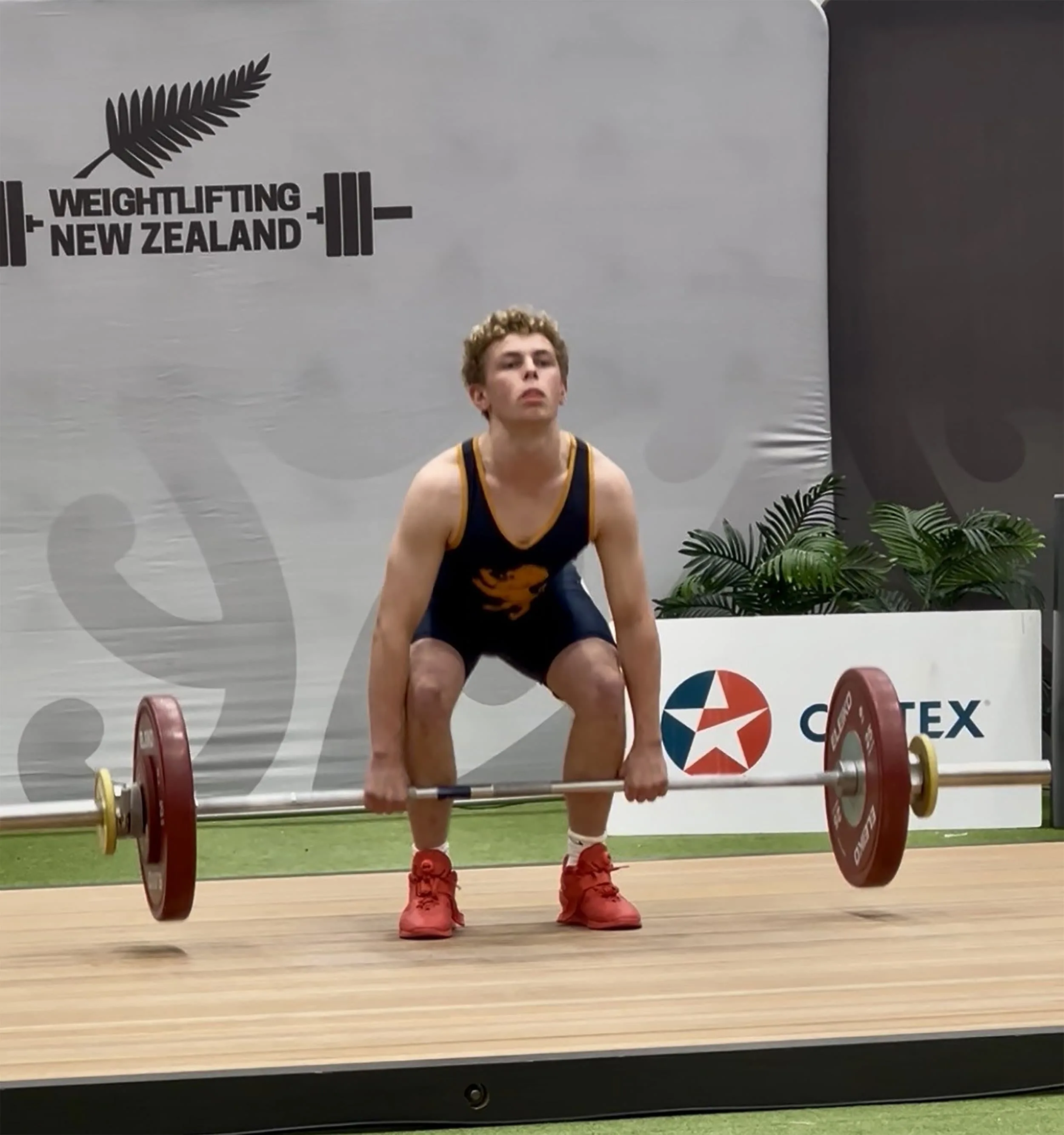
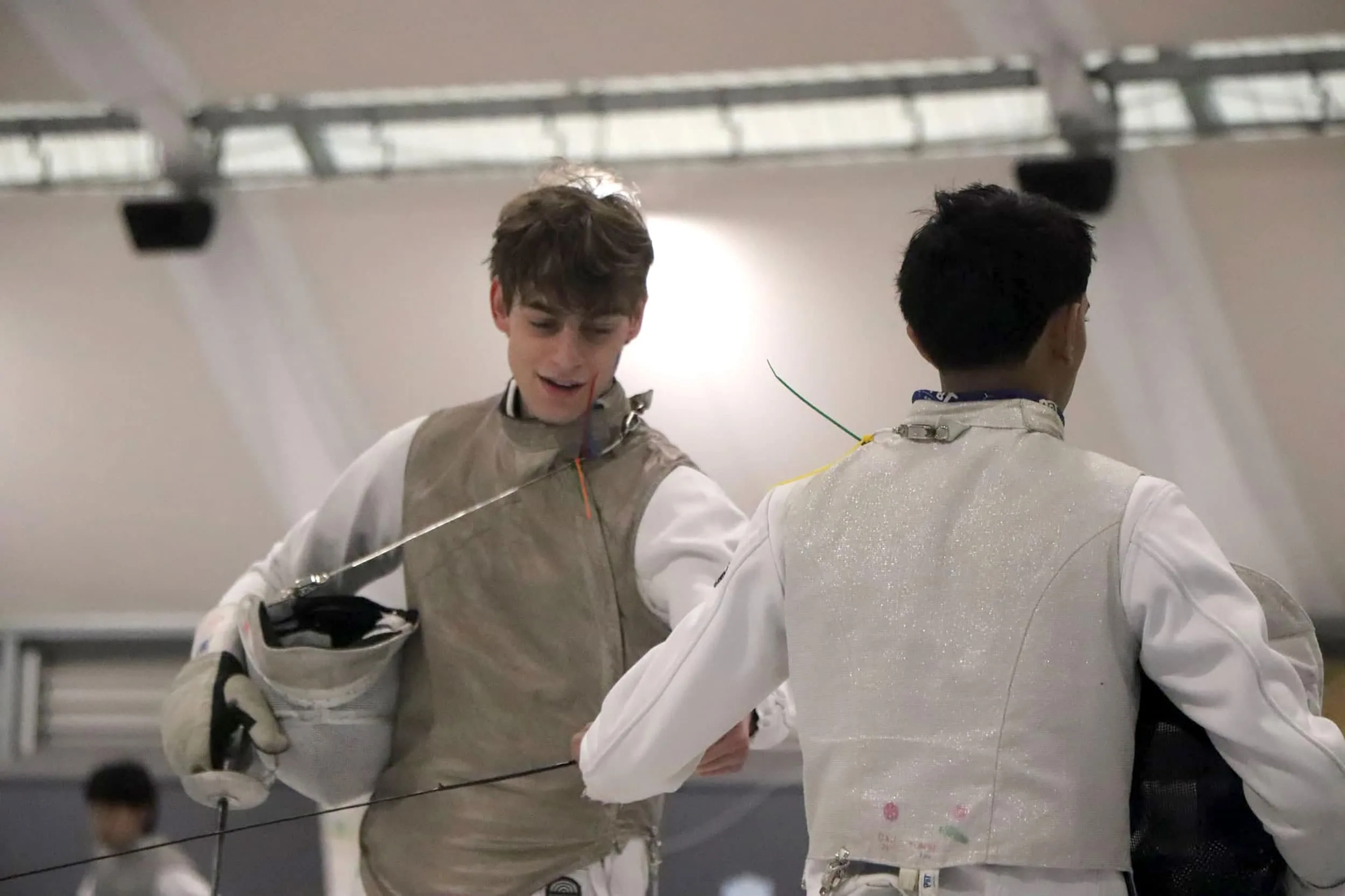
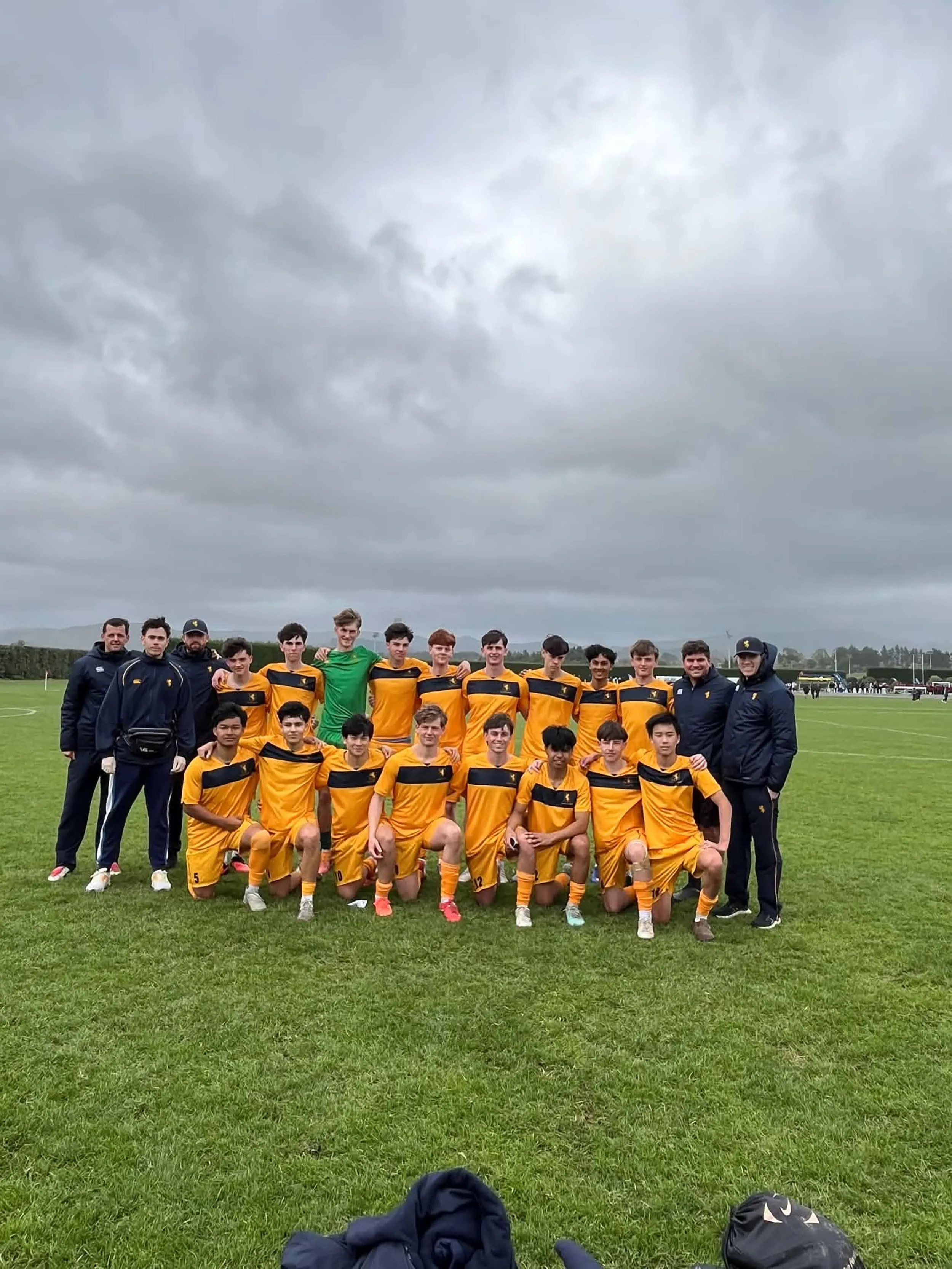
Prof. John MacCormick with his son Alastair MacCormick Mitchell

Prof. John MacCormick ‘85 with his son Alastair MacCormick Mitchell outside the Main Block at the annual ANZAC Day service in 2024.

Obituaries

27Obituaries

Auckland Grammar School would like to extend its condolences to those families who have recently lost a loved one.

Rt Hon Sir Kenneth Keith

Rt Hon Sir Kenneth James Keith, ONZ, KBE, PC, KC, ‘51

Sir Kenneth passed away on 13 May 2026, aged 88.

Regarded as New Zealand’s foremost international law expert and a highly respected and engaged member of the Grammar community, Sir Kenneth James Keith attended Auckland Grammar School from 1951 to 1955. He was Dean of Law at Victoria University of Wellington from 1977 to 1981 and later Professor Emeritus. He also worked in the United Nations Office of Legal Affairs from 1968 to 1970.
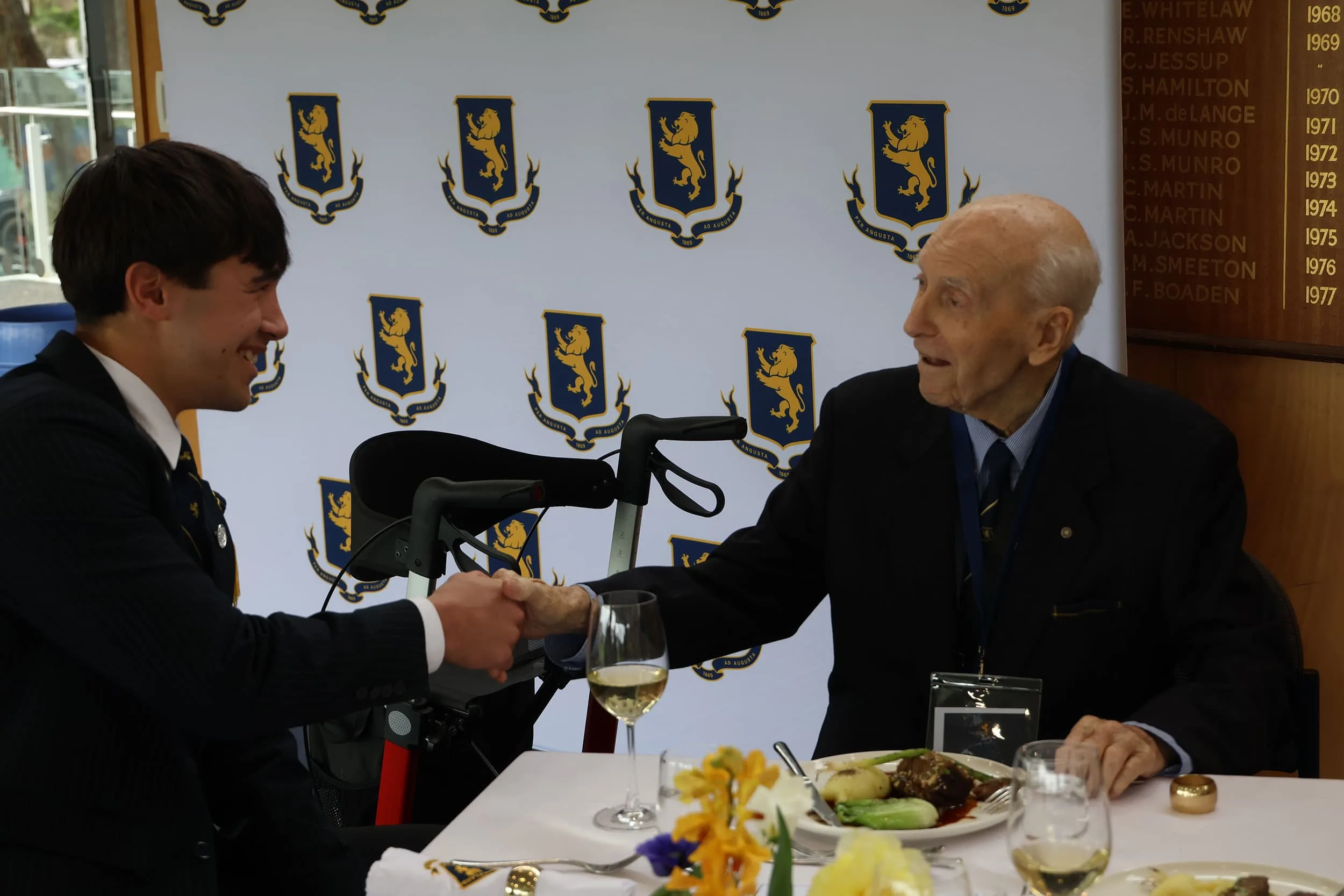
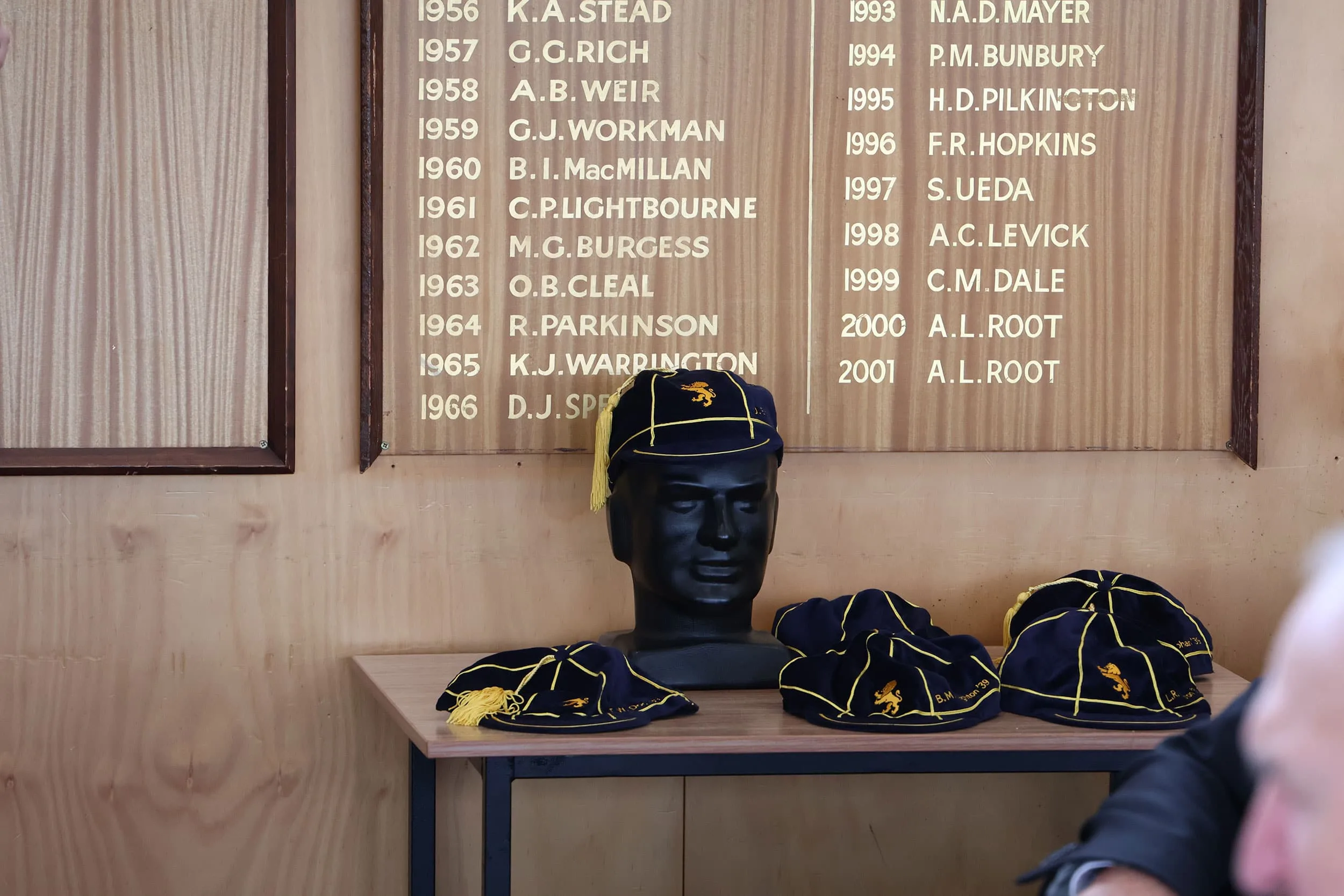
Sir Kenneth was part of New Zealand’s legal team in the Nuclear Test cases before the International Court of Justice and led the New Zealand delegation that prepared the additional Protocols to the Geneva Conventions in 1977. He helped shape the Official Information Act 1982, the Constitution Act 1986 and the New Zealand Bill of Rights Act 1990. As a member of the Royal Commission on the Electoral System, he also played a key role in New Zealand’s adoption of a mixed-member proportional (MMP) representation system of government.

Sir Kenneth was appointed to the Court of Appeal in 1996 and of the newly established Supreme Court of New Zealand in 2005. He was Judge of Appeal in Samoa, the Cook Islands, Niue and Fiji, and a member of the Judicial Committee of the Privy Council. In 2006 he became the first New Zealander appointed to the International Court of Justice, where he served a nine-year term. He was knighted in 1988 for services to law reform and legal education, and in 2007 received the Order of New Zealand, the country’s highest honour.

Sir Kenneth will be remembered as a distinguished Auckland Grammar School Old Boy whose lifelong commitment to justice and the rule of law has left an enduring legacy in New Zealand and around the world.


Stewart Matthews

Stewart Alexander Matthews ‘48

Stewart passed away on 4 June 2026, aged 91.

Stewart believed attending Auckland Grammar School was a great privilege. He began his tenure in 1948 and distinguished himself both academically and on the sports field. He was a member of both the 1st Cricket XI and 1st XV Rugby teams for three years, captaining the 1st XV in 1952, and served as a School Prefect in 1951 and 1952.

After leaving School, Stewart studied at the University School of Architecture, qualifying as an associate member of the Quantity Surveyors Institute. He also served in the Territorial Army, gaining the rank of Captain and spending around ten years with the 3rd Battalion, Auckland Regiment.

Stewart’s business career began with Fisher’s Residential Aluminium Window Division before progressing to Alex Harvey Industries as Group Export Manager. A foundation member of the New Zealand Export Institute, he participated in numerous trade missions throughout the Arabian Gulf and South America.

A devoted Old Boy, Stewart founded Auckland Grammar School’s Augusta Fellowship, helping establish a programme that continues to support the School today. He also gave many years of service to the Penrose Rotary Club and community literacy programmes, receiving a Paul Harris Fellowship in recognition of his outstanding contribution. Stewart will be remembered for his leadership, generosity, and commitment to his School, community, and family.


Terry Nuthall

Terence Graham (Terry) Nuthall ‘53

Terry passed away on 10 August 2026, aged 86.

Terry was a sound academic during his four years at Auckland Grammar School. He was in the A stream classes for Forms 3 and 4 and won first in class for 5E in 1955. Masters said of him that he was a “very keen learner, who has worked well and was a pleasure to teach.”

In addition to his career as a banker, Terry was an avid Hockey player, playing for all four years across various age grades. Terry also loved Orienteering, and represented New Zealand in the sport from 1989-2001. He was a lifelong member of the Auckland Orienteering Club and despite poor health, he was still helping at events up until his untimely passing.

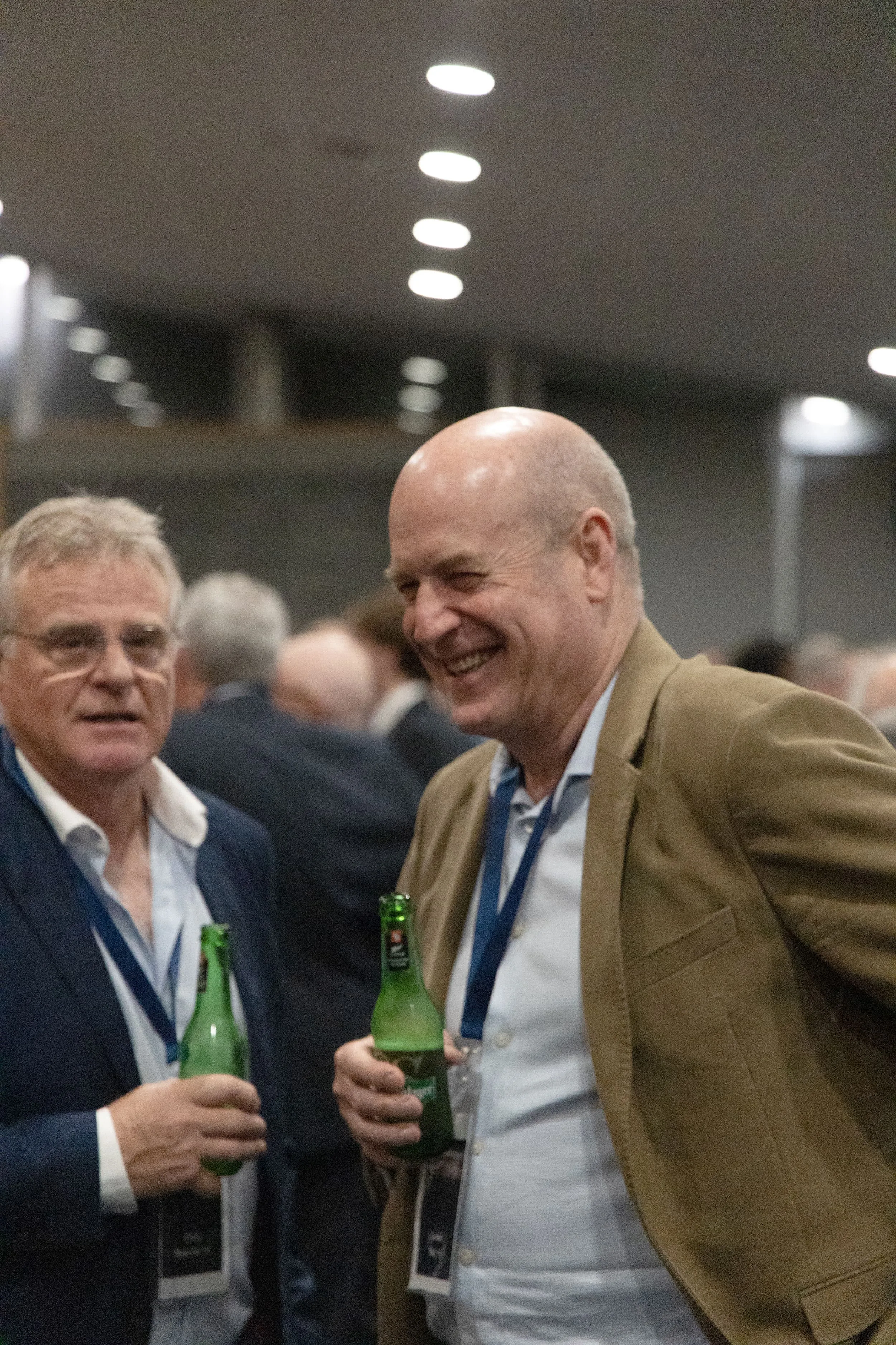
An excerpt from an article he wrote for a magazine 40 years ago showed Terry’s more humourous side, poking fun at himself for picking up the wrong map at the start of a course. “I won’t take the wrong map again in a hurry but then there are a dozen other things that can go wrong. The answer is to concentrate.”

Terry was a regular at the annual Vintage Luncheon, as well as a grandfather to eight grandchildren and a great-grandfather to two.


Peter Riley

Peter Brian Riley ‘56

Peter passed away on 1 July 2026, aged 84.

Peter started his secondary schooling at Mahurangi College in Warkworth, before transferring to Auckland Grammar School for his final two years, ending up in 6A in 1959 and the Upper Sixth in 1960. Peter was an avid Rugby player and was also the recipient of the Williamson Scholarship.

After graduating from Grammar, Peter received his Bachelor of Engineering from the University of Auckland, before obtaining a Master of Science, majoring in Rock Mechanics from the University of London.

Peter was the founder and managing director of Riley Consultants Ltd. Established in 1984, the company is a multi-disciplinary engineering firm operating around the country and the Pacific, and was “driven by a desire to do things differently and to build something of Peter’s own”. Managing Director Steven Price said of Peter’s passing, “We will take time to reflect on Peter’s legacy and the lasting impact he has had on our organisation.”

Advertisement Sibuns — advertisement

Dr Michael John Knapton ‘55

Michael passed away on 11 August 2026, aged 85.

Michael was born in Bournemouth, England, in 1941. During his time at Auckland Grammar School, he was a strong all-round student and athlete. In 1955, he placed first in 3A and then progressed through 4A, 5A and 6A, playing Cricket and Rugby. Michael rose through the ranks of the School’s Cadet Battalion, serving as Sergeant and later Warrant Officer Class 2 in his final year.

Michael went on to study medicine at the University of Otago, graduating with a Bachelor of Medicine and Bachelor of Surgery. He served as Regimental Medical Officer for 6 RNZIR (Hauraki) from 1969 to 1985, reaching the rank of Major before retiring from the Army.

Following his retirement, Michael continued to serve the community as Honorary Physician to the Bay of Plenty Rugby Union from 1976 to 1996. An accomplished sailor, he also represented New Zealand in Half Ton yachting in 1972.


Jon Moses

Jon Morris Moses ‘66

Jon passed away on 13 July 2026, aged 74.

Jon attended Auckland Grammar School from 1966 to 1970, with masters saying that he “works very well, and was a very polite and helpful young man.”

Jon was a senior lecturer at Manukau Institute of Technology, a position he held for almost 37 years. He is survived by his wife Maryrose, his son Jon-Paul, his brother Malcolm ‘62 and his sister Sharon.


David John Fraser

David John Fraser ‘46

David passed away on 27 August 2026, aged 94.

Despite missing almost a month of his first year at Auckland Grammar School due to mumps, David was in the A and B classes throughout his four years. David was named the Form 5 Form Rep, a keen athlete and was involved with Football, playing Junior Football in Form 3 and was named captain of the 1st XI side in his final year in 1949.

After leaving Grammar, David became a Justice of the Peace and was a Pharmacist for many years in the suburbs of Mount Roskill and Henderson. He was a life member of the Dunholme Tennis Club and was presented with a Gold Award for 20 years’ service in 1997.

David was part of a multi-generational family with sons Mark ‘69, Scott ‘70, Brett ‘73 and Gregory ‘74 attending the School along with his brothers Jim ‘49, Grant ‘50 and Craig ‘57. They all followed in their uncle John McLean Fraser’s footsteps who attended the School in 1921.


In Memoriam

  • William Donald Aimer ‘44
  • Keith Owen Arthur ‘60
  • Keith McDonnel Barclay ‘66
  • William Wayne Barron ‘61
  • Ronald David (Ronny) Bruell ‘55
  • Colin Ian Capie ‘56
  • Paul Thomas Cavanagh, KC ‘52
  • Dr Grant Crawford Cowie ‘67
  • Robb Neil Montgomery (Bob) Davies ‘49
  • George Arthur de Boyett ‘54
  • Bruce Joseph Draper ‘52
  • Roger Adrian Errington ‘54
  • Gary Grove Feran ‘51
  • Allan Gerald Harold Gilligan ‘49
  • Kim Heppner ‘51
  • Jack Heywood ‘59
  • William Eric Hindley ‘56
  • Nolan (Noel) Wallace Howard ‘46
  • Andrew David Hunter ‘79
  • David Murray Irvine ‘58
  • Michael Lawrence Jaffe ‘55
  • Mataio Rea Kautai ‘58
  • James Beattie Lockett ‘75
  • Donald William Arthur (Don) Marsdon ‘44
  • Winston Maxwell James Marsh ‘56
  • Alexander Hamish McDougall ‘60
  • Kerry Stewart McMillian ‘61
  • Graeme Thomas Meek ‘52
  • John Robert Mitchell ‘55
  • Barry William Neale ‘54
  • Norman Trevor Nelson ‘43
  • Walter John North ‘59
  • Ronald David (Ron) Parsons ‘43
  • John Herbert Pearce ‘56
  • Barry Pooch ‘48
  • David John Reddaway ‘49
  • William Derrick (Bill) Reed ‘56
  • Philip Kendall (Phil) Rice ‘60
  • Dennis Norman Rive ‘60
  • Kelvyn Llewellyn Seaman ‘49
  • Sidney Alan Spalter ‘51
  • Desmond John Stansfield ‘43
  • Dean Guy Stanway ‘61
  • Dr Reginald John Sturt ‘43
  • Peter Joel Sundberg ‘64
  • Colin Charles Edward Thompson ‘42
  • Christopher Buchan Thomson ‘55
  • Peter John (Winter) Utting ‘81
  • Gordon Edward Vial ‘49
  • Murray Baden Watson ‘65
  • Barry Ellis (Bazza) White ‘48
  • Nelson Edgar Young ‘57
Old Boys’ Association

Sponsors and Partners


Essential Deli — advertisement
TUS Grammar — advertisement
Mt Eden Vets — advertisement
k9 Natural — advertisement
JBWere — advertisement
Milford — advertisement